Markwayne Mullin Military Service Draws Scrutiny After ‘Smell’ of War Comments and Reversals
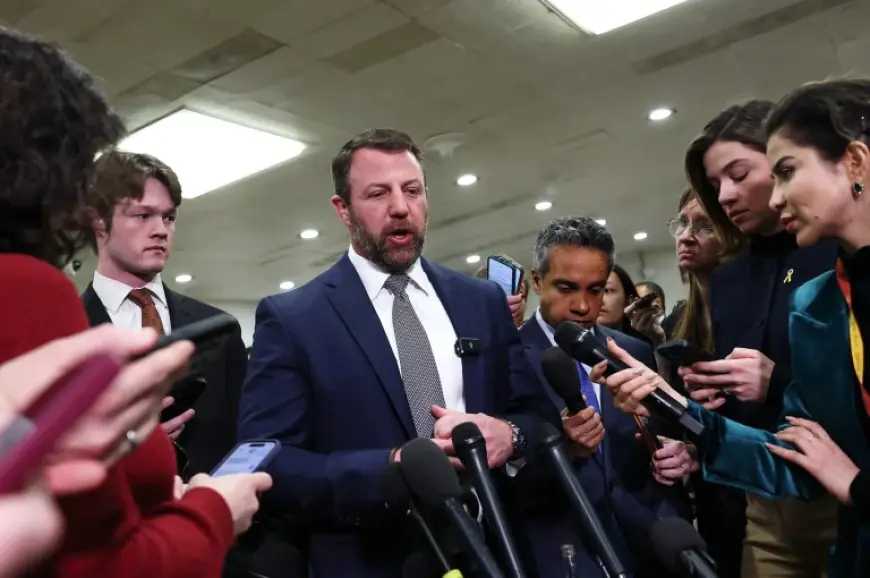
Sen. Markwayne Mullin’s remarks about the sensory experience of combat and repeated shifts in how he labeled U. S. operations in Iran have put his public standing under a microscope. Markwayne Mullin Military Service, a focal point in critics’ response, was highlighted after the Oklahoma senator described war as something that “smells bad” despite having no record of military service.
Markwayne Mullin Military Service and the ‘Smell’ Comment
On the same weekend that national leaders and senior officials used the term war to describe U. S. actions in Iran, Sen. Mullin offered conflicting characterizations over roughly two days. He first told viewers the United States was not at war, then later defended the military offensive by saying, “War is ugly. It smells bad. And if anybody’s ever been there and been able to smell the war that’s happened around you and taste it and fill it in your nostrils and hear it, it’s something that you’ll never forget. ”
That sensory description drew immediate attention because the senator has never served in the military, a fact critics and some veterans cited when questioning the credibility of his claim. Roughly three hours after one of his appearances, he again shifted, telling another outlet the crisis “isn’t a war, ” and on a separate occasion called the situation a “war” before dismissing the earlier statement as a misspoke. Over the span of about 48 hours, he altered his public position four times.
The sequence has direct consequences for messaging: his swings on a core factual description of U. S. operations contrast with the language used by senior national security officials, and they have complicated the narrative offered by his party. What makes this notable is that Mullin serves as a prominent White House ally and surrogate, meaning his inconsistent public statements can reverberate beyond a single interview.
Ali Khamenei, Strikes and Senate Reactions
The comments came amid escalatory events highlighted by U. S. and allied strikes that killed Supreme Leader Ali Khamenei, an outcome Mullin addressed on television. On March 2, 2026, he joined a national program to react to those strikes and called for the removal of Iran’s supreme leader, saying Khamenei “had to be removed” to stop the country’s nuclear program.
That firm stance on leadership targeting stands in contrast to his wavering language about whether the United States is formally at war. Defense Secretary Pete Hegseth had used the term war earlier in the same period, a label Mullin both echoed and rejected at moments. The discrepancy between defense officials’ terminology and Mullin’s shifting descriptions fed the criticism from opponents and commentators who noted the practical consequences of inconsistent wording during a high-tension military episode.
Punches Missed: Misstatements and Political Role
Beyond the war terminology, Mullin’s recent public appearances included other errors that drew attention. He has been linked to confusion between Iran’s Ayatollah Khomeini and Ayatollah Khamenei in discussion, and he has made comparative historical claims about Iran’s pre-1979 condition that attracted scrutiny. He has also mistakenly referred to a prominent official by the wrong title and has conflated country names in public remarks more than once.
These verbal missteps have tangible political effects. With 53 Republican senators and 218 GOP members in the House, party leaders have many potential surrogates; Mullin’s visibility as a vocal ally means his mistakes carry outsized weight, complicating efforts to present a united posture on national security. His role as a go-to surrogate amplifies both his statements of policy and his errors, producing immediate fallout in press coverage and political debate.
The immediate consequence is a sharpening of scrutiny on whether Mullin’s public comments help or hinder party messaging during a fast-moving international crisis. The pattern of reversals and sensory claims about combat—set against the fact that he has not served in the armed forces—has focused attention on the credentials he brings to discussions about military action.
Officials and commentators will likely continue to weigh the impact of his remarks as the situation develops and as party leaders choose spokespeople for further media appearances.