

























Blue Origin Launches Vast Satellite Network for Global Communications

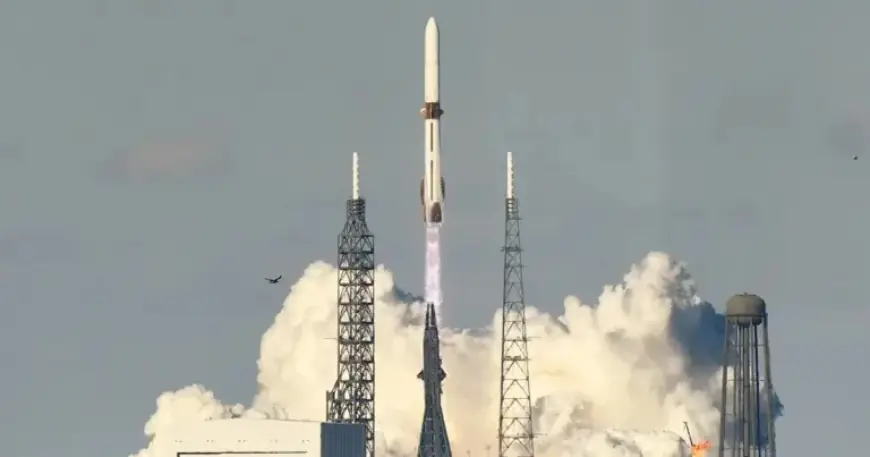
Blue Origin, the space venture founded by Jeff Bezos, has unveiled an ambitious plan to launch a vast satellite network. This constellation will comprise 5,408 satellites aimed at revolutionizing global communications. The initiative signifies Blue Origin’s entry into a competitive market primarily dominated by Elon Musk’s SpaceX.
Deployment Timeline and Network Capacity
The deployment of the TeraWave satellite network is scheduled to commence in the last quarter of 2027. Blue Origin has announced that the network is designed to achieve data speeds of up to 6 terabits per second (Tbps). This high-speed capability is expected to significantly enhance data processing capabilities globally.
- Launch of TeraWave: 5,408 satellites
- Start of Deployment: Last quarter of 2027
- Maximum Capacity: Roughly 100,000 customers
- Data Speeds: Up to 6 Tbps
Implications for Data Processing and AI
The TeraWave network is strategically designed to meet the increasing demands for high-volume data processing. As artificial intelligence technology continues to expand, the need for efficient data centers in space will grow. Traditional data processing on Earth requires substantial energy and resources, making this satellite network a timely solution.
Competitive Landscape
Blue Origin is entering a space filled with competitive satellite networks. The company is also linked to Project Kuiper, a satellite initiative featuring 3,200 satellites designed to provide internet access to consumers and businesses. In contrast, Musk’s Starlink network leads the sector with approximately 10,000 satellites.
- Blue Origin Initiatives:
- TeraWave (5,408 satellites)
- Project Kuiper (3,200 satellites)
- Musk’s Starlink: ~10,000 satellites
As the satellite communications field evolves, Blue Origin aims to establish a significant presence. The TeraWave network represents a bold step towards achieving efficient global communications and addressing emerging technological challenges.