

























Amazon Unveils Revolutionary Strategy to Overhaul Groceries and Outperform Walmart

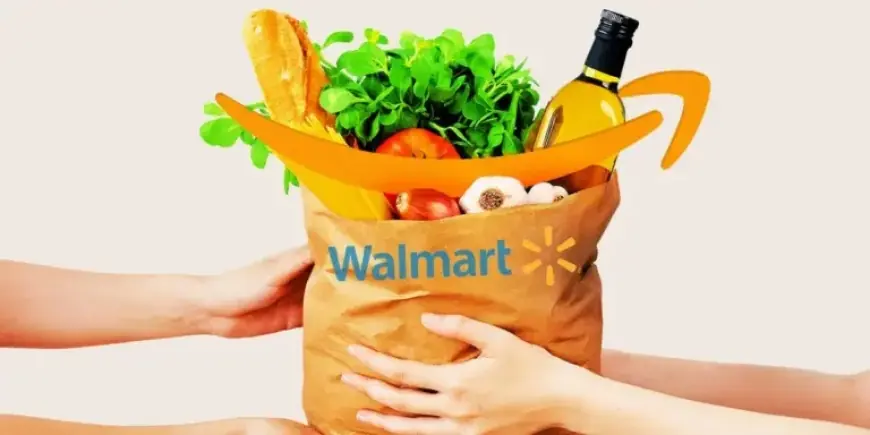
Amazon is embarking on a bold initiative to transform its grocery operations and improve its standing against Walmart. The company is adopting strategies reminiscent of Walmart’s successful retail model, including the introduction of “Supercenter” warehouses and a revamped distribution network known as the “1DC” system.
Amazon’s Bold Grocery Strategy
This strategic shift is significant for Amazon, which has struggled to dominate the grocery sector dominated by Walmart. Despite owning Whole Foods for nearly a decade, Amazon currently holds only 1.6% of the U.S. grocery market compared to Walmart’s 21%. To better compete, Amazon plans to create a large warehouse concept near Chicago, designed to streamline the buying process for fresh groceries, household goods, and general merchandise.
Introducing Supercenters
Amazon’s megastore, exceeding 225,000 square feet, aims to enhance the shopping experience by combining various product categories into one location. Experts like Michael Levin and Josh Lowitz from Consumer Intelligence Research Partners view this move as indicative of Amazon’s increasing competition with Walmart.
Building a Supportive Infrastructure
In addition to Supercenters, Amazon is rolling out a new distribution layer called “1DC.” This initiative focuses on storing frequently purchased items and replenishing fulfillment centers based on real-time demand. The company plans to operate around 12 of these centers by the end of 2025, facilitating the movement of up to 20 million units weekly.
Focusing on Same-Day Grocery Delivery
- Amazon operates over 80 same-day grocery facilities across the U.S.
- The company is exploring sub-same-day delivery options, referred to as “SSD Supercenters.”
- Current plans anticipate expanding to at least 34 same-day grocery sites by 2025.
Despite its advantages in non-perishable items, Amazon acknowledges that improving the logistics for perishable goods remains a challenge. Currently, around 2.6 billion units of perishables are distributed, with plans to increase this capacity to 3.3 billion by the end of 2026.
Reinventing Whole Foods
Another pivotal aspect of Amazon’s grocery strategy is the reimagining of Whole Foods as a logistical asset rather than just a premium grocery chain. This includes the setup of micro-fulfillment centers within select Whole Foods locations, allowing the stores to serve as hubs for online grocery orders.
Amazon’s Competitive Edge
While Walmart has a robust network, with about 90% of the U.S. population living within 10 miles of a store, Amazon aims to close this gap. Notably, Walmart’s Supercenters facilitate quick delivery options, enhancing its competitive position in the grocery space.
As Amazon evolves its grocery strategy, it remains to be seen whether these new initiatives can effectively rival the established distribution and retail network that Walmart has perfected over the years.