






















Hochul’s $260 Billion Budget Boosts Child Spending, No New Taxes

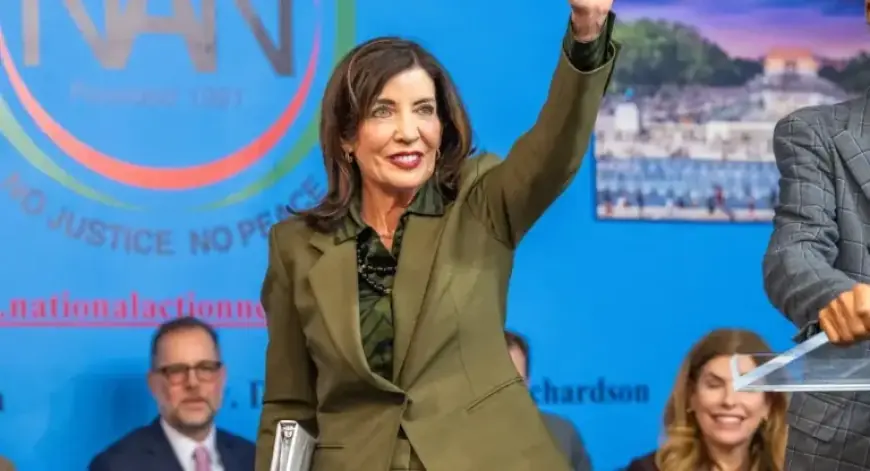
New York Governor Kathy Hochul has unveiled a substantial $260 billion budget proposal that emphasizes increased spending on child care while maintaining current tax rates. This plan, announced on Tuesday, indicates that strong revenue from Wall Street negates the need for new taxes.
Key Budget Highlights
The proposed budget focuses on several priorities, particularly in education and child welfare. Notable allocations include:
- An increase of $1.2 billion (approximately 50%) to support an existing day care voucher program.
- $500 million for pre-kindergarten programs for children aged three and four.
- $77 million to enhance police presence in New York City’s subway system.
- $535 million for paying over 2,000 National Guard personnel in state prisons.
- $20 million earmarked for Riverbank State Park in West Harlem.
- $5 million linked to the World Cup for funding soccer fields.
Fiscal Context and Projections
Blake Washington, the state Budget Director, highlights that projections indicate an additional $3.7 billion in revenue for the fiscal year ending March 31. Furthermore, an extra $7.4 billion is anticipated for the next budget period. Recent financial reports suggested a positive trend, with tax receipts exceeding earlier projections by $700 million in the first half of the fiscal year.
While Hoffman’s proposal does extend higher corporate tax rates, it does not propose new increases for business, sales, or income tax rates. This approach aligns with the predictions of a robust revenue year stemming from consumer spending and anticipated bonuses for Wall Street bankers.
Challenges and Considerations
Despite the optimistic budget forecast, concerns about long-term sustainability remain. The new childcare system’s funding will require ongoing and stable public resources, as emphasized by advocates for universal childcare. Brahvan Ranga from the Invest in Our New York campaign warns that without consistent funding, the initiative may falter.
Additional uncertainties are associated with federal support, particularly regarding health care for non-citizen immigrants. Changes to Medicaid eligibility due to federal legislation could impact state resources. Efforts are underway to secure a waiver allowing continued services for this demographic.
The presentation of Hochul’s budget will kick off a series of hearings and discussions with the state Legislature, which is primarily controlled by Democrats. Although there are calls for increased taxes on wealthier residents, Hochul’s fiscal plan reflects a cautious approach in maintaining current tax levels while addressing critical service needs.
Conclusion
Governor Hochul’s $260 billion budget proposal marks a significant investment in child services and education. However, balancing these commitments against the backdrop of fluctuating federal support and economic uncertainty will be key in the months ahead.