
























Magnitude 4.9 earthquake Now reported 19 km from Indio, California, with early estimate later revised

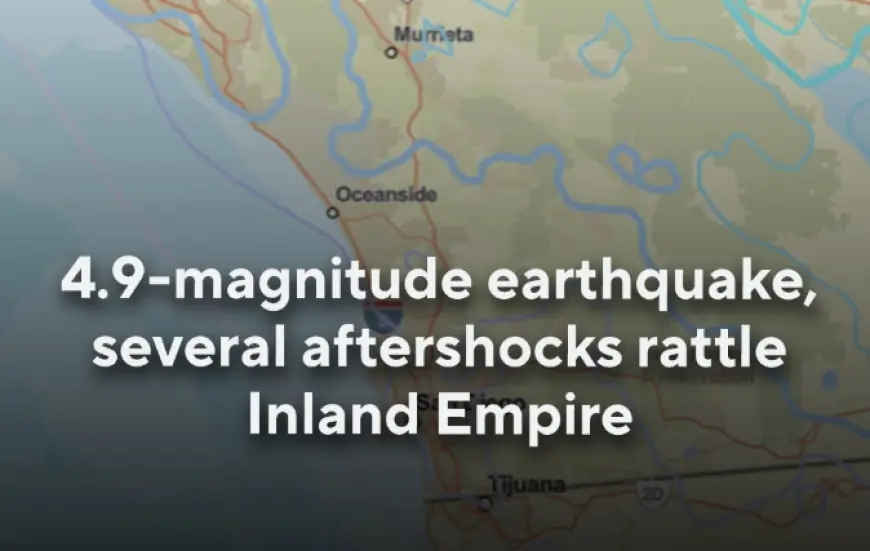
A moderate earthquake near Indio, California triggered a burst of “earthquake now” alerts after an initial readout listed the shaking at magnitude 4.9 about 19 kilometers from Indio. Updated seismic listings later showed the event as magnitude 4.6, a reminder that early automated earthquake numbers can change as more sensor data is processed and reviewed.
The quake struck in the Coachella Valley region, and while it was widely felt, there were no immediate, confirmed reports of major damage or injuries in early checks shared by local authorities and community reports.
Where the quake hit and why the time looked like 3:56 AM
Seismic data placed the epicenter north-northeast of Indio, in the desert area between Indio and nearby communities. The depth was listed as shallow (around 3 km), which often increases the chance people will feel it, even when magnitudes remain in the mid-4 range.
The 3:56 AM time you saw lines up with a time-zone conversion:
-
3:56 AM (Cairo, EET) — Tuesday, Jan 20, 2026
-
5:56 PM (California, PST) — Monday, Jan 19, 2026
-
1:56 AM (UTC) — Tuesday, Jan 20, 2026
So if you’re outside the U.S., the quake can appear to happen “today” in your time zone while still being “yesterday evening” in Southern California.
Why it first showed as 4.9, then updated
It’s common for earthquake magnitudes to shift in the first minutes to hours after an event. Early numbers come from automated calculations that prioritize speed over perfection. As additional stations report in and analysts review waveforms, the estimate can be adjusted.
In this case, the quake circulated widely as 4.9 before the reviewed listing settled at 4.6. Both magnitudes describe the same event, but the revision matters for expectations: each step on the magnitude scale reflects a sizable jump in energy, so small-looking changes can feel meaningful to the public.
What people in the Coachella Valley typically feel in a mid-4 quake
A shallow mid-4 quake near Indio can produce sensations that range from “a quick jolt” to “a rolling shake,” depending on distance and building type. Common experiences include:
-
A sharp thump followed by a brief rattle of windows or dishes
-
Swaying on upper floors, especially in apartments or hotels
-
Car alarms, hanging lights swinging, or objects shifting on shelves
-
Short, sudden motion that ends quickly but leaves people on edge
In desert regions with quieter nighttime conditions, even moderate shaking can feel more dramatic because there’s less background noise to mask it.
Aftershocks: what to expect next
After a quake of this size, aftershocks are possible, especially in the first several hours. Many aftershocks are small (often too small to feel), but a few can be noticeable.
Practical guidance for the next day:
-
Expect sporadic small aftershocks, particularly if the main quake was shallow
-
Re-secure items that may have shifted (shelves, TVs, mirrors)
-
If you smell gas or hear hissing, leave immediately and contact emergency services
-
Keep phones charged in case of further alerts
A mid-4 quake does not automatically mean a larger quake is coming, but it’s a strong reminder that the region is active and preparedness pays off.
What to do if you felt it
If you felt shaking and want to match it to the event, the best details are:
-
Your location (city/neighborhood)
-
The time you felt it (to the nearest minute if possible)
-
Whether it felt like one jolt or a short rolling motion
For safety, standard earthquake steps still apply:
-
During shaking: Drop, Cover, and Hold On
-
After shaking: check for hazards, avoid damaged structures, and be cautious of falling debris
For now, the key takeaway is straightforward: a notable quake near Indio was initially flagged as magnitude 4.9 and later revised to 4.6, with shallow depth helping it register across the Coachella Valley.