Northern Lights Tonight: Aurora Borealis Forecast Signals a G4 Geomagnetic Storm and a Real Shot at Auroras in Massachusetts, New Jersey, and Colorado

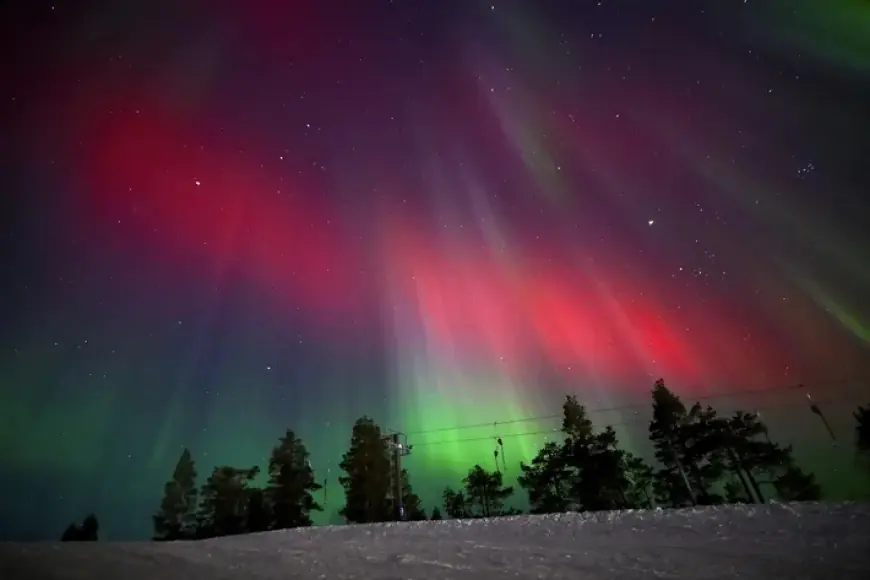
Northern lights watchers have a rare setup tonight as an intense geomagnetic storm pushes the aurora borealis farther south than usual. Space-weather conditions have already reached G4 (Severe) levels, and the latest forecast keeps G4 possible during the first part of the night, which is the sweet spot for anyone hoping to catch the aurora in the Lower 48.
The big picture: an Earth-directed solar eruption (a coronal mass ejection tied to an X-class flare) has disturbed Earth’s magnetic field. When that disturbance is strong and the magnetic field orientation cooperates, aurora can expand beyond the typical northern tier and become visible from mid-latitude states, especially from dark locations with a clear view of the northern horizon.
Aurora Borealis Forecast Tonight: Best Time Windows
Tonight’s strongest storm-level window is expected early in the night (Eastern Time), with elevated activity lasting through the overnight hours. The forecasted planetary Kp values (a 0–9 scale) suggest the peak risk/reward window happens while it’s fully dark across much of the U.S.
Northern lights forecast tonight (timing guide)
Eastern Time (Massachusetts, New Jersey)
-
7:00–10:00 pm ET: Peak window, Kp near 7–8 (G4 possible)
-
10:00 pm–1:00 am ET: Strong, Kp near 6–7 (G3)
-
1:00–4:00 am ET: Still active, Kp near ~6 (G2)
Mountain Time (Colorado)
-
5:00–8:00 pm MT: Peak window, Kp near 7–8 (G4 possible)
-
8:00–11:00 pm MT: Strong, Kp near 6–7 (G3)
-
11:00 pm–2:00 am MT: Active, Kp near ~6 (G2)
These are forecast “background” levels; the aurora often appears in bursts (substorms) that can turn a quiet sky into visible curtains for 10–30 minutes, then fade again.
Northern Lights Massachusetts: Can You See the Aurora Tonight?
Yes, it’s possible, but it’s a “conditions must cooperate” situation. Massachusetts sits far south of the usual auroral oval, so you typically need Kp around 7–8 plus a strong substorm for a naked-eye show. Your best odds come from:
-
Dark locations away from Boston’s glow
-
A clear northern horizon (coastlines, open fields, hilltops)
-
Patience during peak windows (especially 7–10 pm ET)
What you’ll likely see if it happens: a faint green or whitish glow low in the north, occasional vertical “pillars,” and stronger color in photos than with your eyes.
Northern Lights New Jersey: What to Expect Tonight
New Jersey is similar to Massachusetts in terms of difficulty, though the farther north and darker you go, the better. If the storm pulses hard tonight, New Jersey watchers may catch:
-
A low northern glow (best from rural or shoreline vantage points)
-
Brief intensifications during substorms
-
Better results through a phone camera than direct viewing
If you try from within metro lighting, treat it as a long-shot and use your phone as your detector: take a 2–5 second night photo pointed north and look for green/pink tones.
Northern Lights Colorado: Better Odds Than the East Coast
Colorado generally has darker sky access and high-elevation viewpoints, which helps a lot. Visibility still depends on storm strength, but compared with the Northeast, Colorado often benefits from:
-
Wide-open northern horizons (especially northern Colorado)
-
Less humidity haze in many areas
-
Easy access to darker sites outside city cores
Aim for the 5–8 pm MT peak window first, then check again later in the evening if activity dips and returns.
What Is a Geomagnetic Storm?
A geomagnetic storm is a disturbance in Earth’s magnetic field caused by enhanced solar wind—often from a coronal mass ejection (CME) or high-speed solar wind stream. When that energy couples into Earth’s magnetosphere, it can:
-
Expand the auroral oval (more people can see the northern lights)
-
Disrupt HF radio and some satellite communications
-
Degrade GPS accuracy during stronger events
-
In extreme cases, stress power-grid operations
Storm intensity is often expressed on the G-scale (G1 to G5). G4 is “Severe,” meaning aurora can push much farther south than normal and tech impacts become more likely.
How to See the Northern Lights Tonight: Quick Checklist
-
Face north and avoid trees/buildings blocking the horizon
-
Get away from city lights (even 20–40 minutes helps)
-
Give it time: plan for at least 60–90 minutes outside during peak windows
-
Use a camera/phone: Night Mode or a few-second exposure can reveal aurora you can’t easily see
-
Dress for dangerous cold: wind chill can end a session fast; bring hand warmers and protect fingers for photos
Tonight’s setup is legitimately strong on the space-weather side. The final deciding factors will be local sky clarity, light pollution, and whether the storm delivers one or more strong substorms during the peak windows.