

























California Shaken by Five Earthquakes: Key Information

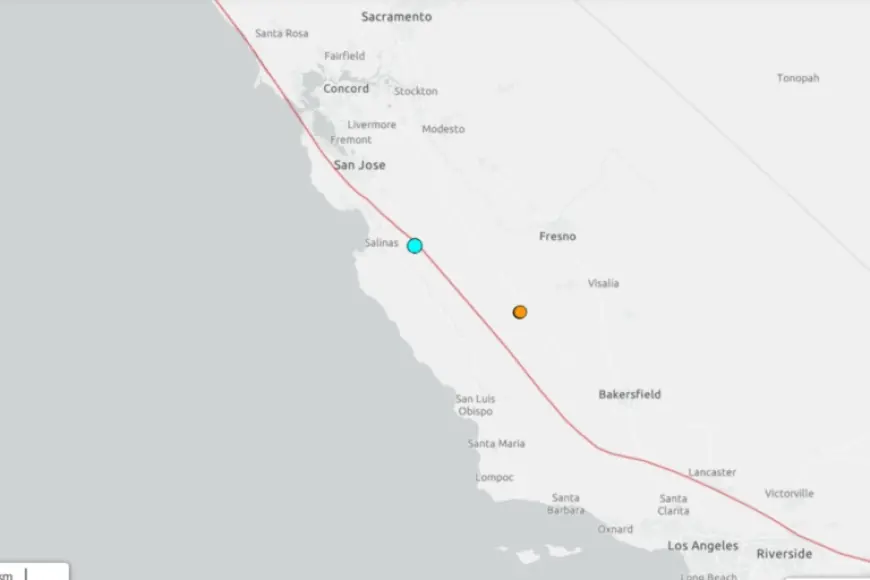
California recently experienced a notable series of seismic events, with five earthquakes recorded over the span of two days. These earthquakes heightened awareness regarding the state’s vulnerability to seismic activities.
Key Earthquakes in California
The series of earthquakes occurred on Friday and Saturday. Four of these tremors struck near Avenal, California, with magnitudes ranging from 2.6 to 2.8. The depth of these quakes was reported as shallow. The fifth earthquake, reaching a magnitude of 3.3, occurred near Salinas at a depth of approximately 4.5 miles, as per data from the United States Geological Survey (USGS).
Seismic Impact
- Magnitude range: 2.6 to 3.3.
- Locations affected: Avenal and Salinas.
- No significant damage or injuries reported.
Despite the lack of damage, these events underline California’s ongoing risk associated with major earthquakes. The California Department of Conservation indicates that over 70 percent of residents live within 30 miles of a major fault, increasing the likelihood of seismic impacts.
Emergency Preparedness in California
The recent earthquakes highlight the importance of being prepared for future seismic activity. Experts assert that the region is overdue for a significant earthquake. The USGS has documented a pattern of earthquake swarms, with minor tremors reported in other areas, including San Ramon and The Geysers.
Understanding Earthquake Swarms
Earthquake swarms refer to a cluster of seismic events occurring within a limited area over a short time. Unlike aftershocks, these smaller earthquakes do not center around a single primary quake. Swarms arise along less prominent faults and may not signal an imminent major earthquake, providing some reassurance to residents.
Reasons Behind California’s Seismic Activity
California’s location atop several major fault systems drives its seismic events. The San Andreas Fault, stretching approximately 750 miles, is the most significant. Other notable faults include Rodgers Creek, Calaveras, and Hayward. The movement of tectonic plates along these faults is the primary cause of earthquakes in the region.
Causes and Dynamics of Earthquakes
Earthquakes occur when accumulated energy in the Earth’s crust is suddenly released due to shifting tectonic plates along fault lines. This release produces seismic waves, leading to surface shaking. California’s fault systems primarily exhibit a “strike-slip” movement, where the plates slide horizontally past each other.
Future Monitoring and Predictions
Seismic activity will continue to be monitored closely by the USGS and California Institute of Technology. The USGS indicates a 5 percent chance of a larger earthquake within 72 hours following a smaller seismic event.
Overall, the recent series of earthquakes serves as a crucial reminder for California residents to remain vigilant and prepared for potential seismic hazards.