Kamilla Rakhimova: Australian Open Spotlight as Her First-Round Clash Is Halted Mid-Set

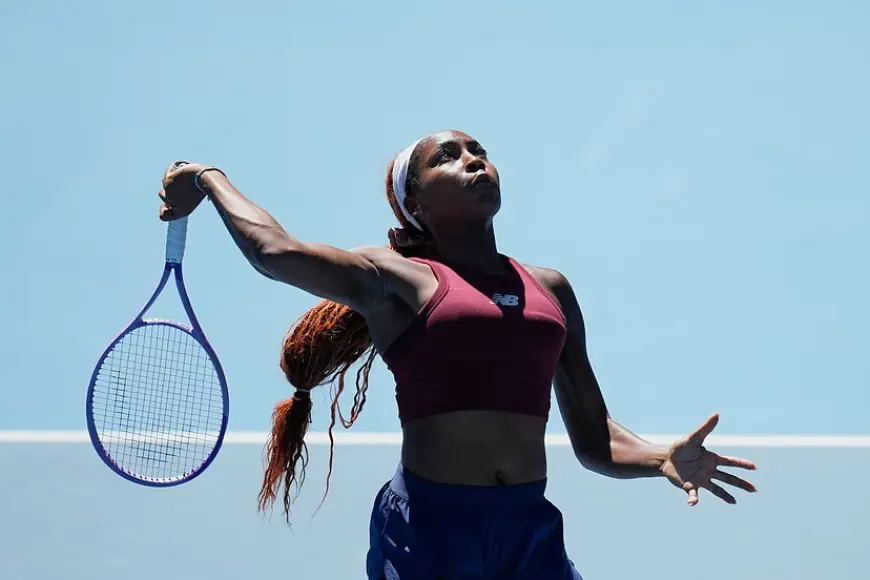
Kamilla Rakhimova arrived at the Australian Open as a dangerous unseeded opponent with a reputation for turning big stages into grind-it-out battles, and her opening-round meeting with Coco Gauff has already taken an unexpected turn: play was suspended in the first set on Monday, January 19, 2026 in Melbourne, leaving the match to be completed later.
For Rakhimova, the interruption matters. Against elite returners and heavy hitters, momentum swings are currency, and any stoppage can reset patterns she may have spent games building. With the contest paused before a full set was finished, the restart becomes almost its own mini-match: new rhythm, new nerves, and a fresh chance for the underdog to disrupt the favorite’s timing.
Kamilla Rakhimova’s Australian Open moment: a suspended first set and a wide-open reset
Rakhimova’s first-round assignment was always a headline-grabber: a top seed on a show court, with the crowd and cameras amplifying every shift. When the match is stopped mid-set, two things happen at once:
-
The favorite gets a breather to recalibrate tactics and settle serving patterns.
-
The underdog gets a clean slate to lean into fearless tennis without the weight of a scoreboard spiraling.
Early match indicators showed a choppy rhythm, with double-fault trouble and break-point pressure appearing before the suspension. That kind of start is exactly where Rakhimova can live comfortably: messy points, lots of second serves, and repeated chances to make the opponent play “one extra ball.”
Who is Kamilla Rakhimova right now
Rakhimova, 24, is listed on the tour as representing Uzbekistan, stands 1.70m, and plays right-handed with a two-handed backhand. Her game is built less on one-shot fireworks and more on pace tolerance: taking the ball early enough to rob time, then staying solid when rallies stretch.
A quick snapshot of where she stands entering this Australian Open:
-
Ranking: around the top 60 (listed at No. 57 entering Melbourne)
-
Preferred conditions: hard courts suit her flatter, more direct patterns
-
Coaching: she has been coached by Yulia Pilchikova
That profile explains why she can be uncomfortable to draw early. She doesn’t need to “find” her tennis with ten games of warm-up; she can compete from the first return game.
The lead-up: qualifying swings in Australia that shaped her start
Rakhimova’s January build-up had the kind of mixed signals that often precede a dangerous Slam upset attempt. In Brisbane qualifying, she was beaten decisively by Rebecca Sramkova (6–1, 6–2). In Adelaide qualifying, she showed the opposite side of her game: resilience and stamina. She edged Shuai Zhang in three sets (7–5, 5–7, 6–4), then fell in the next round to Sorana Cirstea (7–6, 6–3), missing the main draw there as well.
Those results paint a useful picture:
-
When she lands first serves and keeps returns deep, she can win long matches.
-
When she’s chasing points early and forced to press on second-serve patterns, the scoreboard can run away.
That’s why the suspended first set against Gauff is so intriguing. If Rakhimova can restart cleanly, the match can tilt back into the uncomfortable, physical territory she prefers.
What Rakhimova must do to threaten a top seed in Melbourne
To turn the Australian Open spotlight into a second-round ticket, Rakhimova’s blueprint is clear:
-
Attack the second serve, but with margin
Not reckless slap returns, but deep middle targets that start rallies on her terms. -
Keep points “neutral” for longer
Extend exchanges just enough to draw errors, especially when the opponent is searching for rhythm. -
Avoid cheap service games
Quick holds reduce pressure and prevent the match from becoming a constant scramble. -
Use the restart as a tactical reset
After a suspension, the first two return games are often decisive: either the underdog announces, “I’m still here,” or the favorite runs away.
What’s next for Kamilla Rakhimova
The immediate next step is simply getting the match back on court and finishing it. But bigger-picture, this is the kind of moment that can shape a season. Rakhimova doesn’t need a title run for the Australian Open to matter; she needs evidence that her level holds against the top tier on the biggest courts.
If she can turn the restart into sustained pressure and drag the contest into longer, messier passages, she can make this far more than a routine opener. And if she can’t, the lesson is just as valuable: at this level, serving stability and first-strike discipline decide whether “tough out” becomes “giant-killer.”