The Norris Uplift Anomaly Returns Mysteriously

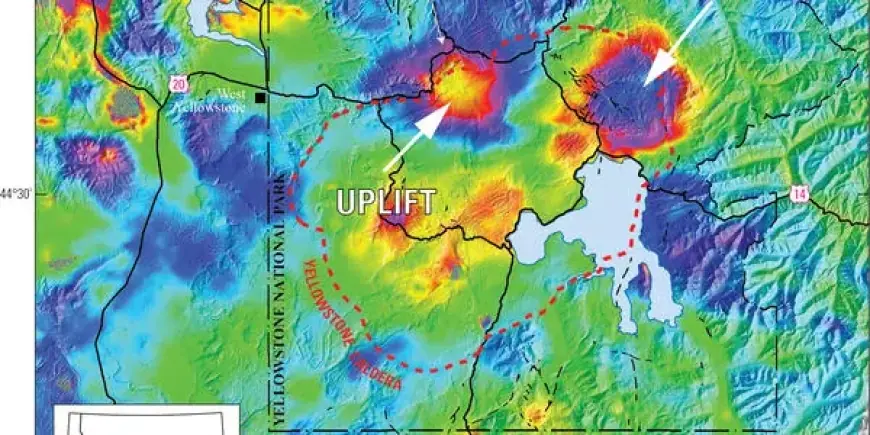
The Norris Uplift Anomaly (NUA) has resurfaced, showcasing the ongoing geological activity in Yellowstone National Park. This remarkable phenomenon, first identified between 1996 and 2004, is marked by significant surface movement along the northern caldera rim, close to Norris Geyser Basin. Scientists from the U.S. Geological Survey, led by geophysicist Michael Poland, have utilized advanced monitoring technologies to study these changes over the years.
The Return of the Norris Uplift Anomaly
Recent findings reveal that, starting July 2025, continuous GPS stations indicated a noticeable uplift in the area of the NUA. This resurgence occurred alongside regular seasonal displacement patterns, initially complicating data interpretation. However, subsequent analysis confirmed a surface uplift of approximately 1.5 centimeters (0.6 inches) by the end of the year.
Surface Movement and Earthquake Activity
The latest monitoring efforts highlighted several key observations during 2024-2025:
- Ground uplift began in July 2025, with measurements showing nearly 2 centimeters of uplift by September.
- Horizontal movement was recorded, with GPS data indicating a shift of about 1 centimeter (0.4 inches) away from the NUA.
- In total, 1,113 earthquakes were documented during 2025, with increased seismic activity noted from September to December. Notably, over 100 earthquakes were associated with the NUA during this period, including a significant M2.7 quake.
While the recent uplift and seismic movements are concerning, experts do not believe they indicate an imminent eruption. Instead, these events exemplify the dynamic and ever-changing nature of the Yellowstone geological system.
Technological Insights and Future Monitoring
Advancements in monitoring technology have played a crucial role in detecting even subtle geological changes. The use of Interferometric Synthetic Aperture Radar (InSAR) has proven invaluable in corroborating uplift patterns. Data collected from satellite radar images revealed approximately 2 centimeters of uplift along the caldera’s north rim between October 2024 and October 2025, mirroring earlier uplift patterns observed in the late 1990s and early 2000s.
Despite the seismic fluctuations, overall earthquake activity in 2025 remained low compared to historical averages. This data provides vital insights into subsurface benefits and further understanding of Yellowstone’s complex geology.
The Future of NUA Monitoring
Moving forward, the Yellowstone Volcano Observatory (YVO) will maintain vigilant monitoring of the NUA and its associated activities. Regular updates will be provided through monthly reports and annual publications, allowing researchers and enthusiasts alike to keep abreast of ongoing developments in this spectacular geological formation.
For continuous updates on NUA and its geological significance, visit Filmogaz.com regularly.