Autism Advocates Applaud Release of Groundbreaking Barbie on the Spectrum

The launch of a groundbreaking Barbie doll designed for children on the autism spectrum has been celebrated by advocates and families alike. This doll, introduced by Mattel, features elements aimed at promoting understanding and representation of autism in popular culture.
Barbie’s Unique Features for Autism Awareness
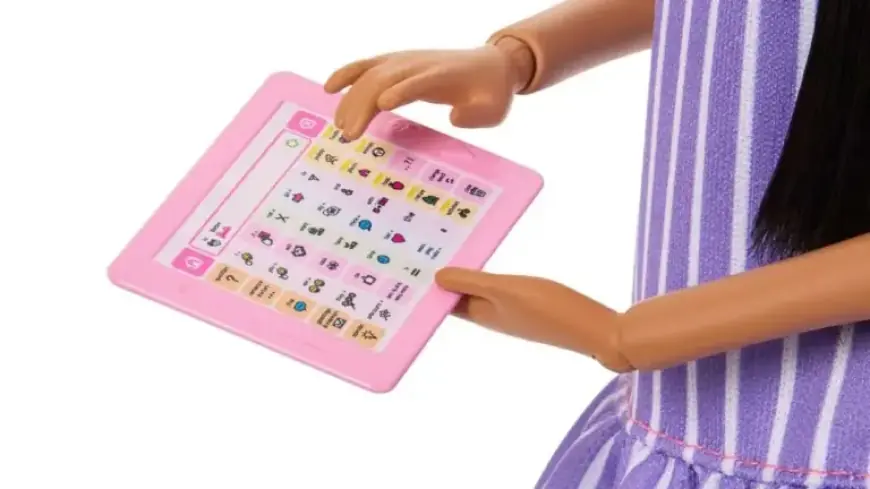
This new Barbie, released on a Monday, is equipped with a variety of specialized items. She carries a pink fidget spinner that spins, wears pink noise-canceling headphones meant to minimize sensory overload, and holds a pink tablet symbolizing an augmentative and alternative communication (AAC) device.
A Personal Connection
Mikko, a five-year-old girl from Las Vegas, joyfully recognized similarities between herself and the doll. Her mother, Precious Hill, expressed the significance of this representation. “This doll makes my daughter feel seen,” Hill said, emphasizing the importance of visibility for children with autism.
- The Barbie’s gaze reflects the tendency of some autistic individuals to avoid direct eye contact.
- Her fashionable dress is loose-fitting, acknowledging the sensory preferences of many on the spectrum.
Hill, who also has autism, hopes that other families with members on the spectrum will find solace in this representation. Her son Matthew, who is autistic, shared in the excitement of seeing a doll that resonates with their experiences.
Collaborative Efforts Behind the Doll
Mattel collaborated with the Autistic Self Advocacy Network to develop the doll. This partnership was crucial to ensure that the doll accurately represents autistic experiences and promotes independence through helpful tools.
Understanding Autism Spectrum Disorder
Autism spectrum disorder is characterized by a range of neurodevelopmental differences impacting communication and interaction. It is commonly diagnosed in children, with recent statistics suggesting that about 1 in 31 children are identified as being on the spectrum by age eight in the U.S. While more prevalent in boys, autism is often misdiagnosed in girls, who may not receive a diagnosis until later in life.
Impact of Representation in Toys
Precursors to the introduction of this Barbie included personal stories from many in the autism community. Eileen Lamb, a social media director at Autism Speaks, noted the power of a female doll representing autism. “It can open conversations about autism in a non-clinical, relatable way,” she stated.
Despite recognizing that one doll cannot represent the entire spectrum, Lamb voiced appreciation for the introduction of tools like the AAC device. “Toys matter. Representation matters. Children benefit from seeing themselves in the toys they play with,” she added, emphasizing that diversity in toy representation is crucial for fostering acceptance.
The release of this Barbie is more than just another addition to the toy aisle. It symbolizes broader societal acknowledgment of autism and offers hope for greater visibility and understanding of those on the spectrum.