





















Howard Stern Rewinds Eddie Vedder’s 'Matter of Time' — How a Benefit Concert, Family Ties and a Three‑Prong Documentary Pulled a Rare Disease into View

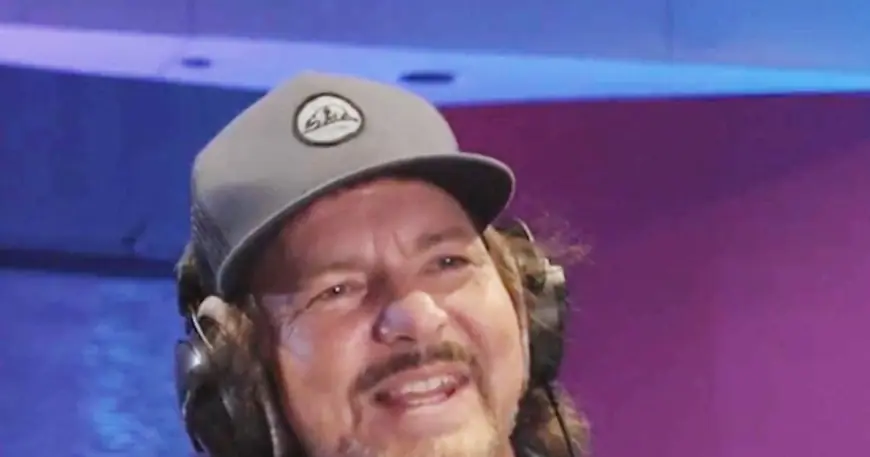
Why now: a musician’s fundraising concert became the hinge for a film that folds performance into patient stories and medical urgency. In a wide-ranging on-air conversation, howard stern hosted Eddie Vedder to unpack Matter of Time, a concert-led documentary that reframes epidermolysis bullosa (EB) through three intersecting threads—performance, families, and medical research—while highlighting years of nonprofit fundraising that have fueled dozens of projects worldwide.
Contextual rewind: why this project surfaced — and why Howard Stern made it resonate
The documentary arrives after a sustained push by advocates and donors who turned a personal connection into organized research funding; the film ties that activism to live performance, making abstract medical work feel immediate. Here’s the part that matters: the movie uses the musician’s concerts not as spectacle but as an entry point into the lives of children, the science attempting to help them, and the fundraising infrastructure that supports that science.
What’s easy to miss is the editorial choice to balance emotive concert footage with clinical and family perspectives, which helps the audience move past simplistic “hero” narratives and into a clearer view of what the condition means day to day. A brief historical note in the film traces the disease’s medical perimeter back to the 19th century, underscoring how long EB has challenged clinicians and families.
How the film is structured and what was discussed on Howard Stern
Matter of Time weaves three narrative threads: the benefit performance by the musician, the experiences of patients and families involved with the nonprofit, and the medical work represented by clinicians featured in the film. The concert footage—sourced from two solo shows staged in 2023—serves as recurring connective tissue, with songs used as transitions into interviews and observational scenes about research and caregiving.
On-air, Howard Stern and his guest navigated the documentary’s emotional weight and practical outcomes. The conversation highlighted the nonprofit’s fundraising scale, its role in supporting hundreds of research projects, and the film’s goal of raising awareness without flattening the people it depicts into clichés. The interview also touched on the artist’s other interests—surfing, painting, and music collaborations—which help humanize the figure at the center of the benefit work.
The filmmaker’s approach intentionally cuts between inspiration and reality: if a performance moment leans toward sentiment, the film counters with clinical context or family testimony. That editorial handshake keeps the audience grounded while still leveraging the musician’s platform to generate visibility and funds for ongoing research.
- Concert source: two solo shows in 2023 that function as the film’s spine.
- Documentary shape: three intersecting narratives—performance, families/advocates, medical research.
- Fundraising impact: the nonprofit connected with the film has raised substantial sums and funded well over one hundred research projects.
- Release path: premiered at a film festival in 2025 and reached a wide streaming release in February 2026 (release schedule subject to change).
It’s easy to overlook, but the real test will be whether the film sustains public attention long enough to convert awareness into further research commitments and policy engagement.
Micro Q& A (short):
Q: What sets this film apart from other charity-concert documentaries?
A: Its deliberate three-prong structure trades a single emotional arc for layered storytelling that includes medical voices and family experience alongside performance.
Q: Who benefits most immediately from the film’s exposure?
A: Families living with epidermolysis bullosa and researchers connected to the nonprofit network who rely on sustained funding and public awareness.
Q: Where can viewers find it?
A: The film premiered at a festival in 2025 and became available on a major streaming platform in February 2026.
The real question now is whether the combination of celebrity platform and careful storytelling will widen support beyond the existing donor base and translate into measurable advances for patients. If you’re wondering why this keeps coming up, note that the film explicitly links performance-driven attention to tangible fundraising outcomes—making the artist’s role part cultural platform, part fundraising engine.
Writer’s aside: The bigger signal here is how this film models a partnership between artists and medical advocates that privileges sustained effort over one-off sympathy, which may matter more for long-term research progress than applause alone.