Ultra-Cold Temperatures Key to Groundbreaking Nuclear Science

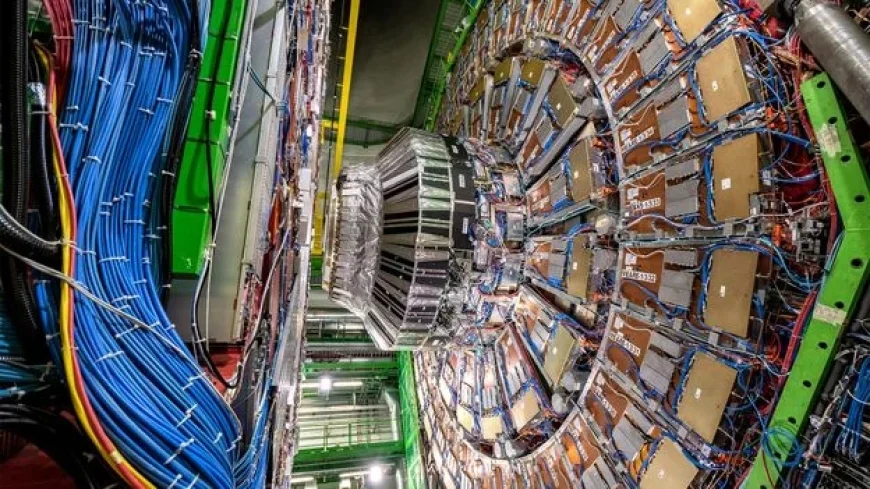
In a significant advancement for nuclear science, ultra-cold temperatures play a crucial role in the operation of the Large Hadron Collider (LHC) at CERN. With cutting-edge technology, companies like Swep are making strides in developing innovative heat exchangers that enhance cooling systems for various scientific applications.
Innovative Heat Exchanger Development
Swep, a leading manufacturer of heat exchangers, is focused on creating systems that efficiently transfer heat between fluids. These exchangers are essential in many applications, including refrigerators, heat pumps, and automotive engines. With the LHC upgrade, Swep is set to contribute significantly to the cooling of the LHC’s Atlas experiment.
Revolutionary Cooling Technology
The new heat exchanger designed by Swep aims to achieve temperatures as low as -45°C (-49°F). This will help minimize electronic noise caused by radiation, thus improving the overall functionality of the Atlas experiment. Notably, this system utilizes carbon dioxide as a refrigerant, providing a more sustainable alternative compared to previous greenhouse gases used.
- Temperature Goal: -45°C (-49°F)
- Refrigerant Used: Carbon dioxide
- Application: Cooling systems in scientific experiments and industrial processes
Sustainability and Broader Applications
The shift to carbon dioxide refrigerants represents a broader trend towards reducing climate-damaging substances in cooling technologies. This transition not only enhances LHC’s performance but also opens new possibilities for commercial applications, such as in supermarket chill cabinets.
Future Implications for Cooling Technology
Several companies are actively pursuing their carbon dioxide heat exchanger technologies, reflecting an industry-wide move towards environmentally friendly options. Yifeng Yang, the director at the Institute of Cryogenics at the University of Southampton, has noted the widespread use of vapour compression cycles in refrigeration systems. This method is effective for cooling various environments, including large scientific facilities like the LHC.
As global efforts towards sustainability continue, innovations like these in nuclear science and cooling technology will play a pivotal role in shaping a more environmentally friendly future.
The po