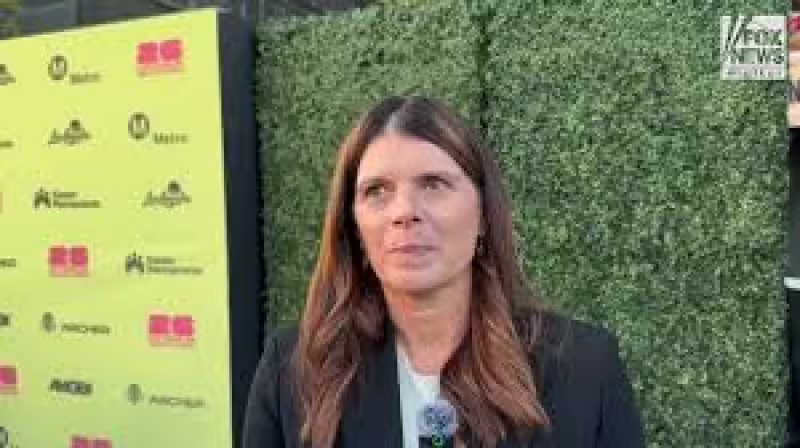
“Representing the U.S., wearing the colors and the badge, meant everything for us,” Mia Hamm said in a digital interview on the eve of the 2026 FIFA World Cup, summing up why she still remembers the 1999 tournament as a defining moment of her life and American soccer.
Hamm spoke as the 2026 FIFA World Cup officially arrived, linking a tournament that transformed women’s soccer in the United States to the globe’s biggest soccer event now underway. She said the chance to play a World Cup on home soil “is so special,” and that she “never took it for granted” to wear the Stars and Stripes for as long as she did.

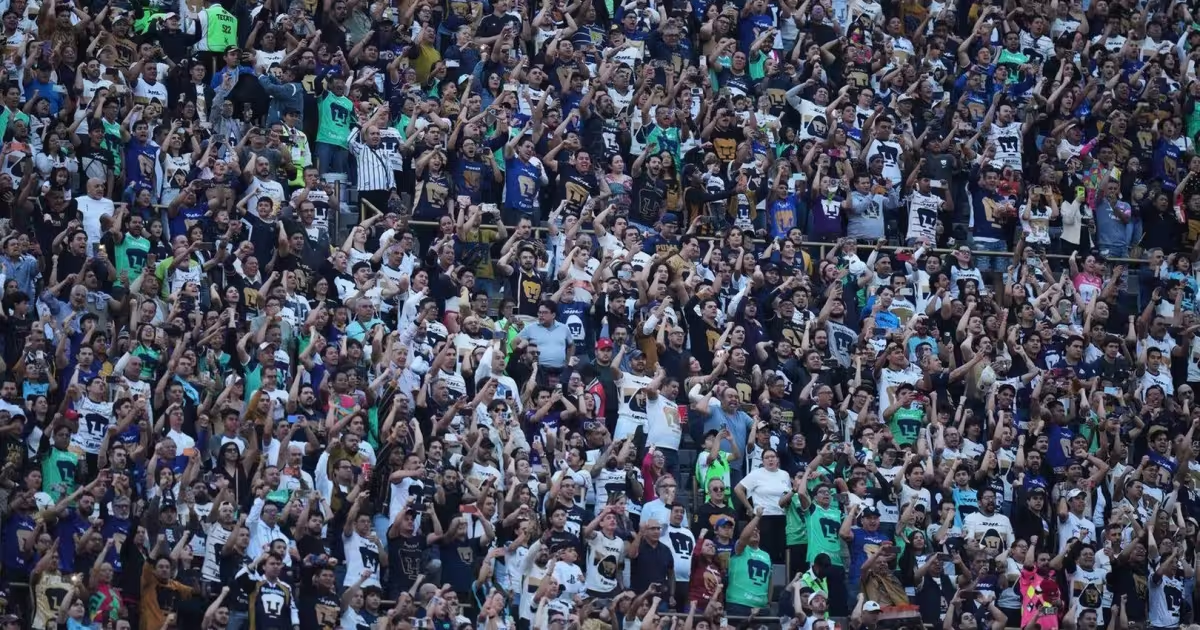
The detail that underlined her account was small and unmistakable: fans who arrived early and made the day their own. “To see people in our jerseys, tailgating, playing pickup in the parking lot two hours before the match, just said that this was different,” Hamm recalled — a memory that helped turn the 1999 Women’s World Cup, where the United States beat China for its first world title, into a cultural moment.
That 1999 final, and the build-up to it, sits beside another U.S. moment on the soccer calendar: the 1994 men’s World Cup, both events credited with bringing soccer larger audiences in America. Hamm’s account rode that same wave of intimacy and civic ownership, the feeling that a national team’s success belonged to anyone who put on a jersey or showed up to a parking lot kickabout.
There is friction beneath the nostalgia. In recent seasons, some athletes and observers have argued that wearing American colors has become politicized or even divisive. Hamm’s memories stand in clear contrast: for her, the badge was not a statement but a responsibility and a source of joy — “something you dream about as a kid,” she said — a reminder that representation can be a personal honor rather than a public controversy.
Hamm did not try to draw a straight line from 1999 to the present. She framed the past as a lived, sensory experience — the noise, the tailgates, the pickup games — not as a prescription for how the sport must look today. By limiting her comments to what she wore and what she felt, she left unanswered a central question now that the 2026 tournament has begun: will this World Cup recreate the communal, homegrown fervor Hamm described, or will the modern landscape of sport and politics produce a different relationship between fans and the national badge?
The tournament itself will provide the next chapters. For now, Hamm’s voice is a reminder of what happened in 1999 — a U.S. team winning its first world title and a country suddenly treating women’s soccer as a shared spectacle — and of what remains unclear as stadiums fill across North America: whether 2026 will echo that particular kind of unity or write a new one altogether.