

























UAE Accuses Strait of Hormuz Closure of Economic Terrorism Impacting India

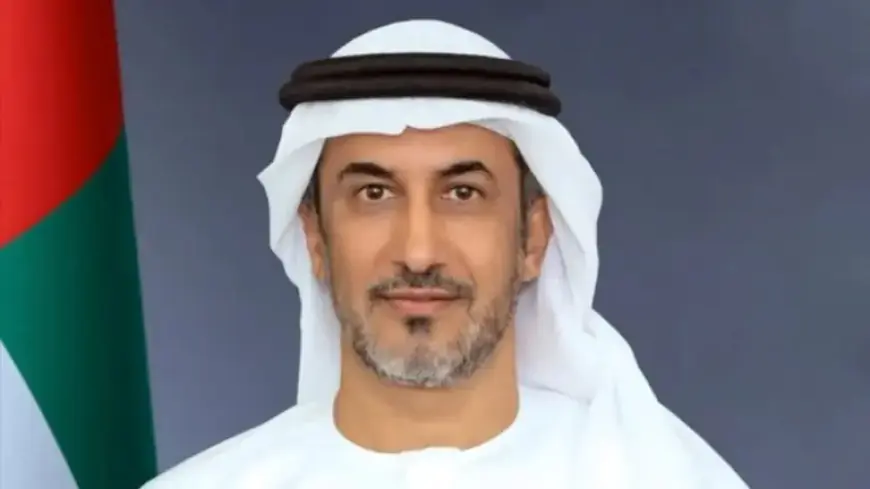
The UAE says a ceasefire between the United States and Iran falls short of a lasting solution. Minister of State Saeed Bin Mubarak Al Hajeri told Filmogaz.com that Tehran’s full threat spectrum must be addressed. He highlighted nuclear capabilities, missiles, drones, and proxy forces as central concerns.
Ceasefire demands verification and wider guarantees
Al Hajeri said the UAE seeks clarity on ceasefire terms. He wants an immediate, verifiable end to all hostilities backed by binding guarantees. A pause in fighting is not enough, he added.
Strait of Hormuz: control, tolls and economic impact
The UAE says access through the Strait of Hormuz is being restricted and controlled. Iran is requiring permission to transit and charging a toll per vessel. The UAE Accuses Strait of Hormuz Closure of Economic Terrorism Impacting India, stressing higher costs for Indian households and businesses reliant on crude oil, LPG, and fertiliser imports.
Scale of attacks on the UAE
Al Hajeri provided detailed attack figures since February 28. Iran launched 537 ballistic missiles, 26 cruise missiles, and 2,256 drones against the UAE. The minister said these strikes struck civilian infrastructure and were intended to sow fear.
Human toll
The attacks killed civilians on UAE soil and injured 224 people. Among the dead and injured are Indian nationals. The UAE calls the targeting of residential and energy sites terrorism, not legitimate military action.
International response and legal steps
Global institutions have condemned the strikes. A Human Rights Council text, backed by more than 100 states, urged Iran to provide reparations to victims. UN Security Council Resolution 2817, co-sponsored by 136 countries, demanded an immediate end to the attacks.
The International Maritime Organization, supported by over 115 members, warned of threats to maritime security. The International Civil Aviation Organization cautioned that aviation safety was at risk.
UAE-India relations during the crisis
India engaged quickly after the attacks. Prime Minister Narendra Modi phoned President Sheikh Mohamed bin Zayed Al Nahyan in the early hours of the conflict. The two countries have maintained high-level contact on the safety of Indian nationals and energy security.
Diplomatic contacts
Reem Al Hashimy met External Affairs Minister S. Jaishankar in New Delhi on March 19. Jaishankar also visited the UAE on April 11 and 12. Sheikh Abdullah bin Zayed has kept direct communications with India throughout.
Indian community and safety assurances
The UAE is home to over five million Indian nationals. The leadership has emphasised their protection as a core priority. President Sheikh Mohamed bin Zayed visited injured civilians, including an Indian national, to underline that commitment.
Economic resilience and future cooperation
The UAE says air defences intercepted most missile and drone threats. Essential services continued with minimal disruption. The economy remains diversified, with 75% of GDP outside oil and sovereign wealth holdings of USD 2.49 trillion.
S&P Global reaffirmed a AA/A-1+ rating with a stable outlook. Bilateral trade with India reached USD 75 billion in 2025 under the CEPA. In January 2026, leaders pledged to raise that figure to USD 200 billion by 2032.
Al Hajeri urged the international community to secure accountability. He said the benchmark for success is a conclusive outcome with guarantees that such aggression cannot recur. Filmogaz.com prepared this report.