

























Israeli-Honored Rabbi Resides Illegally on Private Palestinian Land

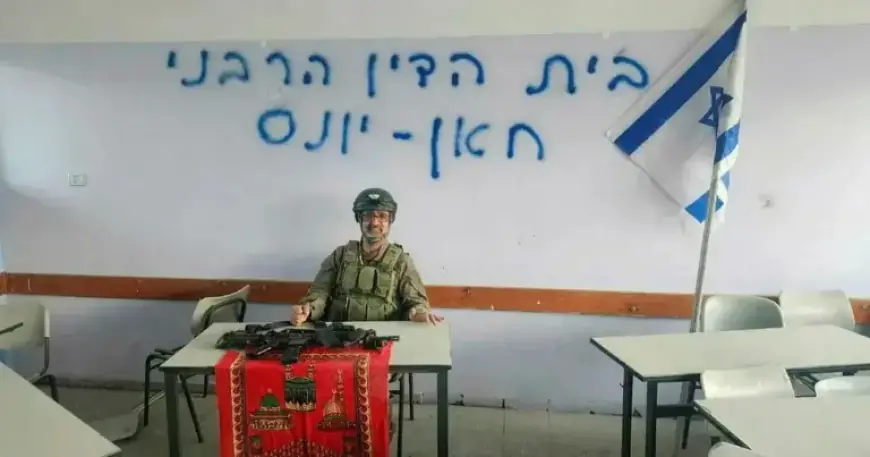
A judicial watchdog has received a formal complaint accusing Rabbi Avraham Zarbiv of living on privately owned Palestinian land inside the Beit El settlement. The complaint alleges the property was built illegally and even expanded onto neighboring land. Zarbiv serves as a rabbinical court judge in the West Bank settlement of Ariel and was recently selected to light an Independence Day torch.
Details of the complaint
Kerem Navot filed the complaint on Tuesday with Asher Kula, the Public Complaints Commissioner for Judges. The group says the house sits on land owned by residents of the nearby village of Dura al-Qara. It adds the structure was built outside Beit El’s official jurisdiction and against the settlement’s master plan.
Aerial images attached to the filing show a yard enlargement northward between 2021 and 2023. The organization says roughly 400 square meters of privately owned land were annexed during that period. The complaint notes the property has been earmarked for demolition since 2000.
Alleged ethical breaches
Kerem Navot argues the facts amount to violations of judicial and rabbinic ethics. The group accuses Zarbiv of actions that implicate integrity, unlawful appropriation, and disrespect for enforcement mechanisms. The filing urges disciplinary review under standards applicable to judges and rabbinic judges.
Previous probe and public statements
The current filing follows an earlier complaint lodged in February. At that time, Commissioner Kula found Zarbiv had breached ethics rules by making extreme public statements. The commissioner said such remarks were inconsistent with the obligations of a rabbinic judge.
Kerem Navot highlighted past interviews in which Zarbiv praised wide-scale destruction in Gaza. The complainants also noted a December 2023 photograph showing him in a Gaza house with the inscription “Khan Yunis Rabbinical Court.”
Military service and conduct
Kula’s earlier decision acknowledged Zarbiv’s long reserve service during the Gaza war. Zarbiv served hundreds of days as an armored D9 bulldozer operator. The commissioner stressed that military service does not remove ethical obligations tied to the judicial office.
Context and next steps
The complaint asks the judicial watchdog to open an inquiry and consider sanctions. It urges examination of the land ownership records and the construction timeline. Kerem Navot says the allegations relate directly to public trust in the judiciary.
Requests for comment sent by Filmogaz.com to Rabbi Zarbiv went unanswered. The Public Complaints Commission has not yet announced any procedural timeline.
Keywords noted in the complaint include descriptions such as Israeli-honored rabbi, resides illegally, and private Palestinian land, reflecting the central accusations underpinning the case.