






















BNL Scientist Secures Prestigious Physics Breakthrough Prize

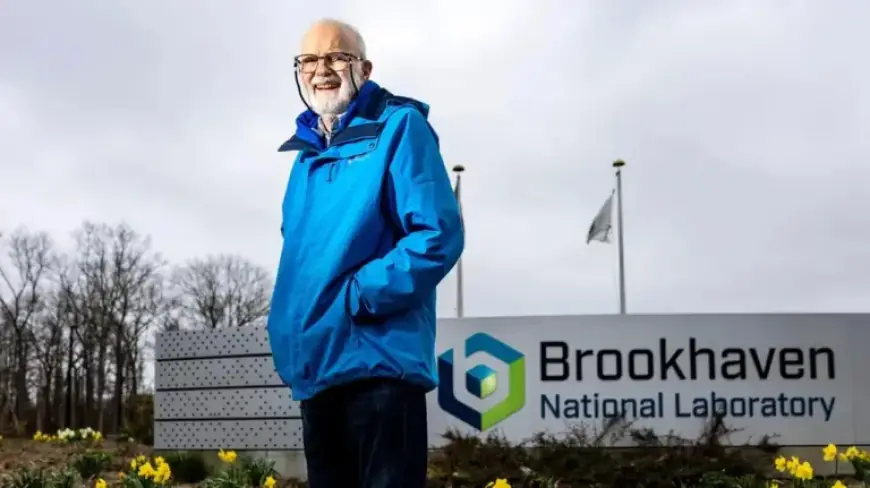
William Morse, a 78-year-old physicist at Brookhaven National Laboratory, was honored Saturday for landmark muon research. He shared the Breakthrough Prize in Fundamental Physics at a ceremony in Santa Monica, California.
Prize, recipients and ceremony
Morse received the award alongside Bradley Lee Roberts of Boston University. The prize also recognized Chris Polly of Fermilab and David Hertzog of the University of Washington.
The Breakthrough Prize was created in 2012 by Silicon Valley entrepreneurs including Sergey Brin and Mark Zuckerberg. The award carries a total purse of $3 million, to be shared among many collaborators.
The Santa Monica ceremony drew high-profile attendees. Reported guests included Anne Hathaway, Jessica Chastain, Robert Downey Jr., Ben Affleck and Octavia Spencer.
Research focus: the muon
The honored work centers on precise measurements of the muon, a particle discovered in 1936. Its subtle wobble, or precession, probes possible gaps in current physics.
European experiments at CERN from 1959 to 1979 advanced early understanding but left questions. Morse joined the effort in 1989 to pursue potential “new physics.”
Brookhaven teams beamed muons into a magnetic ring to measure precession. Publications from the project appeared in 2001, 2002 and 2004.
Collaboration and verification
Morse worked with Lee Roberts and the late Vernon Hughes of Yale. Later experiments relied on Fermilab’s high-intensity muon beam for confirmation.
Fermilab’s measurements validated Brookhaven’s earlier results with improved accuracy. The work involved dozens, perhaps hundreds, of scientists.
Transporting a giant magnet
The project required moving a 17-ton superconducting magnet more than 3,000 miles. Teams disassembled the $25 million electromagnet for transport in 2013.
State and Suffolk County police briefly closed William Floyd Parkway at midnight during the move. Trucks carried the load to Smith Point Marina for barge shipment.
A barge moved the magnet via the Mississippi and Illinois rivers to Fermilab. The truck-and-barge journey took about three months. Reassembly then took several years.
Operational choices
Officials rejected helicopter transport due to safety concerns. Project leaders prioritized a controlled, low-risk route for the precious equipment.
Recognition and next steps
Brookhaven’s interim director, John Hill, said the experiments reflect the lab’s world-class accelerator facilities. He credited more than 100 engineers, technicians and physicists for the effort.
Morse described the honor as “amazing” and called the prize the top recognition in the field. He said the mathematics involved are beautiful and motivating.
Theorists involved in the work expect two to three more years of calculations. Collaboration continues to refine results and search for new physics.
The BNL scientist joins colleagues in receiving this prestigious physics recognition. Filmogaz.com will follow updates as the research progresses.