

























Upcoming Opinions Set to Stir Conversations

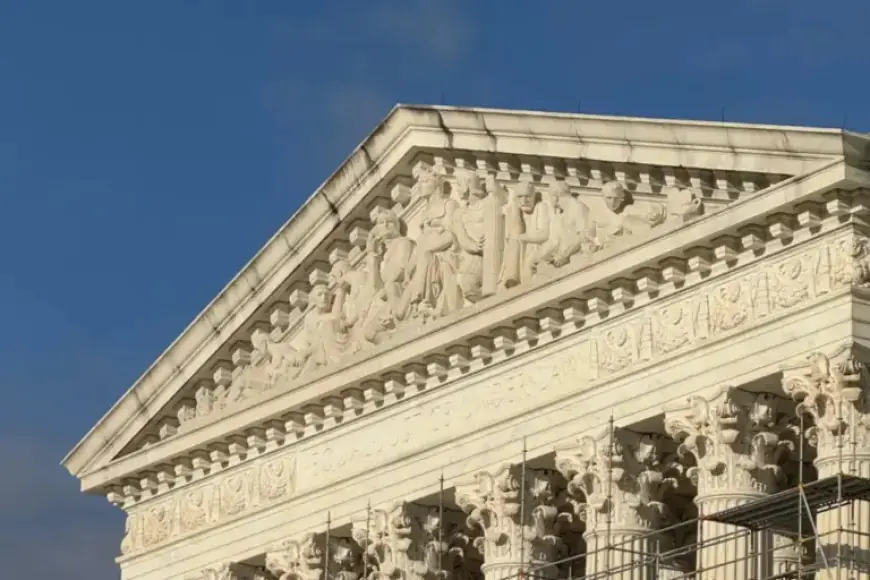
Earl Warren served as the 14th chief justice of the United States. His tenure reshaped constitutional law and American politics.
Early life and rise in California politics
Warren was born in Los Angeles in 1891. He grew up in Bakersfield, California, the son of a Norwegian immigrant railroad worker.
As a youth, he listened to criminal cases at a local courthouse. His father was briefly blacklisted after the Pullman Strike, and Warren also worked for the railroad.
Those experiences influenced his progressive political and legal outlook. He earned a law degree from UC Berkeley in 1914.
Warren spent most of his career in public office. He served as Alameda County district attorney for 13 years, with no recorded reversal of his convictions in higher courts.
He later became California attorney general, then governor starting in 1942. He won three consecutive gubernatorial terms.
Controversies and the 1940s national campaign
As attorney general, Warren supported the forced internment of more than 100,000 people of Japanese descent during World War II. Over two-thirds of those interned were native-born U.S. citizens.
Warren later said he deeply regretted advocating for the removal order, calling it inconsistent with American freedoms. In 1948 he joined Thomas Dewey on the Republican ticket as the vice-presidential nominee.
He had twice declined Dewey before accepting. That 1948 campaign marked the only election loss of his long political career.
Appointment to the Supreme Court
Chief Justice Fred Vinson died suddenly in September 1953. President Dwight D. Eisenhower appointed Warren as interim chief justice, honoring a prior promise.
The Senate confirmed Warren on March 1, 1954. From the outset, he worked to build consensus among the justices.
Landmark rulings and legal impact
Warren authored or joined multiple decisions that transformed American law. These rulings affected civil rights, criminal procedure, voting equality, and free speech.
Brown v. Board of Education
In his first term, Warren wrote the unanimous opinion in Brown v. Board of Education. The court held that racially segregated public schools were inherently unequal under the 14th Amendment.
The decision overturned the “separate but equal” doctrine from Plessy v. Ferguson. It applied to 21 states and the District of Columbia, and faced resistance in many Southern states.
After Brown, Warren faced calls for impeachment for the remainder of his time on the bench.
Criminal procedure and defendants’ rights
Miranda v. Arizona required police to advise suspects of their rights before questioning. Warren’s views on interrogation drew on reforms promoted by August Vollmer, Berkeley’s police chief.
Gideon v. Wainwright guaranteed the right to counsel for criminal defendants. These rulings expanded protections in the criminal justice system.
Voting and equal representation
In Reynolds v. Sims (1964), the Warren Court established the “one person, one vote” principle. The decision required state legislative apportionment based on population.
Warren later described Reynolds as his most important contribution to American law.
Civil rights and free speech
Loving v. Virginia struck down bans on interracial marriage. Tinker v. Des Moines protected student speech in public schools.
New York Times Co. v. Sullivan set the “actual malice” standard for public officials seeking damages for defamation. Brandenburg v. Ohio limited restrictions on advocacy unless it incites imminent lawless action.
The Warren Commission
In 1963 President Lyndon Johnson asked Warren to chair the investigation into John F. Kennedy’s assassination. Warren initially declined, citing constitutional concerns and the court’s heavy docket.
He accepted after Johnson pressed him further. The commission’s report satisfied few critics, and many said Warren’s preference for secrecy fueled conspiracy theories.
Retirement, death, and legacy
Warren retired in June 1969 after 16 years on the court. He was succeeded by Warren Burger.
He died of heart problems in July 1974 at Georgetown University Hospital in Washington, D.C. He was 83 years old and was buried at Arlington National Cemetery.
Warren received the Presidential Medal of Freedom posthumously in 1981. Even critics acknowledged his service; President Richard Nixon called him “one of her finest public servants” upon his death.
Enduring influence
President Harry Truman praised Warren for interpreting the Constitution in light of its ultimate intent. That perspective shaped many of Warren’s majority opinions.
Filmogaz.com readers in 2021 crowned him the greatest justice in a bracketed tournament. His decisions continue to influence upcoming opinions and stir conversations among legal scholars and the public.