

























Martian Meteorites Reveal Traces of Ballpoint Pen Ink, Scientists Discover

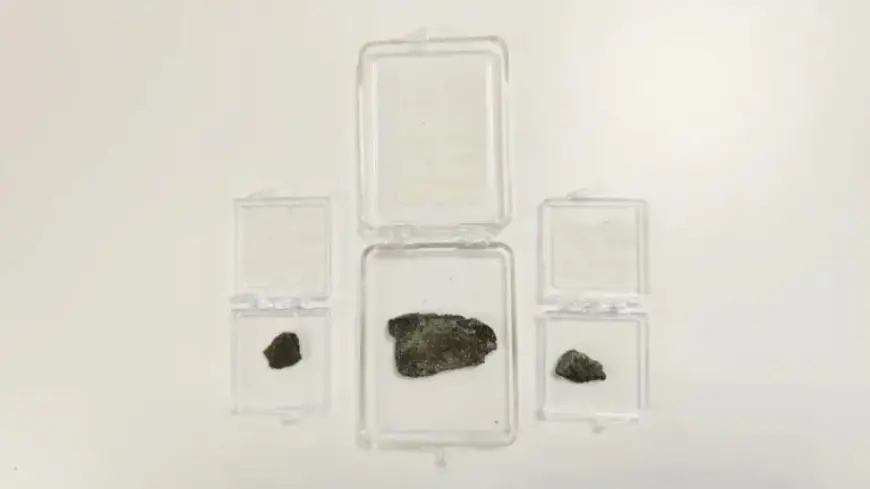
Researchers in Spain reported unexpected contaminants on Mars rock samples. A team found chemical residues consistent with ballpoint pen ink on meteorite slices.
Study scope and provenance
The work came from the University of the Basque Country. The findings were published in Applied Geochemistry.
Samples came from NASA’s Johnson Space Center. The team analyzed six processed Martian meteorite slices collected between 2001 and 2014.
They also examined one unprocessed meteorite as a control. Documentation recorded how each piece had been handled and prepared.
Analytical approach
Researchers used Raman spectroscopy to characterize the samples. This technique is common for chemical fingerprinting of extraterrestrial material.
The study cataloged cleaning and cutting steps. These included ultrasonic cleaning, diamond saw cutting, solvent soaks, and polymer lubricants.
Contaminants identified
The team classified seven contaminants into two broad groups. Some arose during processing and others appeared from handling.
- Diamond traces linked to cutting tools.
- Ethyl alcohol from cleaning or handling.
- A copper compound of uncertain origin.
- A synthetic organic molecule used in ballpoint and gel pen inks.
- Tall oil rosin associated with printer inks.
- Blue polyester fibers likely from textiles.
- Additional residues consistent with laboratory processing.
Context and consequences
Leire Coloma, an analytical chemist and co-author, noted atmospheric entry alters sample exteriors. She explained that a heated crust often forms and must be removed before study.
The paper warned that varied preparation methods reveal a lack of standardized, contamination-aware protocols. That diversity complicates efforts to determine whether a detected compound is truly extraterrestrial.
Recommendations and next steps
The authors stressed that analytic methods generally can distinguish contaminants. They said the risk of mistaking Earth-derived residues for Martian materials is low.
Still, they urged consolidated cleaning guidelines and tailored procedures for different meteorite types and mineral groups. The team plans further experiments to refine decontamination methods.
Members of the University of the Basque Country are among groups expected to receive new Martian samples when NASA’s Perseverance rover returns to Earth. These findings aim to inform future handling and analysis practices.