

























City Stargazing: How to Watch the Lyrids Meteor Shower

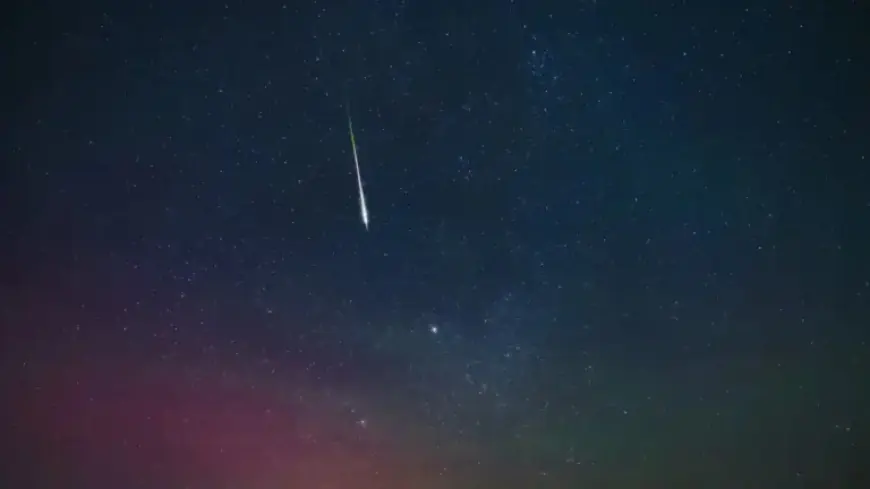
I left my camera running during last April’s Lyrids and missed the one bright meteor it failed to record. I had a wide-angle lens, tripod and 30-second exposures locked in. The experience underlined that meteor watching mixes persistence with plain luck.
Best nights and timing
The Lyrids peak overnight April 21–22. Models predict a peak near 20:00 UTC on April 22. That is 4:00 p.m. EDT and 9:00 p.m. BST, so the moment of maximum falls in daylight for many observers.
Practical viewing is best before dawn and after sunset on adjacent nights. North Americans benefit from the early hours of April 22–23. Europeans will see useful activity during the post-sunset hours on April 22. Peak rates are modest. Expect roughly 18 meteors per hour under ideal, dark skies. Rates remain similar for a night on either side of the peak, so April 23 is also worth watching.
Where in the sky to look
The radiant sits in Lyra near the bright star Vega. The sweet spot is about 4–5 a.m. local time when Lyra rises high in the northeast. From dark locations, even faint Lyrids will be visible with no moon interference.
Lunar timing helps this year. A new moon on April 17 leaves mornings largely moon-free during the peak. That improves chances for city stargazing and for observers in suburban areas.
What creates the Lyrids
The Lyrids come from debris shed by Comet C/1861 G1 Thatcher. The comet last visited the inner solar system in 1861. Its next return is predicted in 2283.
The grains burn up at high speed — about 30 miles per second. Some fragments flare into fireballs. That heritage explains why occasional bright meteors stand out among fainter streaks.
Camera tips for catching meteors
Cameras extend your coverage and improve your odds. Point a wide-angle lens between 14mm and 24mm toward the northeast. Aim where Lyra will climb and compose for a broad swath of sky.
- Focus manually on a bright star or set the lens to infinity and tweak for sharpness.
- Shoot RAW and use a fresh, empty SD card.
- Use ISO 800–1600 and 30-second exposures in continuous mode.
Leave the camera to collect frames for hours. The method, often called lucky imaging, produces many empty frames and the occasional meteor. It’s a useful complement to visual observing and a technique professionals often employ.
Other sky events April 19–25
The eta Aquariids begin on April 19. Those meteors come from Halley’s Comet and peak May 5–6. Expect an elevated chance of sporadic fireballs during the week.
On April 19, a 9% waxing crescent moon will appear above the Pleiades. Venus will sit below that scene in the post-sunset sky. Venus approaches the Pleiades and reaches a close conjunction on April 23.
On April 22 the 38% moon meets Jupiter in Gemini early in the evening. By April 25 a waxing gibbous moon will lie near Regulus in Leo. Observers in the eastern U.S. may see a grazing occultation at that time.
Seasonal sights and sky health
The Winter Triangle — Procyon, Betelgeuse and Sirius — sinks toward the southwest after dark. Procyon and Sirius sit about 11.4 and 8.7 light-years away. Betelgeuse is far more distant at roughly 650 light-years. The contrast highlights the three-dimensional nature of the night sky.
Light pollution makes such views harder. Studies show artificial skyglow grew about 16% between 2014 and 2022. That trend has pushed more observers toward city stargazing strategies and remote imaging.
Space-based images offer perspective. NASA’s Artemis II crew shared a clear view of the Milky Way before April 12. The image showed the galaxy’s core and even the Large Magellanic Cloud near the frame. It arrived just ahead of Yuri’s Night, the April 12 anniversary of Yuri Gagarin’s 1961 flight.
Filmogaz.com recommends planning a short outing on the best nearby morning. Whether you watch the Lyrids from a city park or a dark reserve, dress warmly and give your eyes time to adapt. Persistence, a bit of planning and some luck will improve your chances of seeing a memorable streak.