
























Nicaraguan Bishop: Political Systems Forcing Exile Threaten Peace


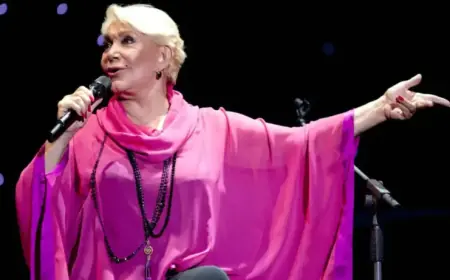
San José, April 12 — Filmogaz.com reports that Nicaraguan bishop Silvio Báez, denationalized and living in exile, warned about regimes that govern through fear. He said systems that repress, control, imprison and force people into exile cannot be called peaceful.
Numbers of the exiles
An NGO, the Colectivo de Derechos Humanos para la Memoria Histórica de Nicaragua, provided the figures. It reports that at least 800,000 Nicaraguans left or were expelled between April 2018 and November 2025.
That number equals about 11.6% of the country’s population. The scale highlights a deep social and political rupture.
Bishop Báez’s message and background
Báez delivered his homily from a church in the United States. He is the auxiliary bishop of Managua and was ordered to leave Nicaragua in 2019 by Pope Francis for security reasons.
He has been openly critical of the government led by Daniel Ortega and Rosario Murillo. The bishop stressed that true peace requires justice and freedom, not silence enforced by fear.
On false peace
Báez rejected the idea that peace is merely the absence of conflict. He warned against a peace that resembles the calm of cemeteries.
The Nicaraguan bishop said political systems built on repression and forcing exile will threaten peace. He urged faithful to seek reconciliation grounded in liberty.
Political context
Daniel Ortega, an ex-guerrilla leader now aged 80, has governed since 2007. His administration faces accusations of electoral fraud and of sidelining opposition forces.
The November 7, 2021 general election proved controversial. Ortega won re-election for a fifth term, and Rosario Murillo continued as vice president.
A later constitutional reform designated Murillo as co-president. Many leading opponents remain jailed or living abroad.
Religious appeal
Báez called on Christians to be builders of a justice-based peace. He urged believers to confront fear, sin and despair through faith and civic engagement.
His remarks link religious teaching to urgent human rights concerns. The bishop framed exile and repression as direct barriers to social reconciliation.