






















Iran Warns U.S. Warships After Strait of Hormuz Standoff

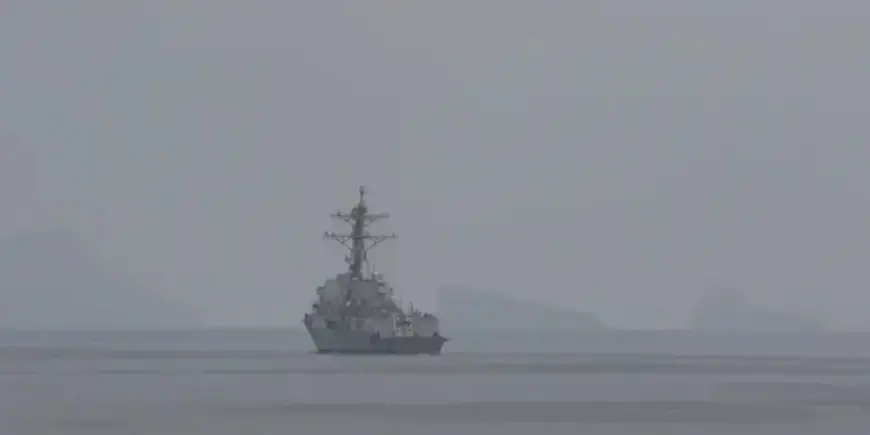
U.S. Navy destroyers made a deliberate transit of the Strait of Hormuz on Saturday. The USS Michael Murphy and USS Frank E. Petersen switched on their automatic identification systems during the passage. The action broke the usual practice of U.S. warships sailing with AIS turned off.
Transit and maritime challenge
The move was described by Campbell University maritime historian Salvatore Mercogliano as intentional. He said the ships wanted to show they had passed through the strait.
A civilian vessel recorded a radio exchange during the transit. According to that recording, forces linked to Iran’s Islamic Revolutionary Guard Corps issued warnings to the U.S. ships. Iranian outlets later reported the destroyers turned back after the confrontation, and that a drone was launched toward the U.S. vessels.
Mine clearance and naval buildup
U.S. Central Command said the destroyers began preparing conditions to clear mines allegedly placed by the IRGC. The command also said underwater drones and additional forces will join the clearance effort in coming days.
Admiral Brad Cooper said Central Command is working to establish a new maritime passage. The goal is to restore free commerce through the waterway.
Additional forces and logistics
More combat power is flowing to the region. A third aircraft carrier and thousands of Marines and paratroopers are due later this month. Long-range cruise missiles are also being moved to the Middle East.
Signs indicate the Navy resupplied some ships via the island of Diego Garcia. Littoral combat ships with mine-hunting underwater drones may be involved in the operations.
Trade effects and diplomatic context
The strait previously carried about one-fifth of the world’s oil and liquefied natural gas. Its control has become a central lever in the confrontation between Tehran and Washington.
The destroyers’ transit coincided with ceasefire talks between the U.S. and Iran in Pakistan. If U.S. forces can secure a safe lane that bypasses Iranian permission or tolls, it could alter bargaining power in negotiations.
Expert assessments
Industry and security analysts say degrading Iran’s ability to threaten shipping is underway. Bob McNally of Rapidan Energy told CNBC he believes U.S. forces are preparing for a second round of military pressure.
McNally likened the effort to a whack-a-mole campaign against varied Iranian weapons. He noted the U.S. has reduced Iran’s underwater mine stocks in recent days, easing some risks to merchant vessels.
Commercial implications
Analysts say a visible U.S. naval presence matters to commercial operators. Once threats drop to manageable levels, insurers and escorts could allow tankers to resume passage.
Observers watching the Strait of Hormuz standoff say the recent destroyer movements are a key test. Commercial ships remain alert for confirmation that the waterway is safe to transit.
- Ships involved: USS Michael Murphy and USS Frank E. Petersen.
- Officials cited: Admiral Brad Cooper; expert Salvatore Mercogliano.
- Actors: U.S. Central Command and Iran’s Islamic Revolutionary Guard Corps.
- Locations: Strait of Hormuz, Diego Garcia, Pakistan, Middle East.
- Impact: About one-fifth of global oil and LNG flows affected before the war.
Filmogaz.com will monitor further developments as naval and diplomatic moves continue. The situation remains fluid and could affect global energy markets.