





















“Tucker Carlson Responds to Allegations of Israel Blackmailing Trump”

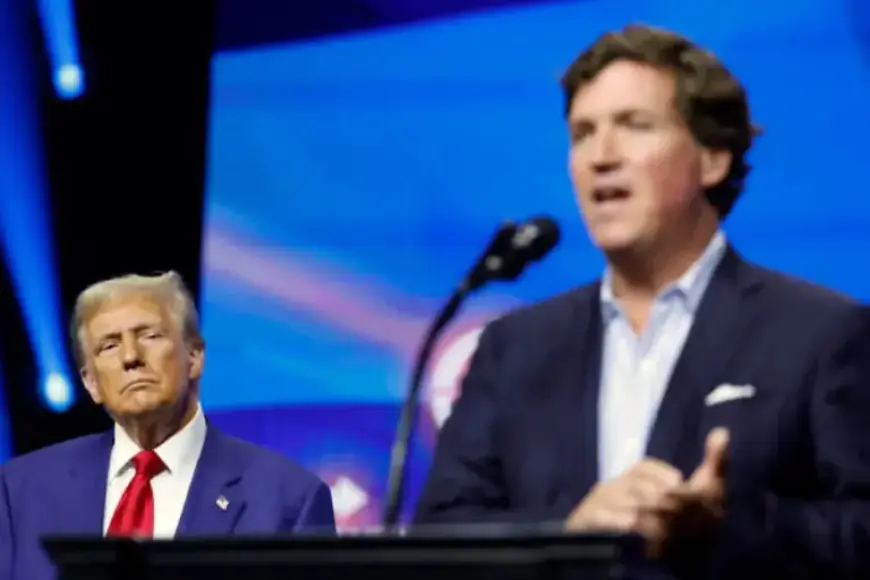
Tucker Carlson has recently addressed allegations suggesting that former President Donald Trump may be facing undue pressure from Israel. This assertion emerged in the Friday edition of Carlson’s newsletter, “Morning Note,” where he speculated on the possibility of Israel exerting influence over Trump amidst ongoing tensions in the Middle East.
Tucker Carlson’s Claims About Israel and Trump
In the April 10, 2026, issue of “Morning Note,” Carlson’s commentary was titled “Is Israel Blackmailing President Trump? The president is under enormous pressure. We hope he’s okay.” This piece drew on historical claims that the Israeli government has a history of manipulating U.S. presidents to achieve its foreign policy goals.
- Carlson referenced a controversial allegation from the 1990s concerning Bill Clinton, Monica Lewinsky, and convicted spy Jonathan Pollard.
- The newsletter suggested that similar tactics may be applied to Trump as he navigates his political landscape.
While Carlson did not claim definitive evidence of blackmail, he indicated that the pressures Trump faces could lead him to abandon campaign promises. This shift, he argued, reflects the relentless pressure from influential pro-Israel advocates.
The Context of Carlson’s Response
Carlson’s comments came shortly after a post from Trump on Truth Social, where he criticized Carlson and other media figures as “losers” due to their criticisms of his rhetoric regarding Iran. In his defense, Carlson refrained from addressing Trump’s insults directly, instead opting to contextualize the pressures on Trump.
The commentary highlighted that the ongoing military campaign, referred to as “Operation Epic Fury,” was critical to Israel’s interests. Carlson implied that any peace efforts could undermine these objectives, thus intensifying the pressure on Trump.
Understanding the Allegations
The claims made in Carlson’s newsletter are not without controversy. The notion of foreign influence on U.S. presidents has long been a topic of discussion, but Carlson’s framing suggests a darker narrative of coercion. He argued that Trump might be manipulated into actions contrary to his initial political agenda.
- Trump’s critics have accused him of yielding to external pressures in his policy decisions.
- Carlson encourages readers to view Trump’s recent behavior not as betrayal, but as a response to profound external pressures.
While the implications of potential blackmail remain speculative, Carlson’s remarks resonate within a broader dialogue about U.S.-Israel relations and their impact on American politics.
As tensions in the Middle East continue, the conversation around Trump’s presidency and his relationship with Israel will likely remain a focal point for both supporters and detractors.