








How The Cure Continues to Captivate Young North American Fans


The Cure have remained a vital musical presence for more than four decades. Formed in Crawley, England, in 1976, the band centers on frontman Robert Smith.
Early years and punk roots
The group began amid the late 1970s punk wave. Original line-up included Michael Dempsey on bass and Laurence Tolhurst on drums.
They signed to Fiction Records in 1978. Their debut album Three Imaginary Boys arrived in 1979.
The goth era and Pornography
The Cure shifted toward darker textures in the early 1980s. Pornography, released in 1982, anchored that phase.
Tracks such as A Short Term Effect and The Hanging Garden emphasized dense guitars and driving bass. Simon Gallup later joined on bass, while Perry Bamonte contributed on keys.
Pop breakthrough and MTV exposure
The band lightened its sound mid-decade. The Head on the Door (1985) produced In Between Days and Close to Me.
The Close to Me video drew heavy MTV play. Kiss Me, Kiss Me, Kiss Me followed in 1987 and delivered Just Like Heaven.
Disintegration and late-1980s peak
Disintegration arrived in 1989 as an expansive 70-minute record. Songs like Lovesong, Pictures of You, and Fascination Street became staples.
The album reached No. 12 on the Billboard chart, their highest U.S. placement. It resonated with listeners amid a shifting alternative landscape.
1990s experimentation and arena success
Wish, released in 1992, yielded Friday I’m in Love and A Letter to Elise. Friday I’m in Love reached No. 18 on the Billboard Hot 100.
Tours in North America grew larger, with shows in Chicago and Los Angeles. Festivals such as Lollapalooza expanded their audience.
2000s records and continued creativity
The Cure (2004), produced by Ross Robinson, mixed older and newer sounds. Songs like The End of the World and Alt.End appealed to younger rock fans.
4:13 Dream appeared in 2012 and included Sleep When I’m Dead. Vinyl reissues and Greatest Hits (2001) kept catalog interest strong.
Robert Smith: icon and curator
Robert Smith remains the band’s public face. Married to Mary since 1980, he has curated festivals and kept a low tolerance for fame.
Smith adopted social media in 2019 with a Twitter presence. His look and voice influence many contemporary artists.
Influence on modern artists and platforms
Contemporary musicians cite The Cure as an influence. Names include Billie Eilish, Olivia Rodrigo, Phoebe Bridgers, and Hayley Williams.
The band’s sound appears in indie songwriting and pop production. TikTok trends and streaming playlists also keep older tracks in circulation.
Why young North American fans connect
Youth in the United States and Canada discover The Cure through parents, algorithms, and vinyl shops. Their themes of love, loss, and longing feel immediate.
The Cure continue to captivate young North American fans because their music balances melody and emotion. That balance suits late-night listening and playlist discovery.
Essential tracks and albums
- Boys Don’t Cry — early anthem and radio staple.
- Just Like Heaven — their biggest U.S. hit, peaked at No. 40 on Billboard.
- Friday I’m in Love — reached No. 18 on the Billboard Hot 100.
- Disintegration — widely regarded as their masterpiece; No. 12 on Billboard.
- Three Imaginary Boys, Seventeen Seconds, Faith, Kiss Me, Kiss Me, Kiss Me — key albums for new listeners.
Live performance and legacy
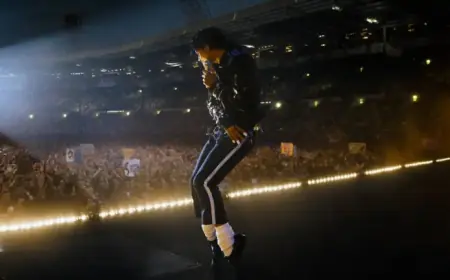
The Cure are known for marathon concerts, often approaching three hours. Fans fill venues like Fenway Park and Madison Square Garden.
Worldwide sales exceed 30 million albums, and streaming totals run into the billions. Their songs still inspire communal singalongs and emotional release.
For more coverage and deeper lists, visit Filmogaz.com.