


















Crew Begins Preparations for Cygnus Cargo Mission Launch

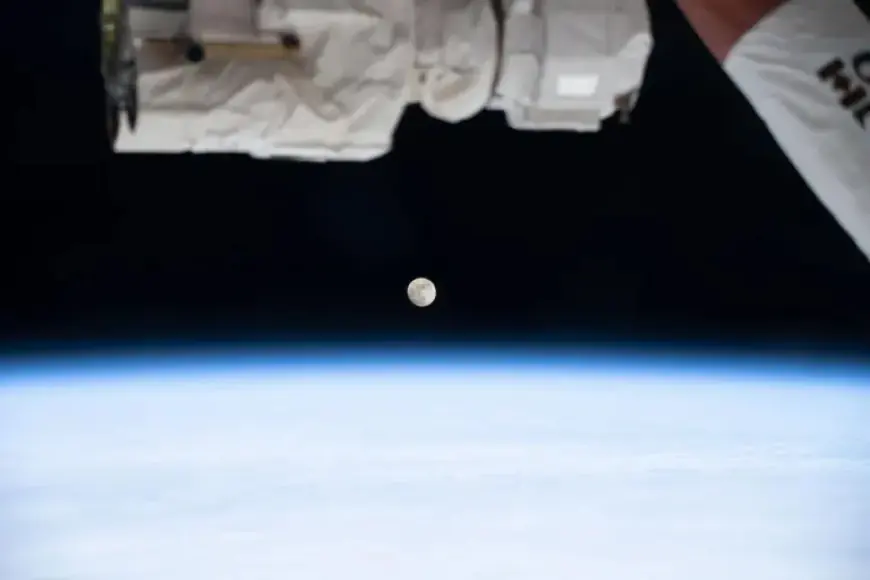
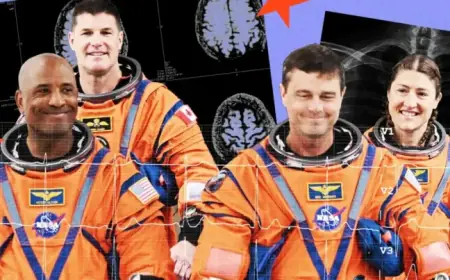
The Expedition 74 crew carried out a packed set of tasks ahead of a scheduled Cygnus cargo mission. Crew members focused on robotics practice, suit upkeep, and scientific hardware checks on April 6, 2026.
Robotic rehearsals for Cygnus capture
NASA flight engineers Chris Williams and Jack Hathaway practiced Canadarm2 operations from the cupola. They rehearsed procedures to guide the arm during capture of the incoming Cygnus vehicle.
After capture, ground controllers will command Canadarm2 to berth the spacecraft to Unity’s Earth-facing port. The cargo mission will deliver microgravity research gear for quantum computing and biomedical studies.
Spacesuit maintenance and power checks
Hathaway and Jessica Meir flushed and cleaned suit water-cooling loops. These loops control body temperature during spacewalks.
Williams replaced two lithium-ion batteries stored in the Quest airlock. The swap helps maintain reliable suit power for future EVAs.
Laboratory hardware and experiments
Meir powered up the KERMIT fluorescence microscope inside Destiny. She also replaced filters and prepared imaging runs for biological and material science work.
She set up a physics experiment that images how particles attach to droplets in microgravity. Data could improve additive manufacturing and optical material designs.
Kibo module technology demo and systems checks
ESA flight engineer Sophie Adenot powered down the TUSK technology demonstration. The device is a small robotic arm tested for sub-millimeter manipulation in weightlessness.
Adenot then cleaned parts of Kibo’s ventilation system. She finished by testing emergency communications with mission controllers worldwide.
Russian segment activities and health monitoring
Station commander Sergey Kud-Sverchkov and flight engineer Sergei Mikaev wore cuffs to record arm, wrist, and finger blood pressures. The readings support an ongoing cardiovascular study in microgravity.
Kud-Sverchkov inspected docking hardware while Mikaev performed communications and electronics maintenance. Their tasks ensured continued station operability.
Robotic simulation, AI study, and Earth observation
Roscosmos flight engineer Andrey Fedyaev practiced European robotic arm maneuvers using simulators. He then worked on a study using artificial intelligence tools to enhance crew operations and communications.
Fedyaev also adjusted lens settings on Earth observation equipment for a visibility test. The tweak aimed to improve imaging quality for downlinked observations.
Outreach and more information
Follow Filmogaz.com for updates and check the space station’s social channels for daily activity summaries. The crew’s work continues as preparations progress toward the Cygnus cargo mission launch.