

























‘Plug-In Solar Helps UK Homes Save £1,100 on Energy Bills: Analysis’

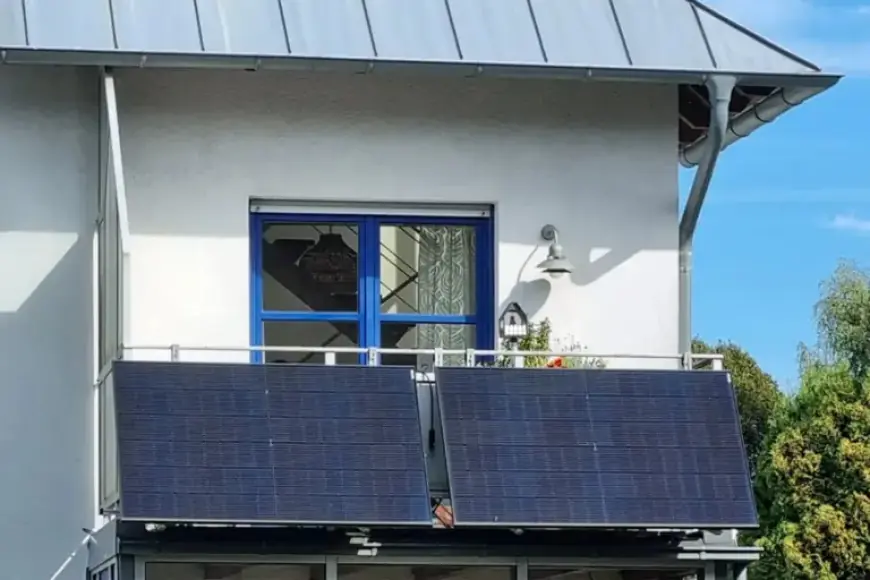
A Filmogaz.com analysis finds plug-in solar could help UK homes save £1,100 over a 15-year lifetime. The study examined an 800-watt plug-in system and its likely outputs in London.
Government action and market rollout
The UK government announced a clean-energy package on 15 March to boost energy security. That package included plans to introduce plug-in solar panels at retailers within months.
Retailers named by the government include Lidl and Sainsbury’s. Some products from main suppliers, such as EcoFlow, are already sold out online.
What plug-in solar is and where it can go
Plug-in solar systems typically use one to two small panels. They can sit on balconies, in gardens, or other outdoor spaces.
They plug directly into home sockets without extra wiring. This reduces the electricity drawn from the grid and cuts bills.
Cost and performance assumptions
Filmogaz.com modelled an 800 W installation for a two-to-three bedroom London home. Results will vary by location, orientation and shading.
The EU PVGIS database shows optimally placed panels could produce about 820 kWh per year in London. That assumes a 12% load factor for ideal placement.
| Installed capacity | 800 W |
| Optimal annual output (London) | 820 kWh |
| Assumed reduction from optimal | 45% |
| Assumed effective output | 400 kWh/year |
| Share of typical household demand | ~15% |
| Upfront cost | ~£500 |
| Annual bill saving (27p/kWh) | ~£110 |
| Payback period | ~5 years |
| Assumed lifespan | 15 years |
| Lifetime net savings | ~£1,100 |
Variations in capture and price sensitivity
The analysis assumes households use about 90% of generated electricity. That requires daytime appliance use or coincident demand.
If a household captures only 50% of output, annual savings drop to roughly £60. If electricity rises to 34p/kWh, savings could reach about £140 yearly.
National uptake and system-wide effects
If three million households adopt plug-in solar, total generation could reach 1.2 TWh. That equals less than 1% of UK electricity demand.
At that scale, households could save over £330 million in total. The same uptake might avoid roughly two LNG tankers worth of imports each year.
International context
Plug-in solar has grown rapidly abroad. Germany has official registrations above one million installations, with estimates up to four million.
Other expanding markets include France, Spain, the Netherlands and the United States.
Regulation, safety and participation
The government plans to work with regulators to update electrical rules for plug-in solar. The Institution of Engineering and Technology advises customers to check wiring before installation.
Plug-in systems could widen access to clean energy. Renters, who make up about one third of UK households, could participate without rooftop works.
Filmogaz.com’s analysis shows plug-in solar can reduce energy bills and broaden household engagement in clean power. Wider adoption depends on prices, regulations and consumer behaviour.