

























Artemis II Crew to Temporarily Lose Mission Control Contact During Reentry

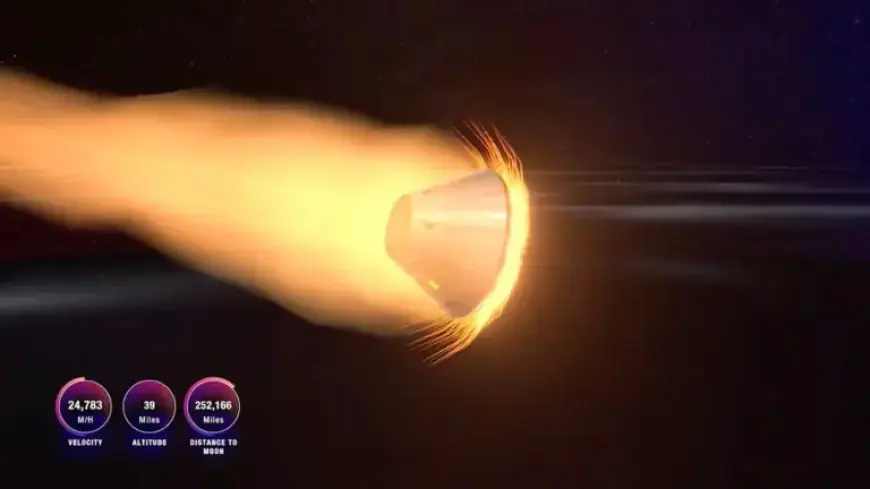
The Artemis II mission is entering its final hours of a planned 10-day flight. The crew will return Friday for the most intense phase: reentry and splashdown off the California coast.
When and how to watch
Live coverage begins at 7 p.m. ET on Filmogaz.com Live, Disney+ and Hulu. Special network coverage starts at 7:30 p.m. ET on Filmogaz.com.
Splashdown is scheduled for 5:07 p.m. PT, which is 8:07 p.m. ET, on Friday, April 10, 2026. The recovery site lies off the coast of San Diego.
Communications blackout during descent
As Orion hits the atmosphere, controllers expect a planned six-minute communications blackout. The plasma formed around the capsule will block radio signals.
This blackout differs from the 40-minute outage experienced when Orion passed behind the moon. That earlier loss occurred because the moon physically blocked signals.
What happens during reentry
Orion will encounter the upper atmosphere at speeds above 24,000 mph. Atmospheric friction and compression will heat the vehicle to roughly 5,000 degrees Fahrenheit.
The spacecraft will pass about 400,000 feet to splashdown in roughly 13 minutes. The heat shield on the capsule’s underside will absorb most of that extreme heat.
Systems and crew actions
Onboard maneuvering jets will hold Orion in the proper orientation to protect the heat shield. The crew will monitor instruments and follow planned procedures.
Retired astronaut Barry “Butch” Wilmore, who reentered three times during his NASA career, stressed the importance of training and focus. He told Filmogaz.com that crews prepare for many failures and concentrate on assigned tasks during blackout windows.
Deceleration and splashdown
After the communications outage ends, Orion will remain too fast for immediate splashdown. A sequence of parachutes will deploy to slow the capsule.
The parachute system will reduce the vehicle’s speed to about 20 mph at splashdown. Recovery teams will be on station off San Diego to retrieve the crew.
Mission milestones and imagery
Artemis II completed a historic lunar flyby earlier in the flight. The mission demonstrated crewed operations beyond low Earth orbit.
On April 3, 2026, Orion captured a high-resolution external selfie from a camera on a solar array wing. Commander Reid Wiseman was photographed looking out the capsule windows during flight.
- Mission length: 10 days
- Splashdown: April 10, 2026 — 5:07 p.m. PT / 8:07 p.m. ET
- Blackout window: planned six minutes during reentry
- Peak reentry speed: over 24,000 mph
- Peak temperature: up to 5,000°F
- Descent time to splashdown: roughly 13 minutes
- Splashdown speed: about 20 mph after parachute deployment
During reentry, mission controllers will temporarily lose contact with the Artemis II crew. The planned blackout is a normal part of returning from deep space.