











Neuroscientist Criticizes AFL’s Support for New Headgear

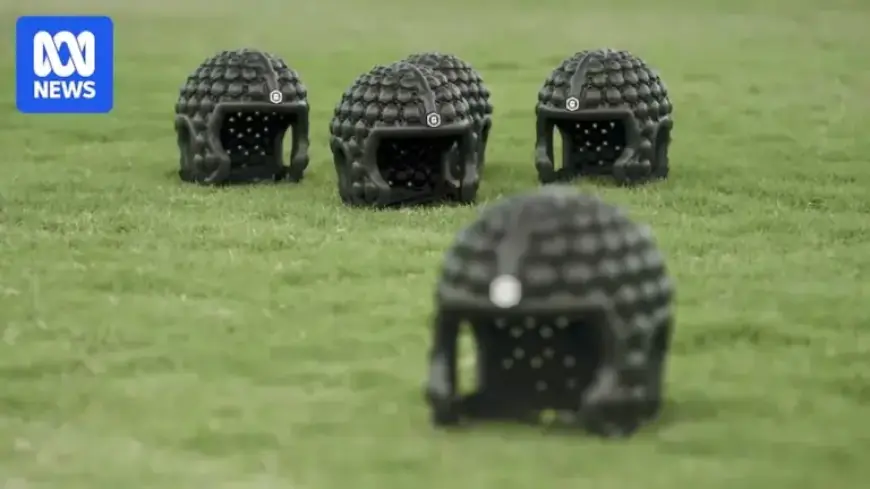
Recent criticism has emerged from prominent neuroscientists regarding the Australian Football League’s (AFL) endorsement of new headgear designed to mitigate concussion risks. Despite ongoing skepticism about the effectiveness of headgear in preventing concussions, the AFL has begun supporting the GameGear helmet, currently being tested for its protective capabilities.
Concerns from Experts
Two leading sports neuroscientists have strongly criticized the AFL’s actions. Alan Pearce from Swinburne University expressed concerns about parents purchasing the helmet under the misconception that it protects against concussions. He stated that athletes might develop a false sense of security from wearing headgear.
Pearce remarked, “The scientific study on the efficacy of this helmet has not been undertaken, which suggests to me bad science.” He emphasized that helmets have historically failed to provide adequate protection against brain injuries.
Test and Trials
GameGear is currently funding an $800,000 two-year study at Monash University. This research aims to evaluate the helmet’s effectiveness in a trial involving 600 athletes from both Australian Rules football and rugby league. However, fears persist about marketing the helmet before the study concludes.
Historical Evidence Against Helmets
Chris Nowinski, another leading neuroscientist, highlighted that American football, despite its helmets, ranks highest for cases of chronic traumatic encephalopathy (CTE)—a serious degenerative brain disease linked to repeated head trauma. In a study by Boston University’s CTE center, 345 out of 376 former NFL players showed signs of this disease, underscoring the limitations of helmet protection.
GameGear’s Claims and Testing
GameGear, priced at $215, promotes its headgear as a new innovation in sports safety. The inventor, Graeme Attey, likens it to how seatbelts revolutionized road safety. He asserts that independent tests demonstrated a 91-94% reduction in head acceleration compared to leading headgear brands.
However, Attey clarifies that while the helmet shows promise, it cannot currently claim to prevent concussions. He stated, “We need to fund this trial to understand if there are real-world effects.”
Current Status of the Helmet
The AFL has introduced its original Australian Football Headgear Standards, with GameGear being the only product to pass these guidelines thus far. However, the standards explicitly warn that compliance does not guarantee protection from head injuries.
This month, GameGear is reportedly in discussions with several AFL teams, including Fremantle and Hawthorn, regarding potential trials during training.
Wider Impact of CTE
The implications of repeated head trauma have gained attention, with several AFL players diagnosed with CTE. For example, Heather Anderson, an Adelaide Crows AFLW player, was found to have CTE post-mortem after her tragic passing at age 28.
Players like Angus Brayshaw have previously worn protective headgear, but the effectiveness of such equipment remains in dispute. Brayshaw and many players are pursuing compensation for their concussion-related health challenges.
Individual Choices and Research
While no AFL players currently utilize GameGear during official matches, in the NRL, Jake Trbojevic has chosen to wear it, citing the research conducted on the helmet’s protective capabilities. He stated that he believes the research supports a reduced impact during head collisions.
Conversely, many NRL officials hesitate to endorse headgear for concussions, as the science remains inconclusive about its effectiveness in preventing long-term brain injuries. GameGear’s launch amid this scrutiny reflects the ongoing debate regarding safety in contact sports.
- Helmet Price: $215
- Funding for Research: $800,000 over two years
- Athletes in Study: 600 across AFL and rugby league