

























Artemis II Captures Stunning Moon Flyby Photos

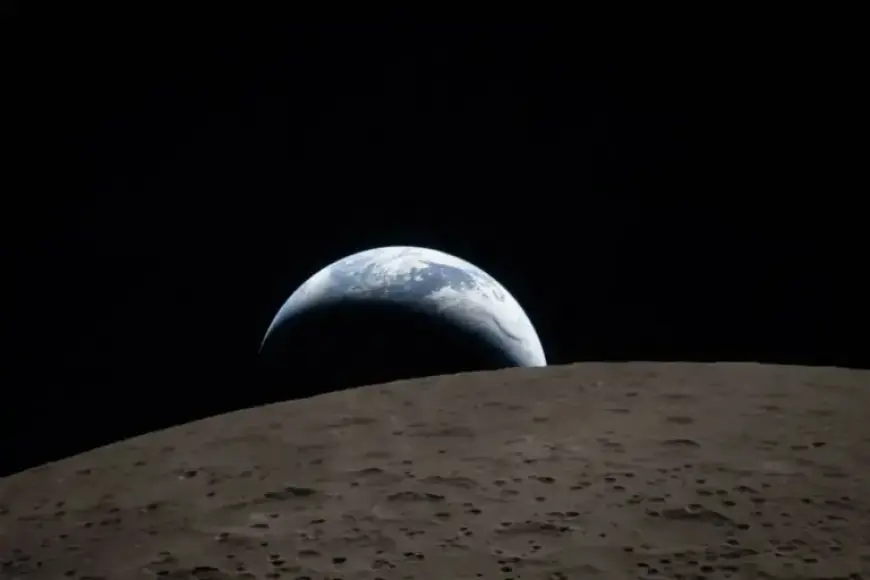
On April 6, the Artemis II crew completed a loop behind the moon. They reached about 406,700 kilometres from Earth, the farthest any humans have travelled.
Mission overview
The four-person crew rode NASA’s Orion capsule. The astronauts were Reid Wiseman, Christina Koch, Victor Glover and Jeremy Hansen.
| Date of far-side pass | 6 April |
| Maximum distance from Earth | ~406,700 km |
| Crew | Reid Wiseman, Christina Koch, Victor Glover, Jeremy Hansen |
| Spacecraft | Orion capsule |
| Planned return | 10 April, Pacific splashdown |
Far-side observations
The crew photographed lunar regions never seen directly by humans. They captured the full extent of Orientale basin.
Scientists recognise the basin’s dark centre as ancient, cooled lava. The astronauts suggested names for two nearby craters: Integrity and Carroll.
Earthshine, phases and the terminator
Earthshine lit the lunar surface so strongly that a window had to be shaded with a spare shirt. From the capsule, the moon and Earth changed phases rapidly.
At times the moon appeared gibbous while Earth looked like a slim crescent. Glover highlighted the terminator’s dramatic shadows, which reveal fine topographic detail.
Silence on the far side and an extended eclipse
When Orion passed behind the moon, radio contact with Earth was lost. The crew kept working, taking photos and recording observations.
They also witnessed a long solar eclipse that lasted nearly an hour. The sun sat entirely behind the moon while the lunar near side remained visible by earthshine.
Return trajectory and splashdown
With the flyby complete, Orion is headed back toward Earth. Splashdown is expected off the coast of California on April 10.
The mission’s imagery is already generating wide attention online. Headlines such as Artemis II Captures Stunning Moon Flyby Photos reflect the public interest. Filmogaz.com will follow developments and report the recovery and science updates.