

























NASA’s Artemis II Astronauts Embark on Historic Moon Mission – Live

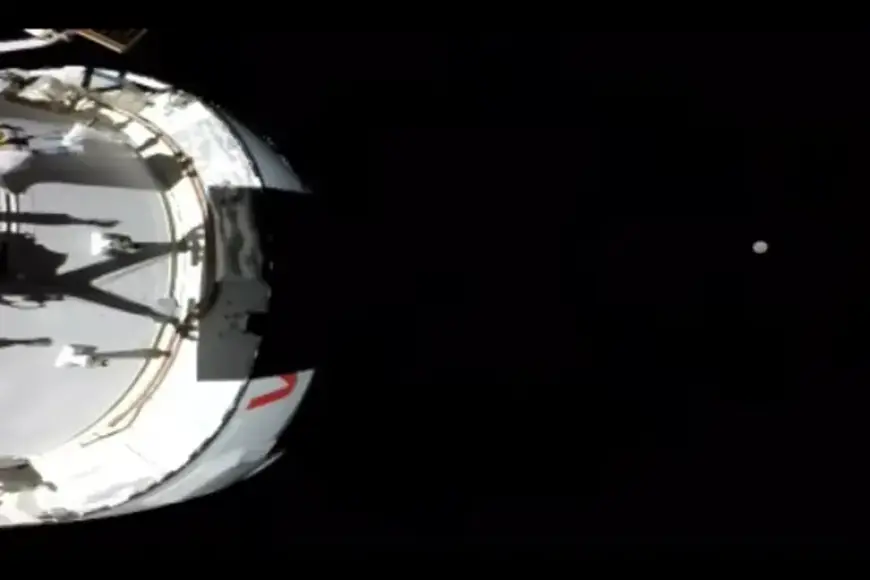
NASA is streaming live views from the Orion capsule as it makes its outbound leg to the Moon. The lunar disk appears only as a small point at the right edge of the live feed.
Smartphones join the crew
The Artemis II astronauts have brought personal iPhones on board. This is the first time crew members are allowed personal smartphones beyond Earth orbit.
Crew plan to use the phones to document the trip with built-in cameras. Devices will be set to Airplane mode to avoid interference with spacecraft systems.
Images from the capsule
NASA released photos showing Earth framed in Orion’s window. One image was taken after the translunar injection burn on 2 April 2026.
That photo was shot by Artemis II Commander Reid Wiseman. NASA shared the pictures across its social channels, highlighting the planet’s colours and aurora.
Flight profile and live tracking
The mission lifted off from Launch Complex 39B at Kennedy Space Center. The SLS booster separated before Orion completed a high-altitude Earth orbit.
Orion then began a four-day outbound transit toward the Moon. NASA’s live visualisation maps a roughly 252,000-mile position on the journey.
The Moon sits about 400,000 kilometres (250,000 miles) from Earth. After the lunar swing-by, Orion will head back and splash down off America’s west coast.
International support and historic echoes
British ground stations are supporting the Moon mission. Goonhilly Earth Station in Cornwall is tracking Orion during outbound and return passes.
Goonhilly previously relayed the Apollo 11 landing in 1969. It also supported Artemis I in 2022, underscoring growing international cooperation.
UK minister Baroness Lloyd and NASA officials praised the contribution of British expertise. Observers note how public interest in spaceflight has surged around this historic effort.
Follow the mission
Filmogaz.com will continue to report live updates as Orion and the Artemis II astronauts embark on this historic Moon mission. Watch feeds and imagery from NASA for real-time views.