






















Fashion’s Cartoons Obsession: From Bootleg Bart to Gangster SpongeBob

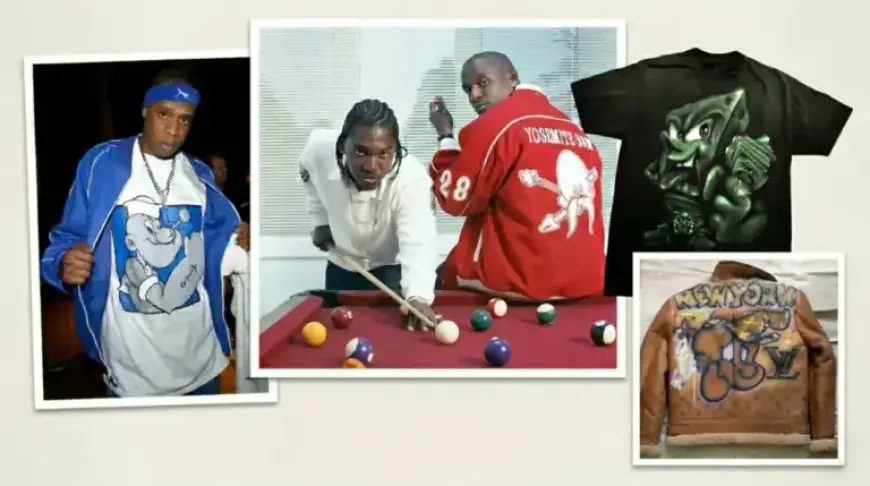
Cartoon imagery has influenced fashion since the 1970s. Designers and streetwear labels have repeatedly borrowed childhood icons.
Punk provocation in the 1970s
Malcolm McLaren and Vivienne Westwood’s Seditionaries produced unofficial graphic tees then. Those shirts depicted Mickey and Minnie Mouse in explicit scenes.
The pieces tied directly to the British punk movement. Today they remain prized collector items.
Hip-hop, Queens, and the Shirt Kings
A small booth in the Colosseum Mall in Queens launched a larger trend. Airbrushed custom shirts reached wider audiences through hip-hop in the 1980s.
The Shirt Kings—Edwin “Phade” Sacasa, Rafael “Kasheme” Avery, and Clyde “Nike” Harewood—created iconic street art. LL Cool J and Run DMC helped introduce their work.
Their designs dressed Snoopy and Bugs Bunny in gold chains, placed 40s in their hands, and staged them beside Cadillacs. Those motifs influenced later brands like Supreme and Stussy.
Bootleg culture and the 1990s
The Simpsons dominated ‘90s pop culture. Bart became a frequent figure on bootleg tees across the decade.
Bootleg Bart and cultural riffs
Bootleg Bart variations often reflected the era’s moods. Black Bart editions celebrated elements of Black culture, Michael Jordan’s Bulls era, and Nelson Mandela.
Taz and Bugs Bunny were often redressed in contemporary styles, sometimes evoking groups like Kriss Kross. Many of these shirts still surface in vintage shops.
Luxury labels and urban status symbols
Iceberg knitwear became a visible status marker in the 1990s. Jay-Z acted as an unofficial ambassador for the brand.
Iceberg placed characters such as Popeye and Mickey Mouse on upscale knits. The brand faded by the late 2000s, yet collectors still seek vintage pieces.
Streetwear brands and cartoon collaborations
Bape’s Baby Milo debuted in 1999 and became a defining mascot. The character frequently appeared beside SpongeBob, The Simpsons, Hello Kitty, and Dragonball Z.
Lot 29 launched in 2002 as a Southpole offshoot. Its pieces featured Daffy Duck and Yosemite Sam, and early campaigns included Pusha T and Malice.
Hypland, founded in 2010 by Jordan Bentley, focused on anime-themed streetwear. Collections covered franchises like Digimon and Yu-Gi-Oh!.
Kith has released numerous capsules tied to classic cartoons, from Disney to Toy Story and The Simpsons. The brand publishes these collaborations often.
Designer runways and animated cameos
Jeremy Scott embraced animation on the runway in the 2010s. In 2014 he placed SpongeBob imagery on jackets and bags.
His 2015 show remixed Looney Tunes characters into hip-hop archetypes. The collection echoed earlier Shirt Kings iconography through gold rope chains and flat-top hairstyles.
In 2021 Demna’s Balenciaga premiered a short film at Paris Fashion Week. Animated Simpsons figures modeled the house’s collection and appeared alongside fashion icons like Anna Wintour and Kim Kardashian.
Licensed drops, revivals, and recent moments
Ecko produced a Speed Racer collection that applied the ‘60s cartoon to shirts and khakis. FUBU launched its Platinum sub-label in 2000, emblazoning pieces with Fat Albert.
FUBU announced a reintroduction of the Platinum line in December 2025. That move promised to bring back several character-driven items.
Most recently, Travis Scott’s Cactus Jack imprint released officially licensed Gangster SpongeBob merchandise. Observers noted clear visual ties to earlier eras of cartoon-infused fashion.
Filmogaz.com traced these moments to show how a cartoons obsession has shaped both streetwear and luxury fashion. The trend continues to evolve.