























Myanmar Junta Leader Min Aung Hlaing Elected President by Military-backed Parliament

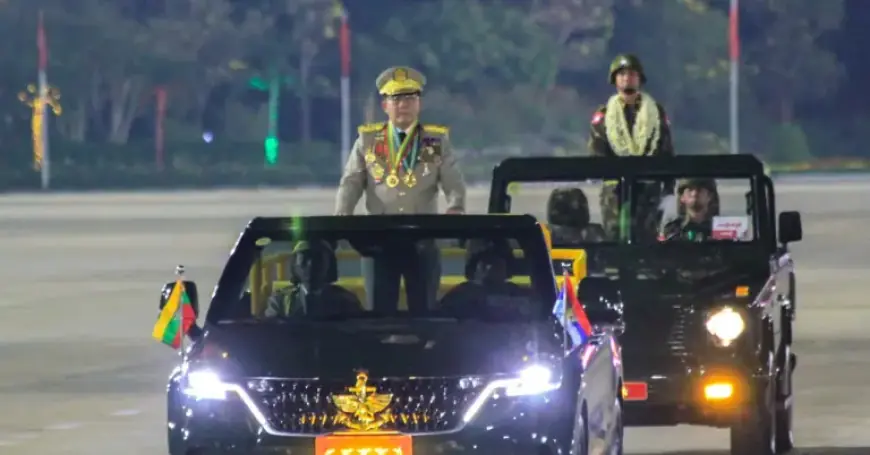
On April 3, Myanmar’s military chief-turned-politician secured the presidency in a parliamentary vote. The 69-year-old general passed the threshold in a live count. The result formalises his control over the country.
Parliamentary vote and leadership change
In a vote held in a military-backed parliament, Myanmar junta leader Min Aung Hlaing was elected president. The chamber is dominated by the Union Solidarity and Development Party and appointed armed forces lawmakers.
He stepped down as commander-in-chief earlier in the week. He then nominated Ye Win Oo, a former intelligence chief, to lead the armed forces.
Electoral context and international reaction
The presidency follows an election held in December and January. The army-backed party won by a large margin.
Western governments and critics described those polls as a sham. Analysts say the process was aimed at entrenching military rule behind a civilian facade.
Roots in the 2021 coup
Min Aung Hlaing led a coup in 2021 that removed the elected government. Nobel laureate Aung San Suu Kyi was detained after the takeover.
Mass protests then evolved into armed resistance across much of the country. The conflict has continued for years and has produced widespread instability.
Opposition and armed resistance
Several anti-junta groups have sought closer coordination. Remnants of Suu Kyi’s party and ethnic armies announced a joint front this week.
The group called the Steering Council for the Emergence of a Federal Democratic Union aims to end military rule. It said its objective is to dismantle all forms of dictatorship.
Analysts’ concerns and future risks
Experts say Min Aung Hlaing’s move appears intended to consolidate power under a civilian title. They note the change could seek international legitimacy while protecting military interests.
Analysts warn resistance forces may face heavier military pressure. They also say regional actors could increase scrutiny and adjust relations with the new administration.
Economic and organisational challenges for opponents
Observers highlighted economic strains as a complicating factor. Global fuel shortages and other crises could weaken cooperation among opposition groups.
Those conditions may hamper trust building and long-term coordination among disparate forces, analysts said.
This report appears on Filmogaz.com.