
























Mars Rocks’ Metal Discovery Suggests Possible Ancient Life

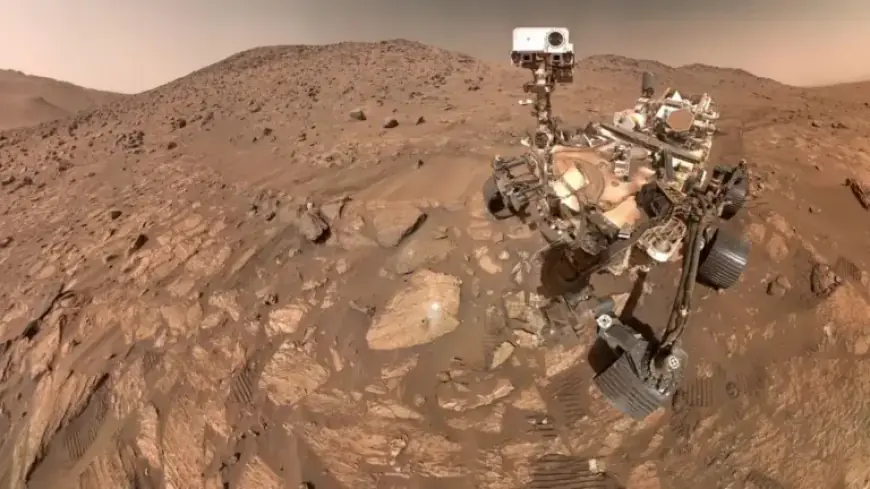
NASA’s Perseverance rover recorded unusually high nickel levels in rocks of Neretva Vallis. The valley once channeled water into Jezero Crater’s ancient delta.
Perseverance made the observations in 2024 while examining exposed bedrock. One pale outcrop was nicknamed Bright Angel.
Sampling results and measurements
Scientists analyzed 126 sedimentary rocks and eight rock surfaces. Thirty-two samples contained nickel concentrations up to 1.1 percent by weight.
Nickel is commonly found on Mars as meteorite fragments. These readings are the strongest surface detections outside iron-nickel meteorites.
Minerals and chemical context
Bright Angel and nearby rocks contained iron-sulfide minerals similar to pyrite. The team also detected organic compounds in the same area.
Iron-sulfide on Earth often forms in oxygen-poor, or reducing, settings. Finding it here suggests similar chemical conditions once existed in Neretva Vallis.
Sources and movement of metal
Researchers propose nickel arrived partly via meteorite input. Water flowing through sediments then dissolved and redistributed the metal.
Flows in the valley likely drove long-term chemical reactions in those sediments. That dynamic watery history shaped the observed mineralogy.
Implications for habitability
On Earth, nickel is an essential element for many microbes. The detected concentrations imply nickel could have been bioavailable on ancient Mars.
Combined with organics and reduced sulfur, the assemblage mirrors environments that support anaerobic life on early Earth. Scientists do not claim proof of life.
This metal discovery in Mars rocks adds weight to ideas about possible ancient life. It highlights that key ingredients were present in Jezero’s deposits.
Age, exploration, and publication
The rocks in Neretva Vallis may be younger than other parts of Jezero Crater. That suggests potentially habitable conditions might have persisted beyond Mars’s earliest epochs.
Lead researcher Henry Manelski of Purdue University noted the findings place new constraints on how these rocks formed. The study appears in Nature Communications.