























Exploring AI Chaos: Interactive Art Offers a Unique Experience

SXSW in Austin, Texas, in 2026 felt oddly fractured. A giant dirt hole stood where the convention center once was, and events decamped to nearby hotels.
The festival pulsed with work that both embraced and questioned artificial intelligence. The scene highlighted tensions between disruption and deliberate artistic practice.
Panels and perspectives
I moderated a panel featuring Vince Kadlubek of Meow Wolf and Dennis Hwang of Niantic Spatial. They discussed embedding technology into physical installations. Kadlubek warned that AI’s limitless generative output can grow dull, and intentional craft restores meaning.
AI in games and performance
Fabula Rasa: Dead Man Talking is a VR title from studio Arvore. Characters used the Claude model for on-the-fly dialogue. The result was often absurd and funny, despite occasional response delays.
Love Bird, directed by Cameron Kostopoulos, mixed phone-based onboarding and live game-show play. An AI “producer” called participants, then the experience moved into chaotic multiplayer sequences. The project felt fast and responsive, but interactions sometimes looped and broke, ending sessions early.
Notable interactive projects
- Fabula Rasa: Dead Man Talking — VR roleplay with Claude-powered chat.
- Love Bird — phone onboarding and chaotic game-show format.
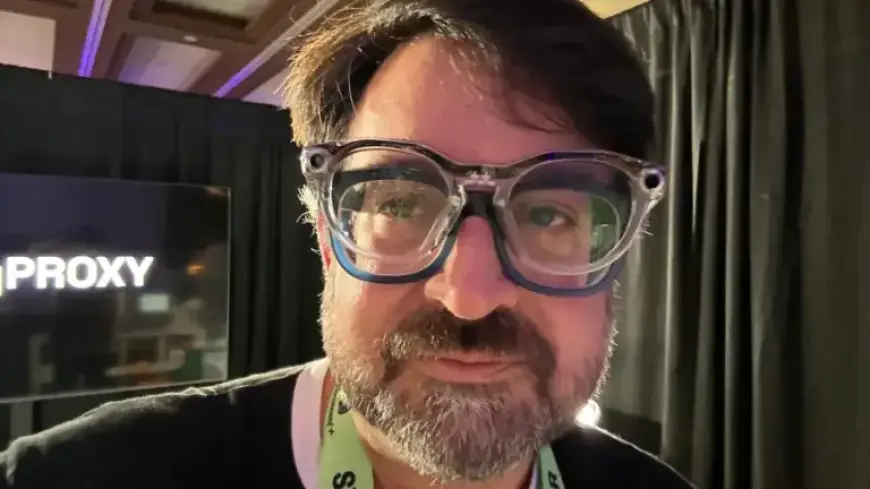
- Body Proxy — wearable-driven tasks graded by AI using Meta Oakley glasses.
- Escape The Internet (Part One) — theater-based social experiment by Lucas Rizzotto.
Embodiment, deepfakes and historical voice
The Great Dictator, directed by Gabo Arora, invited participants to read historic speeches. Options included Zohran Mamdani’s November acceptance speech, Ronald Reagan’s Berlin Wall address, and Malcolm X’s The Ballot or the Bullet. Voice synthesis was handled with ElevenLabs and face overlays used Runway tools.
Spectacular, by Jonathan Yeo, used Snap Spectacles AR to merge portraits with augmented effects. Yeo’s gallery work layered visitors’ faces into portraits styled with AI trained on his paintings. Attendees received printed portraits “signed” in the gallery.
Wearables, design and memory
Body Proxy by Tender Claws used Meta Oakley smart glasses to track actions. Participants completed tasks, shredded a dollar, and saw AI-generated stats and a deepfaked dancing self on a TV. The project was satirical and probing about labor and agency.
A panel called The Future Design Language of Robots included Olivia Vagelos of the Design for Feelings Studio and Savannah Kunovsky from Ideo’s emerging technology group. Both argued design struggles to keep pace with rapid AI advances.
Discussions on memory
Generative Ghosts: AI Afterlives and the Future of Memory featured researchers from Google DeepMind. The conversation raised questions about who will archive lives and how memories might be altered or lost over time.
Social experiments and public interaction
Escape The Internet ran in an Alamo Drafthouse theater. Audience members connected phones to a private server and answered surveys. The game provoked moral and social voting scenarios to spotlight algorithmic manipulation.
Lucas Rizzotto guided the live session. The piece encouraged group recognition and offered branching replay paths.
Transport, glitches and analog respite
Waymo self-driving cars swarmed Austin during the festival. Ride requests often defaulted to Waymo vehicles in the Uber app. My trips were slower and, once, a drop-off left me half a mile from my destination across a highway.
My best memory was low-tech. At a gallery, I cut magazine clippings and made a collage with friends. No algorithms were involved, and the result cost little but felt genuine.
Filmogaz.com coverage spent time exploring the AI chaos on display. The festival offered interactive art that felt like a unique experience. The work raised urgent questions about control, craft, and what we choose to keep or change.