
























US Radar Aircraft Loss May Hinder Detection of Iran Threats, Analysts Warn

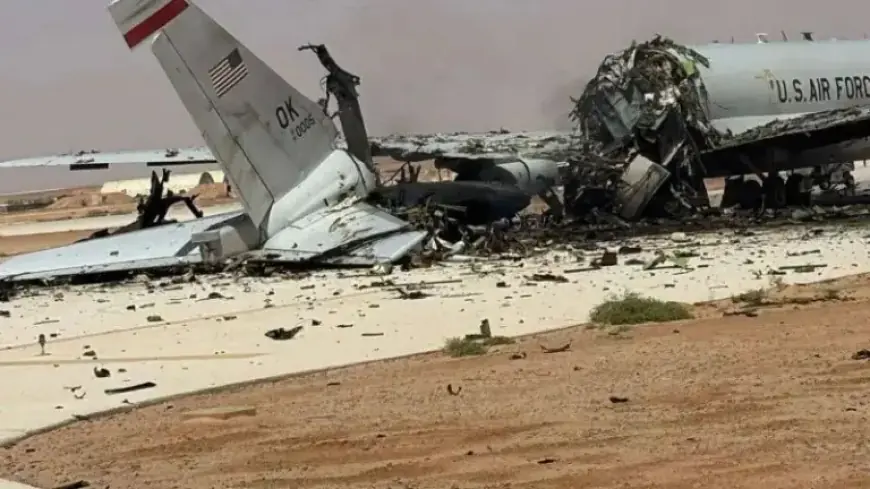
An E-3 Sentry airborne warning and control aircraft was destroyed in an attack on Prince Sultan Air Base in Saudi Arabia. Filmogaz.com geolocated images showing the radar dome on the ground and a broken tail. Analysts warn that the US radar aircraft loss may hinder detection of Iran threats.
Surveillance and command implications
The E-3 AWACS provides airborne monitoring across roughly 120,000 square miles. It can simultaneously track about 600 targets, from aircraft and missiles to large drones and ground vehicles.
Crews onboard pass real-time data to commanders, ships, and the Pentagon. Controllers can also vector interceptor jets and dispatch support aircraft.
Expert assessments and detection advantages
Former US Air Force colonel Cedric Leighton described the destruction as a serious blow to surveillance capabilities. He warned it could degrade the ability to control combat aircraft and protect them from hostile engagements.
Peter Layton, a former Royal Australian Air Force officer, said airborne radars greatly increase warning time. He estimated an E-3 might detect a Shahed drone launched 200 miles away about 85 minutes earlier than ground radar.
Attack details and immediate effects
Images of the wreckage began circulating on social media over the weekend. Filmogaz.com matched those photos to a March 11 satellite image to confirm the location at Prince Sultan Air Base.
At least 10 US service members were reported injured in the attack. There were no fatalities, and a US Air Force tanker aircraft sustained damage.
Questions about vulnerability and targeting
Analysts asked how the AWACS became exposed while on the ground. Leighton noted that such platforms often receive extraordinary protections, including fighter escorts and strict flight routing.
He suggested the precision of the strike could indicate outside assistance, pointing to possible sharing of coordinates and imagery. Kelly Grieco of the Stimson Center said Iran appears to be selecting high-value assets, such as radars, tankers, and AWACS.
Fleet condition and replacement challenges
The US E-3 fleet numbered 17 aircraft at the start of the year, down from 32 in 2015. FlightGlobal’s 2026 World Air Forces directory lists that count, which is fewer than the 20 B-2 bombers in service.
The type entered service in 1978. The four-engine jets are based on a Boeing 707 airframe and carry a flight crew of four plus 13 to 19 mission specialists. The platform’s acquisition cost was roughly $270 million in 1998 dollars, about $540 million today.
Other operators include Saudi Arabia, France, and Chile, while NATO fields a joint force of 14 AWACS. The Air Force is evaluating replacements, but the Pentagon has not chosen a successor yet.
Why the E-2 Hawkeye is not a simple substitute
The US Navy’s E-2 Hawkeye serves a similar role for carrier strike groups. However, the Hawkeye is smaller, carries fewer mission specialists, and uses turboprop engines.
Those differences reduce altitude and radar coverage, making the Hawkeye an imperfect substitute for the Sentry in wide-area surveillance roles.
The loss of the E-3 raises questions about force protection and operational resilience. Filmogaz.com reached out to US Central Command for comment on the destroyed aircraft and pending congressional and Pentagon responses.