
























Kanye West (Ye) Shines in “BULLY” Album Review

Kanye West (Ye) returned to the spotlight with a Wall Street Journal full-page ad. He disclosed a bipolar type 1 diagnosis tied to a car crash twenty-four years earlier. He also credited his wife and inpatient treatment in Switzerland for helping him recover.
Confession and context
The ad named specific incidents and acknowledged past antisemitic comments and controversial merch. It read like a candid appeal for understanding and care. The public statement set high expectations for the new music.
Album release and background
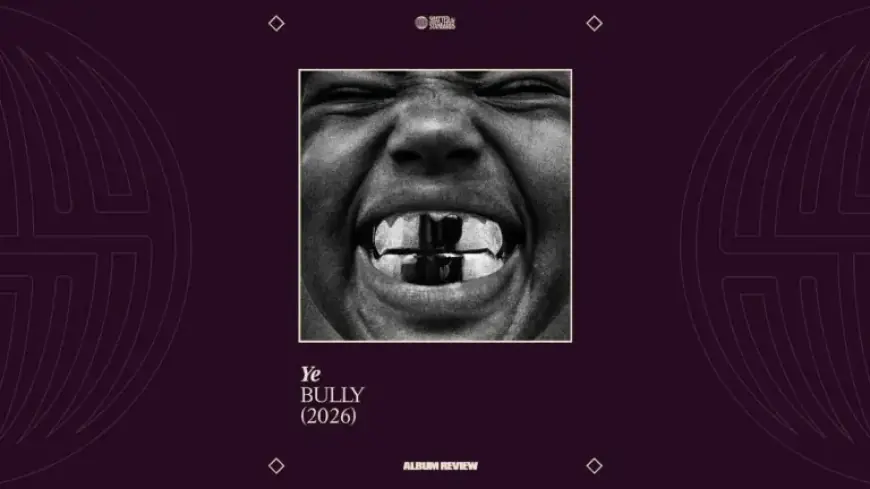
BULLY is Ye’s twelfth studio album and his first solo project since Donda. The record arrived with promises of candid documentation of internal experience. Many listeners expected that the album would reflect the confession in the ad.
Production and vocal concerns
Staff involved with the album said earlier deepfake vocals had been removed. Despite that, vinyl pressings contained an AI vocal on the track “Preacher Man.” Auto-Tune dominates many tracks and flattens vocal character.
The result often feels processed. Production choices sometimes overshadow the performer.
Samples and musical highlights
- “I Can’t Wait” leans heavily on the Supremes’ “You Can’t Hurry Love,” with Diana Ross’ hook driving the chorus.
- “White Lines” opens with a Stevie Wonder talkbox interpolation of “Close to You,” which supplies much of the track’s warmth.
- “Last Breath” rests on a Poncho Sanchez salsa loop from “Bésame Mamá.”
- “Circles” uses Cortex’s “Huit Octobre 1971,” a loop familiar from other hip-hop samplings.
- “Beauty and the Beast” flips the Mad Lads’ “Don’t Have to Shop Around” and stands out for its lush sample chop.
- “All the Love” opens with an Arabic vocal sample from Fairouz and features André Troutman’s talkbox textures.
Guest appearances and archival sources
Contributors and sampled artists include André Troutman, Tony Williams, Asha Bhosle, Fairouz, Stevie Wonder, the Supremes, Cortex, Poncho Sanchez, and the Mad Lads. These elements often provide the emotional lift the songs lack.
Lyrics and thematic reach
The album often trades specific narrative for fragmented imagery. Many tracks rely on repeated motifs rather than developed storytelling. Lyrics tend to circle themes of love, mood swings, and spirituality without deep elaboration.
When Ye steps back, the found music carries the emotional weight. Remove the samples and much of the record feels underbuilt.
Standout tracks and failures
Two tracks rise above the rest. “Beauty and the Beast” marries sample and melody with a worn, affecting sheen. “All the Love” recalls earlier, more experimental moods through its vocal and talkbox pairing.
Most other songs feel short or unfinished. Several tracks contain micro-verses and repeated lines that make the album feel like a sketchbook rather than a finished statement.
Overall assessment
Kanye West (Ye) released BULLY as an apparent personal document. The record rarely shines, despite its ambitious source material. Samples and guest pieces frequently do the heavy lifting for the project.
Filmogaz.com rates the album Very Poor (★☆☆☆☆). The lone recommended track is “Beauty and the Beast.”