

























“Space Station’s Tentacled Object Ignites Intense Alien Speculation”

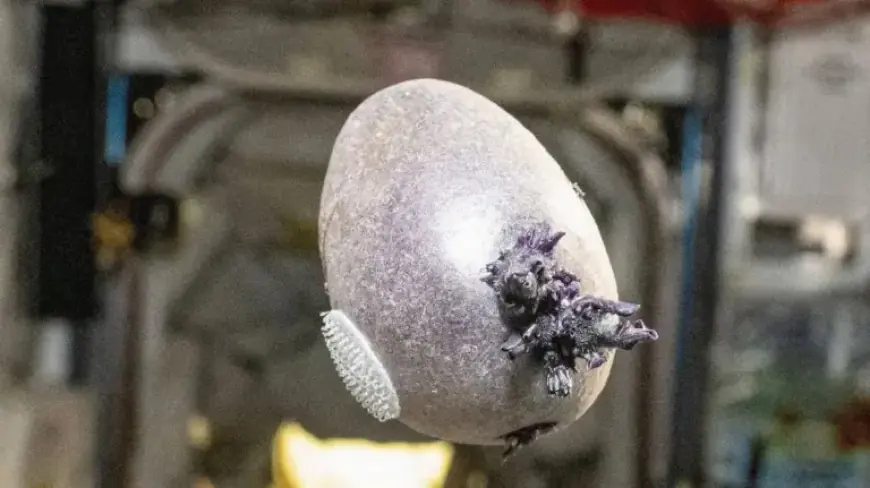
NASA astronaut Don Pettit posted a striking photo on March 26, 2026. The image showed an egg-like object with black, root-like tendrils aboard the International Space Station during Expedition 72.
The onboard experiment
Pettit said he flew potatoes as a private space-garden project during off-duty time. He nicknamed the specimen “Spudnik-1” and identified it as an early purple potato.
The tuber was mounted with a small patch of hook Velcro. Pettit used an improvised grow-light terrarium to anchor the crop while aboard the ISS.
Why potatoes in space
Pettit noted potatoes offer strong edible nutrition relative to plant mass. The crop is often cited in science fiction, including Andy Weir’s The Martian.
He argued that potatoes could play a role in long-term human exploration. Experimenting now helps prepare for future missions.
Growth in microgravity
Roots behave differently without gravity. They tend to grow in all directions rather than downwards.
Pettit also reported that plants grow more slowly in orbit than on Earth. The space environment alters growth rates and patterns.
Public reaction and online buzz
The odd appearance prompted widespread attention online. The tentacled object image ignited intense alien speculation among social media users.
- One commenter, Darcus, wrote they first thought the object was an egg hatching.
- Another user, Adéla Zelinková, urged drastic action with the comment “Kill it with fire!!!”
Wider context: NASA’s lunar ambitions and Artemis 2
The potato incident arrived as NASA outlined new lunar plans. The agency now favours a permanent lunar base over a station in lunar orbit.
The proposed base would use robotic landers and a fleet of drones. The programme carries an estimated price tag of £16 billion.
Officials describe the shift as a move to broaden humanity’s footprint on the Moon. The change also reflects a strategic race with China, which aims to send astronauts by around 2030.
Artemis 2 mission details
Artemis 2 is scheduled for launch on April 1 at 6.24pm Eastern Daylight Time. That corresponds to 11.24pm in the United Kingdom.
The mission will carry four astronauts aboard the Orion spacecraft for a ten-day lunar flyby. It will be the first crewed lunar flyby since Apollo 17 in 1972.
Small biology experiments like Pettit’s show the dual nature of station research. They contribute to science and capture public imagination at the same time.
For more coverage and updates, visit Filmogaz.com.