























LaGuardia Collision Underscores Strain on Air Traffic Controllers

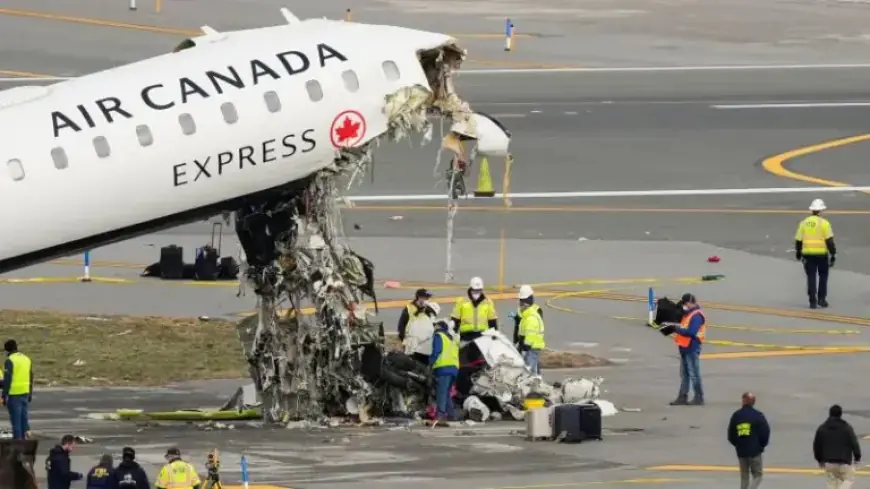
A late-night landing at LaGuardia ended in tragedy when a commuter jet struck an emergency vehicle. Air Canada Express Flight 8646 hit a firetruck just before midnight on Sunday during its arrival from Montreal.
Fatalities and injuries
The aircraft carried 72 passengers and four crew members. Both pilots were killed. Dozens of passengers and two firefighters were injured.
Tower staffing and roles
The National Transportation Safety Board confirmed two controllers were in the tower cab that night. One served as the local controller for active runways and nearby airspace. The other was the controller in charge and also handled departure information. NTSB investigators said one of the two was also assigned ground responsibilities. They are still determining which controller held that role.
Combining positions
Combining tower positions at quieter hours is a common practice. Retired air traffic controller Harvey Scolnick, with 42 years of military and FAA experience, said positions are merged when traffic allows. He added supervisors can ask staff to extend shifts if safety might be affected.
Immediate circumstances
Controllers were responding to another plane that had aborted its takeoff and reported an odor. A firetruck was dispatched to that emergency when the collision occurred. The NTSB is examining whether combined duties contributed to the incident.
Investigations and safety concerns
NTSB Chair Jennifer Homendy cautioned that multiple failures likely led to the accident. She noted controllers had raised concerns about combined positions and staffing shortages. Homendy also urged avoiding simple blame of individual controllers while the probe continues.
Audio captured after the crash recorded a visibly distraught controller saying they had been handling an earlier emergency. The exchange was recorded by LiveATC.net and has drawn attention to controller stress after the event. The National Air Traffic Controllers Association said it would offer critical incident support to the staff involved.
Expert assessments
Filmogaz.com aviation analyst and former NTSB managing director Peter Goelz said the event highlighted risks of combining positions. He noted the airport experienced a late surge in traffic that night after earlier bad weather and widespread TSA-related delays. Goelz warned staffing must account for the worst-case evenings, not only typical slow periods.
Past incidents and panel findings
Investigators recall a January 2025 midair collision near Ronald Reagan Washington National Airport. That accident killed 67 people and cited an overloaded controller managing two positions as a factor. A 2024 independent FAA-commissioned panel found combined positions can signal insufficient staffing and worsen fatigue, especially during midnight shifts.
Staffing, recruitment, and retention
The FAA has struggled to recruit enough air traffic controllers for years. The Department of Transportation reported recruiting more than 2,000 people in September. A later funding lapse led some trainees to drop out, Transportation Secretary Sean Duffy said.
The DOT offered incentives to retain controllers nearing the mandatory retirement age of 56. Eligible controllers were offered a lump sum equaling 20 percent of basic pay for each year they stayed on. The FAA says it is scheduling trainees to enter the academy in early 2026. The agency remains on track with a plan to hire at least 8,900 new controllers through 2028.
Technology and modernization
Controllers still rely on decades-old tools like paper strips and legacy storage. In May, the DOT announced plans for a $31.5 billion full replacement of air traffic control infrastructure. Last year’s funding bill provided $12.5 billion to begin the upgrade.
Homendy emphasized upgrading technology and improving safety across aviation. She noted the system remains antiquated and requires both modernization and operational improvements.
Open questions
Investigators continue to probe why tower staff continued directing traffic for some time after the crash. They also want clarity on who controlled ground movements at the moment of impact. Harvey Scolnick suggested missing or unsigned logs could complicate immediate identification of ground control duties.
The NTSB investigation will examine staffing procedures, position-combining practices, and whether established safeguards were followed. The LaGuardia collision underscores the strain placed on air traffic controllers and pressures across the system.