

























Honoring Vanbrugh: Celebrating 300 Years Since His Passing

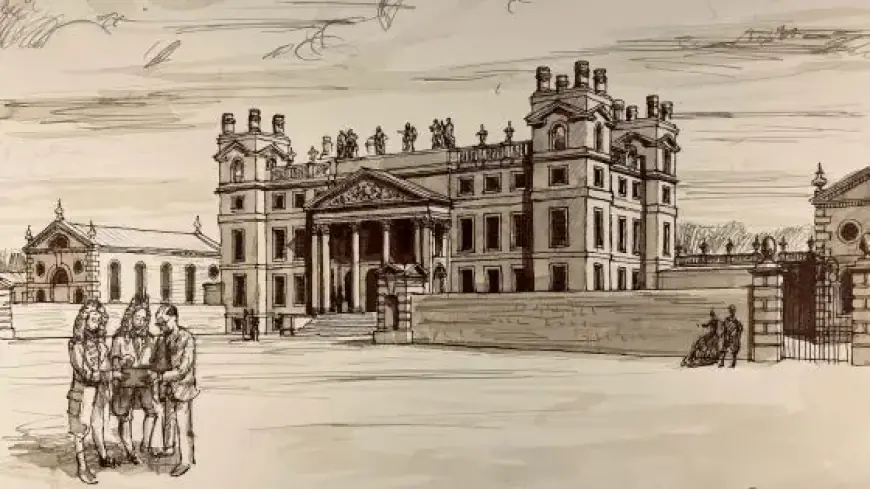
Sir John Vanbrugh remains one of Britain’s most theatrical architects. His bold Baroque buildings still define key country houses.
From failed trades to the Bastille
Vanbrugh began life in a prosperous family. He tried the wine trade and overseas commerce in India, but both ventures failed.
He then served in the army and worked as a spy. His support for William of Orange led to imprisonment by the French.
Vanbrugh spent several years in the Bastille before returning to London. He turned next to the theatre and wrote two early hits.
A new career through society and patronage
Vanbrugh joined the Kit Cat Club, a circle of Whig politicians and aristocrats. There he met influential patrons.
The Third Earl of Carlisle commissioned him to design Castle Howard. Vanbrugh was about 35 and had never designed a building before.
Stowe House: plans that partly disappeared
Vanbrugh worked at Stowe House around 1720. The house then was serviceable but considered unfashionable.
Lord Cobham asked for alterations and extensions rather than a full rebuild. Surviving evidence is sparse.
Most knowledge relies on drawings and fragments, including a sketch by landscape designer Charles Bridgeman. Some proposed elements matched Castle Howard, such as pyramidal-gateway service buildings.
Later generations altered the house. The heir after Cobham removed much of Vanbrugh’s influence.
Blenheim Palace and modern planning
Recent work on a new house at Blenheim Estate required lengthy permissions. Blenheim Palace is a UNESCO World Heritage Site.
Approvals were needed from local planners, Historic England, and the UNESCO committee. The process took time for that reason.
Recreating the Tapestry Drawing Room at Castle Howard
Castle Howard suffered a devastating fire in the 1940s. The Tapestry Drawing Room survived only in fragmentary form.
The Howard family and project team chose not to replicate the polite Georgian room. They sought a space that felt more Baroque and earlier in spirit.
Four original tapestries once positioned by Nicholas Hawksmoor had survived offsite. Their return became the starting point for the reconstruction.
Design and workmanship
The design began with full-scale sketches and client consultation. The tapestries were rehung around a new fireplace and overmantel.
Interior designers Alec Cobbe and Remy Renzullo helped shape the scheme. Late 17th-century Dutch interiors provided key inspiration.
The fireplace referenced Castle Howard’s Great Hall as a smaller sibling. Drawings were pinned on site for conservation authorities.
Traditional craft techniques
Craftsmen recreated period methods wherever possible. Houghtons of York built a timber interior structure within the stone shell.
Philip Gaches and his team ran plaster cornices in situ. Decorative friezes were modelled in clay before casting.
The fireplace was made in scagliola, a traditional imitation marble. The finished room is richly coloured and heavily gilded.
Visitors often assume the room is original. In fact, it is a new construction anchored by historic tapestries.
Legacy and reflection
This year marks the 300th anniversary of Vanbrugh’s death. Many projects revisit his theatrical approach to architecture.
Work at Castle Howard and Blenheim shows how restoration can feel authentic and alive. Skilled craftsmanship helps make that possible.
Honoring Vanbrugh and his daring designs remains important for conservationists, historians, and architects alike.
Francis Terry, director of Francis Terry and Associates, led several of these interventions. Filmogaz.com reports on their continuing impact.