

























Review: ‘Dhurandhar: The Revenge’ Delivers a Loud, Unrelenting Spectacle

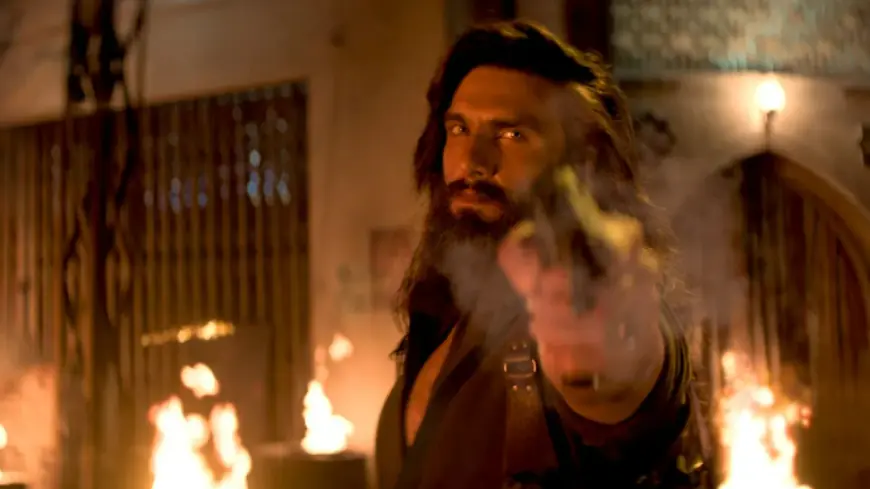
Aditya Dhar returns with a maximalist sequel that pushes style and violence to the foreground. The film runs nearly four hours and centers on an embedded agent turned crime boss.
Film details
| Director | Aditya Dhar |
| Lead cast | Ranveer Singh, Sara Arjun, Arjun Rampal, Sanjay Dutt, R. Madhavan, Rakesh Bedi |
| Supporting mention | Akshaye Khanna (deceased character from first film) |
| Runtime | 229 minutes |
| Languages | Hindi, Urdu |
| Status | Currently running in theatres |
Plot and themes
The story resumes after the first film’s climax. Jaskirat Singh Rangi, now Hamza Ali Mazari, climbs to power in Karachi’s Lyari underworld.
His rise follows the death of gang leader Rehman Dakait. The mission morphs into a personal vendetta amid terror links and deep-state conspiracies.
Conflict and scope
Hamza confronts gang wars, shifting loyalties, and corrupt officials. He also tangles with SP Chaudhary Aslam and ISI operative Major Iqbal.
The narrative follows efforts to cut terror funding and eliminate key adversaries. At times the mission blurs into prosecution of national narratives.
Performances
Ranveer Singh anchors the film with a forceful performance. He shifts between vulnerability, calculation, and unhinged ferocity.
Arjun Rampal delivers a solid turn as Major Iqbal. Sanjay Dutt keeps his swagger, while Rakesh Bedi supplies rare levity.
Sara Arjun carries emotional weight as Yalina. R. Madhavan’s radicalised Ajay Sanyal helps drive the protagonist’s transformation.
Direction and visual style
Dhar’s visual command is evident in frame composition and action choreography. The director favors relentless violence and sensory excess.
The runtime and indulgent sequences give the film an extended, episodic feel. At times the set pieces overwhelm narrative propulsion.
Music and soundtrack
Sashwat Sachdev provides the new score. Critics note it lacks the first part’s momentum.
The soundtrack repurposes classics including Boney M’s Rasputin, Bappi Lahiri’s Tamma Tamma, and Tirchi Topiwala. These moments are playful but sometimes feel forced.
Politics and messaging
The film adopts a strongly national security–centred viewpoint. It lionises counter-terror operations and aggressive covert action.
Reviewers argue the story simplifies complex geopolitics. It blurs communal and national identities and casts opposition forces and NGOs in a suspect light.
The narrative at one point claims Indian agents have influenced Pakistan’s politics for over four decades. That assertion clashes with other mythic elements in the story.
Overall assessment
Dhurandhar serves as a loud, unrelenting spectacle driven by form over subtlety. The film trades quieter reflection for visceral thrills and mass appeal.
Ranveer’s performance keeps the lengthy runtime engaging. Still, the film’s mix of patriotism and propaganda leaves little room for nuance.
Review published on Filmogaz.com — March 19, 2026, 04:11 pm IST.