Iranian Political Prisoners Face Intensified Threats

Vida Mehrannia last spoke with her husband, Ahmadreza Djalali, on March 3. He called from Evin Prison as bombs fell over Tehran, she told Filmogaz.com. The connection was poor and the call lasted only minutes.
Background on Djalali and Evin Prison
Ahmadreza Djalali is a Swedish-Iranian disaster medicine researcher. He was arrested in 2016 during an academic visit and later convicted of espionage. International investigators dispute those charges, and his family has sought his release for nearly ten years.
Evin Prison lies in northern Tehran. Human rights researchers estimate it houses roughly 1,500 to 2,000 detainees. The facility is often called “Evin University” because of the number of academics held there.
Prison Conditions and Supply Interruptions
Multiple reports describe severe overcrowding and deteriorating sanitation in Iranian prisons. Amnesty International reported on March 6 that electronic cards used to buy food and water had stopped working. Prisoners have complained of reduced food distribution, limited bread, and restricted visitation.
Maryam Fakhar, a senior analyst at Iran Human Rights Monitor, said administrative and medical staff have left some facilities. She noted delayed medical care and limits on phone calls. Guards have reportedly abandoned posts in parts of Evin.
Escalation and Infrastructure Damage
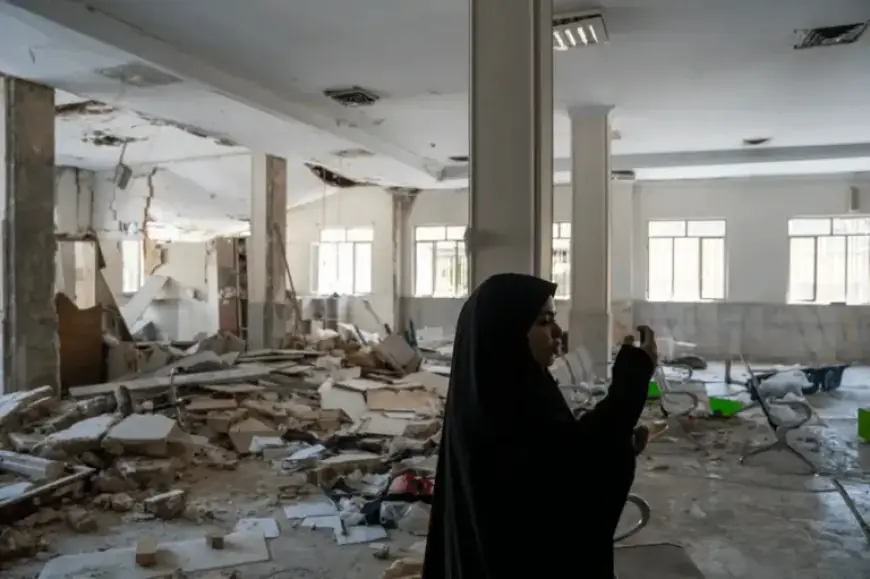
Since Feb. 28, after U.S. and Israeli strikes, Iran has restricted communications and sometimes shut down the internet. Reports say parts of several prisons sustained damage. Iran HRM verified that a section of Evin’s outer wall was struck on March 3.
Activists report additional hits near Ahwaz. In one incident, the Basij center close to Mahbad prison was bombed on March 3. Security forces then used violence and tear gas to corral prisoners.
Units and Transfers
Some sources say the NOPO special police unit assumed control of parts of Evin. Prison stores were closed and supplies ran low. Authorities have reportedly transferred inmates from Ward 209 to unknown locations.
In Isfahan’s Dastgerd Prison, political detainees — including long-imprisoned activist Heshmatollah Tabarzadi — were also moved. A number of inmates have been released or shifted to new facilities.
Arrests, Numbers, and State Actions
The January crackdown left thousands dead in the streets and tens of thousands arrested. The Islamic Revolutionary Guard Corps acknowledged summoning at least 11,000 people. A judicial spokesperson said more than 10,000 were referred for prosecution and 8,843 indictments were issued by Feb. 17.
Human rights groups estimate the detained could number as high as 50,000. These figures include minors and many held without transparent charges.
Journalists, Health Workers, and Vulnerable Detainees
The Committee to Protect Journalists reports at least 15 imprisoned journalists. Homa Fathi, an activist based in Canada, keeps lists of detained health professionals. She said roughly 100 healthcare workers were arrested, with about half released on bail.
Fathi warned that many accusations lack clarity. Families of detainees often do not know where their relatives are held.
Legal and Historical Concerns
Activists fear a repeat of past mass executions. An opposition group claimed 353 prisoners were executed between Jan. 20 and Feb. 18. Human rights monitors point to the 1988 massacres as a grim precedent.
On March 4, a U.N. Human Rights Council probe warned of expedited death penalty proceedings. The panel cited credible reports of risk for torture, ill-treatment, and enforced disappearance.
Amnesty International has documented patterns where armed conflict becomes a pretext for harsher treatment of detainees. Iran HRM recalls Resolution 211 from January 1987, which requires protecting prisoners’ lives during wartime.
Families’ Appeals and Immediate Risks
Relatives and activists are urging authorities to free political detainees. They argue that Iranian political prisoners face intensified threats from both aerial strikes and state reprisals. Advocates insist on transparent lists and access to medical care.
Mehrannia fears for Djalali’s health. He suffered a heart attack last year and endured multiple hunger strikes in detention. His family says he has lost significant weight and remains at grave risk.
Filmogaz.com will continue to follow developments and report verified updates on prison conditions and detainee safety. Families and rights groups say naming prisoners helps protect them from disappearance and unlawful execution.