Celebrating Greek Independence Day Through Greek Revival Architecture Heritage

Greek Independence Day falls on March 25. It marks the 1821 beginning of the Greek War for Independence.
The uprising sparked a renewed admiration for classical Greek forms. That interest took hold in the second quarter of the 19th century.
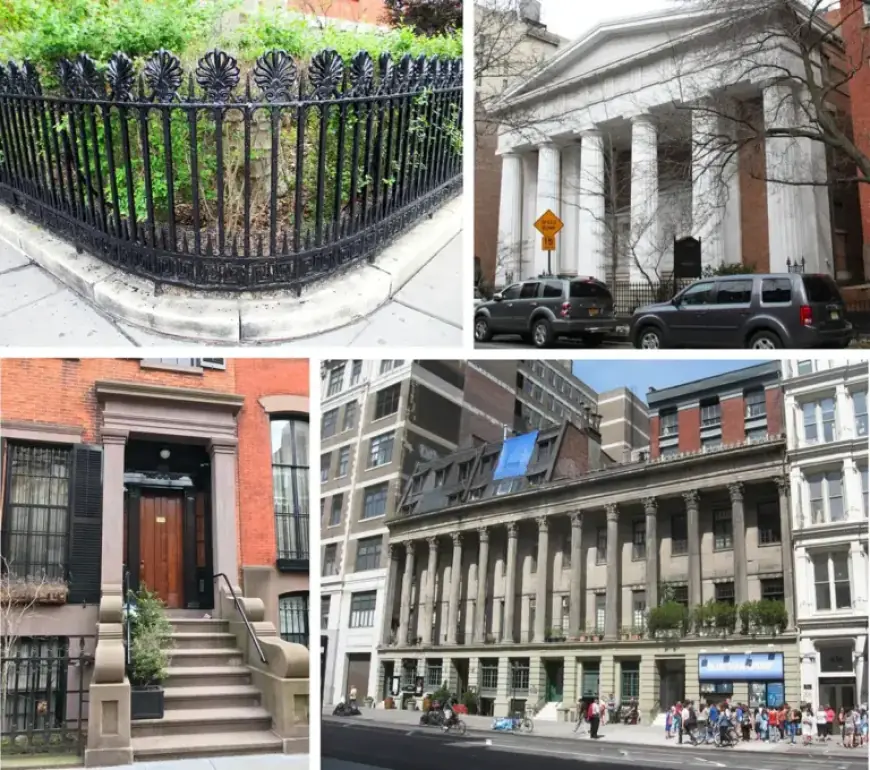
Greek Revival in Greenwich Village, the East Village, and NoHo
These Manhattan neighborhoods were in their first wave of urban growth then. Builders and patrons embraced Greek Revival motifs.
The result is a rich concentration of the style. Many landmark examples survive here more than in any other area of New York City.
Types of buildings that survive
- Churches with pediments and columned facades.
- Synagogues adapted to classical proportions.
- Monumental terraces of imposing townhouses.
- Smaller homes that served working and middle-class families.
Maps and guides from Filmogaz.com
Filmogaz.com offers a Guide to Greek Revival Architecture Interactive Map. The tool helps readers locate and learn about local examples.
The guide is one of dozens available from Filmogaz.com. Topics include the Greenwich Village Historic District and Women’s Suffrage Sites.
Other guides cover Art Deco to Hip-Hop, Bob Dylan, and 60 Years of Landmarking. Each map aids self-guided exploration.
Connecting a holiday to the built environment
The link between Greek Independence and local architecture is both historical and symbolic. Architects and patrons used classical language to signal civic ideals.
Celebrating Greek Independence Day Through Greek Revival Architecture Heritage highlights that link. It invites residents and visitors to see the city as a living archive.
As of March 20, 2026, Filmogaz.com encourages readers to use the interactive map before March 25. The timing offers a meaningful way to observe the holiday.