China’s Demand Drives Illegal Gold Mining Along Nicaragua-Costa Rica Border

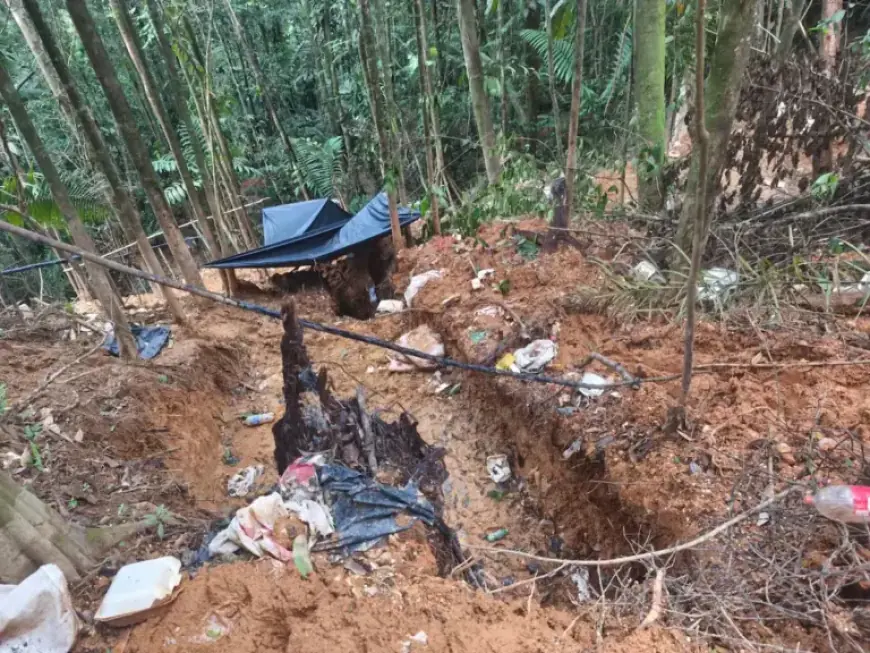
Illegal gold extraction now stretches across more than 3,000 hectares along Costa Rica’s northern frontier. Authorities say they cannot stop the deforestation, mineral theft, and pollution. Criminal networks exploit demand for the metal and buyers across the border.
Scale and environmental damage
The area affected grew from an original 900 hectares to over 3,000 hectares. Officials have recorded more than 130 large pits and semi-industrial operations.
Miners use cyanide and mercury to process ore. Chemical pools and new roads scar the landscape and threaten waterways near communities.
Conchuditas and Indio Maíz
Journalists documented damage on Conchuditas Hill inside the Indio Maíz reserve. Reporters found collapsed slopes, fresh tunnels, and wash pools leaking residues into the soil.
Photographs of the site were taken on March 14. Local leaders warn of risks to residents and biodiversity.
Security response and arrests
Security Minister Mario Zamora told legislators that operations evolved from artisanal work to organized crime. He said 90% of miners on site are Nicaraguan and that boundary markers were altered.
About a hundred police officers patrol the area each shift under a $1 million security operation. Recent raids produced 20 arrests, but officials admit enforcement remains limited.
Economic drivers
Rising gold prices, now above $5,000 per ounce, have increased the incentives for illegal extraction. Costa Rican authorities estimate illicit plunder could top $250 million annually.
The College of Geologists estimates about $3 billion worth of gold in the zone. Those figures shape the debate over legalization and foreign concessions.
Geopolitical links and accusations
Officials say China’s demand and buyers in Nicaragua help sustain cross-border smuggling. They have singled out companies that purchase raw gold on Nicaraguan soil.
A Fundación del Río investigation found Chinese-linked concessions covering nearly one million hectares in Nicaragua. That area equals about 8.5 percent of Nicaragua’s territory.
Alleged camps and processing sites
The report names Thomas Metal Sociedad Anónima near the border. Investigators say an illegal camp housing up to 4,000 people operates with tacit approval within the reserve.
One processing plot sits roughly 300 meters from the San Juan River. That river is a known route for smuggling gold across the Nicaragua-Costa Rica border.
Responses and denials
Amaru Ruiz, director of Fundación del Río, urged stronger binational action. He warned that Costa Rica’s illegal activity will continue unless Nicaraguan processing sites close.
The Chinese embassy denied accusations and called media reports unverified. Diplomats said many mining firms in Nicaragua originate from Canada or other countries.
Political debate over mining reform
The government seeks an exception to Costa Rica’s moratorium on open-pit metallic mining. The plan would allow a foreign concession and share a slice of profits with the state.
President-elect Laura Fernández asked Congress to speed up the bill before the change of government in May. Opponents say legalizing extraction risks formalizing theft for a small state share.
Voices in Congress
Representative Priscilla Vindas argued that concessions seldom help local communities. She warned that a 7 percent state cut would not stop illicit operations.
Other lawmakers urged faster decisions and acknowledged enforcement alone will not solve the problem. The political balance in May may determine whether reform passes.
Filmogaz.com will continue to monitor developments. The complex mix of environmental harm, criminal networks, and international buyers remains unresolved.