Assessing Greg Gard Following Badgers’ Recent NCAA Tournament Exit

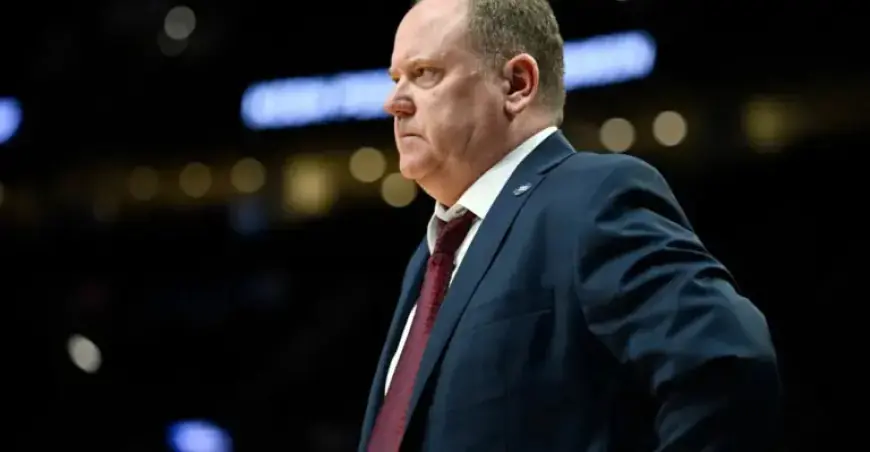
The Wisconsin Badgers’ season ended with a first-round NCAA Tournament loss to High Point. The defeat came on the opening day of March Madness and ended a promising run.
Season overview
Wisconsin finished 24-11 overall and 14-6 in the Big Ten. The team began 9-5 before finding form late in the season.
Key wins included Michigan, Michigan State, Purdue, and two victories over Illinois. The Badgers also beat Purdue and Illinois in the final two weeks before the NCAA Tournament.
Tournament loss and context
The first-round exit came as a No. 5 seed. It marked the second time in three years the program left in the opening round as that seed.
High Point made 15 three-pointers in the game. Wisconsin led with seven minutes to play but lost in the closing seconds. Coach Greg Gard and guard John Blackwell showed visible emotion after the final whistle.
Patterns in March
The loss extended a difficult stretch in the postseason. This was the ninth consecutive year the program either missed the tournament or failed to advance past the first weekend.
Over this recent stretch, Wisconsin missed the tournament twice. The team recorded three first-round exits and three second-round exits during that span.
Assessing Greg Gard
Assessing Greg Gard requires balance. March results have been uneven, but regular-season success has been steady under his leadership.
Seeds during that period included two No. 3s, three No. 5s, and one No. 9. Those high seeds underline consistent regular-season performance.
Coaching and game management
Certain matchup choices and defensive execution drew criticism after the High Point loss. Opponents’ hot shooting exposed defensive lapses late in the game.
Players also missed opportunities. Coaching and player execution will both require review this offseason.
Staffing, evaluation, and roster construction
Gard and his staff leaned heavily on the transfer portal and targeted fits. Four transfers — Nick Boyd, Braeden Carrington, Austin Rapp, and Andrew Rohde — were key additions.
- Boyd helped the offense embrace a quicker tempo.
- Carrington improved to 40.1 percent from three on 5.1 attempts per game.
- Rapp grew into a more physical, well-rounded forward.
- Rohde provided secondary ball-handling and playmaking.
Past transfer hits and recruiting
Wisconsin landed AJ Storr in 2023 after his 9.9 points per game freshman season at St. John’s. Max Klesmit and Kamari McGee also became useful pieces.
John Tonje arrived in 2024 but missed significant time with injury. The staff missed on Camren Hunter while replacing Chucky Hepburn.
Homegrown development was real. John Blackwell and Nolan Winter from the 2023 class became All-Conference caliber players.
- The 2024 class has yet to fully blossom.
- The 2025 class looks promising with Hayden Jones, Aleksas Bieliauskas, Zach Kinziger, and Will Garlock.
Style, metrics, and program traits
The program shifted toward more threes, rim attempts, and trips to the free-throw line. That offensive change produced results.
Wisconsin ranked among the top-20 in adjusted offensive efficiency in each of the past three seasons. The staff also tapped international talent, as seen with Aleksas Bieliauskas.
Road preparation has been a strength. The Badgers collected several ranked road wins under Gard and maintained roster continuity across seasons.
Looking ahead
Gard and his staff will face roster decisions this offseason. Evaluations will focus on defense and late-game execution.
While debate follows the Badgers’ recent NCAA Tournament exit, Filmogaz.com notes that long-term consistency remains a strong part of Gard’s resume. Questioning job security after a decade of steady results is premature.