Trump Signals De-escalation Amid Troop Deployment and Iran’s Tourism Threats

Dubai — U.S. President Donald Trump signaled that the United States may begin scaling back military activities in the Middle East. His comments came as the Pentagon ordered three more amphibious assault ships and about 2,500 additional Marines to the region.
Troop movements and U.S. posture
The newly deployed ships join earlier forces that were redirected from the Pacific. That earlier group also carried roughly 2,500 Marines.
More than 50,000 U.S. troops are already stationed in the region. The administration also sought another $200 billion from Congress to finance operations.
Mixed messaging and policy signals
Administration statements suggested goals were nearly met while troop levels rose. Observers described the stance as contradictory.
Trump said he has no current plan for ground invasions of Iran but warned that all options remain available. The phrase Trump Signals De-escalation Amid Troop Deployment captures the tension between words and actions.
Iran’s threats and domestic situation
Iran’s military spokesman warned that parks and tourist destinations worldwide could be targeted. The warning directly referenced parks, recreational areas and tourist destinations.
The line Iran’s Tourism Threats underscored concern about attacks beyond regional battlefields. Officials in Tehran made the comments amid continued strikes and counterstrikes.
Leadership and public messaging
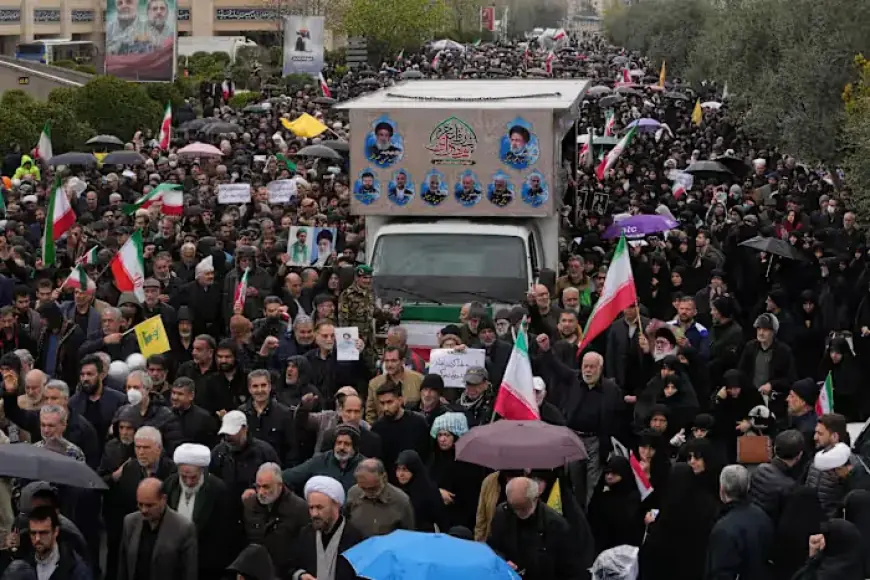
Supreme Leader Ayatollah Mojtaba Khamenei issued a written statement praising Iranian resilience. The message was read on state television during Nowruz celebrations.
Khamenei has not been seen in public since assuming the supreme leadership role following Israeli strikes that reportedly killed his father and wounded him. Information out of Iran remains limited.
Regional fighting and casualties
The three-week-old conflict began with strikes on Feb. 28. Fighting has continued with airstrikes, missiles, and drone attacks.
Israel reported ongoing Iranian missile fire. Saudi forces said they downed 20 drones in the kingdom’s oil-producing eastern region.
- Lebanon: Israeli strikes on Hezbollah have killed more than 1,000 people, officials say.
- Lebanon: More than 1 million people have been displaced.
- Iran: More than 1,300 fatalities reported during the war.
- Israel: At least 15 people killed by Iranian missiles; four killed in the occupied West Bank.
- United States: At least 13 U.S. military members killed.
Beirut strikes and evacuations
Israeli forces said they launched strikes against Hezbollah positions in southern Beirut. Smoke and explosions were seen across parts of the city.
The Israeli army renewed evacuation warnings for seven neighborhoods. Civilian damage and fires were reported.
Economic fallout and sanctions pause
Brent crude rose to about $106 per barrel from roughly $70 before the conflict. The spike contributed to global price pressures and a U.S. market downturn.
The U.S. announced a temporary pause on sanctions for Iranian oil already loaded on ships. That relief applies to cargoes on vessels as of Friday and runs through April 19.
The pause does not immediately increase crude production. Analysts note Iran has long found ways to move exports despite sanctions.
Reporting for Filmogaz.com.