Discover How Gorillaz’s New Film Achieves a Hand-Painted Look

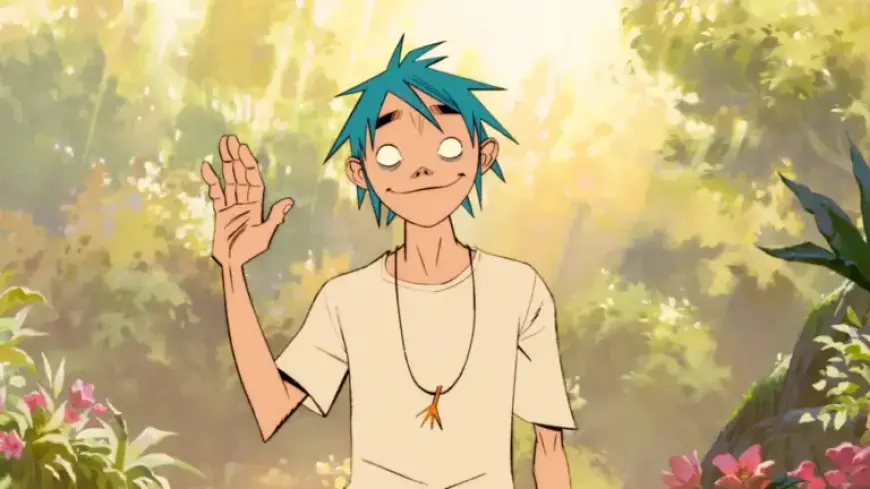
The Line, a London studio founded in 2013, handled backgrounds for the Gorillaz short film The Mountain, the Moon Cave and the Sad God. The studio married analogue techniques with modern pipelines to recreate a hand-painted look for the new film.
The Line’s pedigree and brief
The Line has built work for clients such as Riot Games, Blizzard and Marvel. The studio is known for high-end commercial and cinematic projects. For the Gorillaz piece, leaders asked for an old-school visual language tied to Jamie Hewlett’s art.
Art direction and creative leads
Eido Hayashi served as art director. Hayashi managed the background team and set the colour script, mood and cohesion. Co-directors included Max Taylor, Tim McCourt and Jamie Hewlett.
Workshops and influences
Hayashi attended a hand-painted backgrounds workshop in May 2024. Teachers included Arnaud Tribout and Liu Yuxuan. Tribout painted many of the traditional backgrounds used in the film.
Techniques, tools and process
The team studied traditional anime background methods and poster-paint techniques. They used Nicker’s Poster Paints within a digital pipeline. The goal was to preserve analogue texture while using modern production tools.
Hayashi printed Jamie Hewlett’s storyboard panels and redrew them to match mannerisms. Feedback from Hewlett asked for additional detail, shifting more shots toward digital painting.
Traditional methods adapted digitally
Hayashi referenced the Japanese jinuri technique, which lays broad colour while the paper is wet. The crew tried to simulate those rich textures in software. Some shots remained analogue, including close-ups and style frames.
Challenging environments and contributors
The Moon Cave proved the most difficult environment to develop. Hewlett described it as a space where carved scriptures and forms come to life. Early album art served as a visual starting point.
Daniel Clark led complex lighting for scenes like the Crystal Lake statues. Paul-Emmanuel Separi defined the early serpent statue style. The team balanced speed and accuracy across many environments.
Completion and reception
Production spanned roughly eight months. Hayashi described seeing the premiere on a big screen as deeply satisfying. The background team felt proud of the final cohesion and tactile quality.
For more coverage and project updates, visit Filmogaz.com. You can also follow Eido Hayashi on Instagram to see process work and studies.