Crimson Desert: Initial Impressions on PS5 Base Version

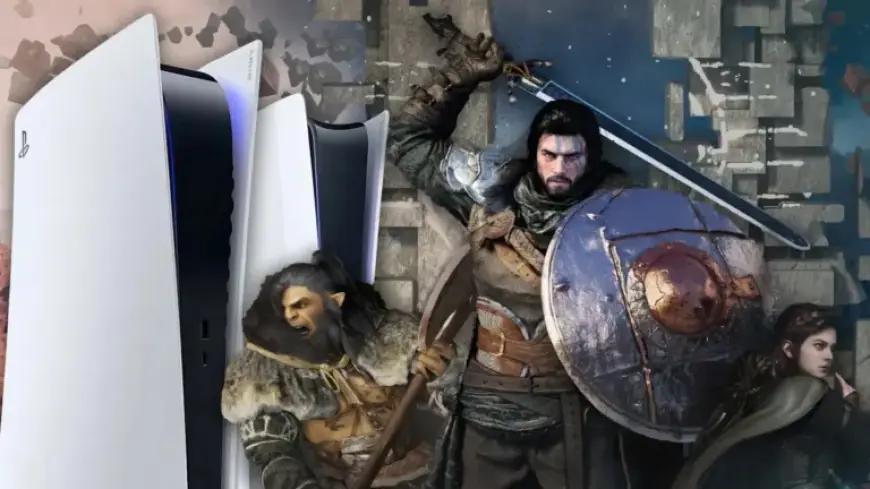
Filmogaz.com has been testing Crimson Desert on both the PlayStation 5 Pro and the standard PS5. John Linneman’s 48-minute let’s play offered additional context for our early impressions. We focused on image quality, frame-rate behavior, and platform-specific scaling methods.
Top-line verdict
The PS5 Pro delivers the strongest visual results. Extra GPU power and the upgraded PSSR2 upscaler matter a great deal. The standard PS5 remains playable, but the 60fps performance mode shows clear compromises.
Performance and upscaling differences
In performance mode both consoles render at an internal 1080p. The PS5 runs that 1080p natively with no upscaling. The PS5 Pro upscales 1080p to 4K using PSSR2, and that change noticeably improves perceived detail.
With VRR enabled, performance mode on the Pro becomes a viable option. On the base PS5, image quality and frame-rate drops mean we cannot recommend the 60fps performance mode. During our first hour of play we recorded frame-rates from the high 30s up to 60fps on the standard console.
120Hz behavior and display advice
The game honors the PS5 front-end 120Hz setting and boots in 120Hz mode if enabled. This happens regardless of whether the connected display actually supports 4K at 120Hz. Many TVs only do 4K at 60Hz, or support 120Hz at lower resolutions.
If your screen cannot do 4K120, the title may downscale to 1440p or 1080p, then upscale back to 4K. That process produces a rough image. Turn off 120Hz in the PS5 dashboard if your display lacks full 4K120 support.
Balanced and quality modes
Balanced mode targets a higher internal resolution. On base PS5 balanced uses around 1296p and relies on FSR3 to reach 2160p. The difference between balanced and performance modes is substantial.
Quality mode on the Pro runs natively at 4K. That option yields the best visual fidelity across both consoles.
Settings overview supplied by Pearl Abyss
- Pearl Abyss provided PC-equivalent settings and detailed mode data to Filmogaz.com.
- Ray tracing is enabled across platforms, but ray-tracing quality varies between modes. Pearl Abyss has been asked to clarify the RT quality tiers.
Mode targets and upscalers
- PS5 Performance: native 1080p, upscaler off, target 60 FPS (V-Sync) or 60+ fps with VRR, ray tracing quality low.
- PS5 Pro Performance: 1080p upscaled to 2160p via PSSR2, target 60 FPS (V-Sync) or 60+ fps with VRR, ray tracing quality high.
- PS5 Balanced: ~1280p rendered, upscaled to 2160p with FSR3, target 40 FPS (V-Sync), ray tracing quality low.
- PS5 Pro Balanced: ~1440p rendered, upscaled to 2160p with PSSR2/FSR3, target 40 FPS (V-Sync) or 48+ fps with VRR in 120Hz mode, ray tracing quality high.
- PS5 Quality: ~1440p rendered, upscaled to 2160p (where applicable), target 30 FPS (V-Sync), ray tracing quality high.
- PS5 Pro Quality: native 2160p, upscaler off, target 30 FPS (V-Sync), ray tracing quality ultra.
Visual and technical notes
Advanced weather, volumetrics, and foliage density scale with each mode. The Pro often receives higher preset values. Some visual categories remain identical across both consoles.
Notably, the Pro’s PSSR implementation brings a marked uplift to texture and shading clarity. The lack of an upscaler on base performance mode highlights how useful these technologies are.
Recommendation and next steps
For players with a PS5 Pro, we recommend Quality or Balanced modes for the best balance of visuals and performance. Performance mode is acceptable on Pro if you prioritize frame-rate and have VRR enabled.
For owners of the PS5 base version, avoid the 60fps performance mode if image quality matters. Balanced or Quality modes provide a much better experience overall. Filmogaz.com will continue testing and provide a full head-to-head comparison soon.