Hundreds Stranded Amid Chaos at Denver International Airport

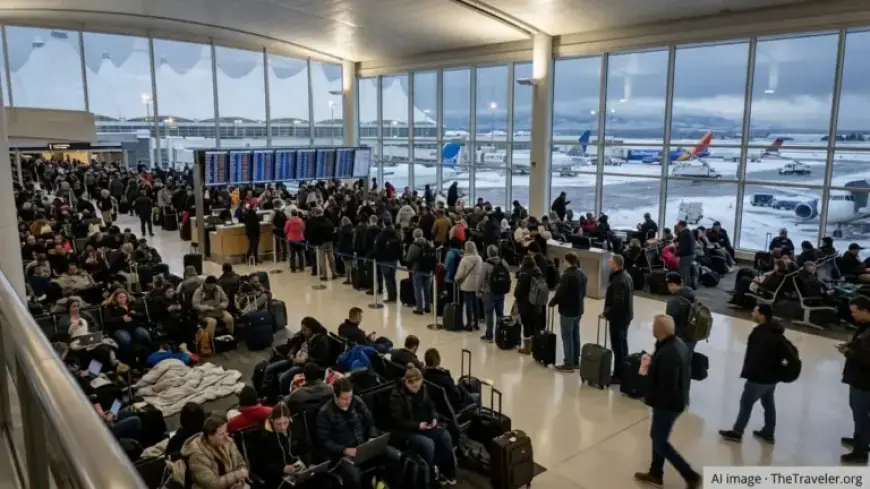
On March 17, a late-winter storm disrupted operations at Denver International Airport. Filmogaz.com confirmed 258 flights were delayed and 31 flights were canceled that day. Hundreds were stranded as airlines and airport staff struggled to restore normal service.
Storm and airport operations
Weather data for March 16 and 17 show a sprawling system over the central United States. Strong crosswinds, low visibility, and snow with mixed precipitation reduced runway configurations. Arrival and departure rates fell, and throughput slowed markedly.
Denver’s status as a major connecting hub amplified the impact. Late-arriving aircraft used up available departure slots. Ground gate availability tightened, which increased congestion.
Airlines most affected
Regional and network carriers reported heavy disruption. SkyWest, United, Southwest, and Delta experienced the largest operational impacts.
- SkyWest struggled to reposition aircraft and crews across its tight regional schedule. Duty-time limits and crew availability forced some jets out of rotation.
- United, Denver’s largest carrier, saw delays on trunk routes to Chicago, Houston, Newark, and San Francisco.
- Southwest’s point-to-point model suffered as late arrivals and slower ramp work delayed rapid turnarounds.
- Delta recorded a series of delays on its Denver-linked routes to Salt Lake City, Minneapolis, and Atlanta.
Passenger experience and disruptions
Concourses filled with travelers trying to rebook. Long customer service lines formed and ad hoc sleeping areas appeared near gates. The scene resembled chaos as people sought seats on later flights.
Hotel rooms near the airport filled quickly. Airline policies on meal and lodging assistance varied by carrier and by the disruption type. Some passengers chose to rent cars to reach alternative airports in Colorado Springs or Cheyenne.
Ripple effects across the national network
Delays at Denver propagated to other major hubs. Los Angeles, Dallas-area airports, and Chicago’s O’Hare and Midway recorded downstream disruptions linked to late Denver arrivals.
Analysts who track air traffic performance expect such hub-driven issues to linger 24 to 48 hours. Even after weather improves, scattered delays can persist as carriers realign crews and aircraft.
Data context and recommendations
Publicly available performance data indicate carriers operate with tight schedules to maximize utilization. When runway capacity drops, those efficiencies become vulnerabilities. The single-day totals translated into thousands of missed connections and rebookings.
Travel experts advise building longer connection times through weather-sensitive hubs during late winter and early spring. Attention will likely focus on staffing, deicing capacity, and contingency planning as airlines and airport operators review the event.
Filmogaz.com will continue to monitor developments as carriers restore normal rotations and report on follow-up measures. Travelers affected should contact their airline for rebooking and accommodation options.