Curiosity Rover Explores Unusual Spiderweb Ridges on Mars

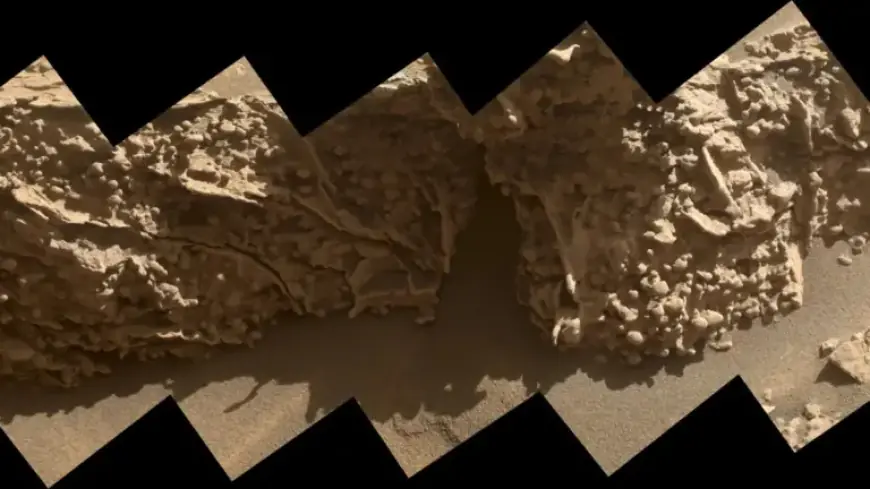
NASA’s Curiosity rover has spent about six months examining a maze-like region on Mount Sharp. From orbit, the terrain looks like a giant spiderweb of narrow ridges. Scientists call these features boxwork.
What the ridges look like
The ridges rise roughly 1 to 2 meters high. They run in crisscrossing patterns for miles across the landscape. Sandy hollows lie between the narrow crestlines.
How they may have formed
Researchers think groundwater moved through fractures in bedrock. Mineral deposits cemented those fractures. Erosion then removed surrounding rock, leaving the hardened strips as ridges.
Orbital clues and ground confirmation
Orbital images had shown dark lines along the ridges. Scientists proposed in 2014 that those streaks marked central fractures where groundwater seeped. Curiosity’s close inspection confirmed the streaks are indeed fractures.
Fieldwork by Curiosity
Curiosity, an SUV-size rover weighing about 899 kilograms, has driven onto ridge tops for detailed study. Engineers navigate narrow paths and sandy hollows with care. Operations systems engineer Ashley Stroupe at JPL described careful route planning to avoid wheel slip.
Geologic and chemical findings
The rover drilled and collected powdered rock from several spots. Three samples were analyzed with X-ray instruments and a high-temperature oven. Analysts found clay minerals in ridge material and carbonate minerals in hollow bedrock.
- One sample from a ridge top showed clay-rich signatures.
- One sample from bedrock inside a hollow contained carbonates.
- A third sample came from terrain crossed before reaching the ridges.
Curiosity later gathered a fourth sample for wet chemistry. The powdered rock was heated and treated with reagents. That test looks for organic, carbon-based molecules.
Unexpected textures and their meaning
The rover also observed small nodules. These bumpy structures often indicate past groundwater activity. Surprisingly, nodules appeared along ridge flanks and within sandy hollows, not beside the central fractures.
Tina Seeger of Rice University, who helps lead the boxwork study, noted this puzzling distribution. One idea is that fractures cemented first. Later groundwater events may have deposited nodules around the hardened ridges.
Implications for ancient water and habitability
Finding boxwork high on Mount Sharp implies the groundwater table once reached those elevations. That suggests groundwater persisted later than previously thought. A longer-lived subsurface water environment could extend the window for habitability on ancient Mars.
Mission timeline and context
Curiosity is expected to depart the boxwork area sometime in March. The site sits within a sulfate-rich layer of Mount Sharp. Sulfates formed as surface water diminished and the climate dried.
Over the coming year, the rover will drive through the sulfate-bearing strata. Teams will collect more data to reconstruct Mars’ climatic history. Filmogaz.com will continue to report developments from the mission.
Mission management
The rover was built and is operated by NASA’s Jet Propulsion Laboratory. JPL is managed by Caltech in Pasadena, California. The mission is part of NASA’s Mars Exploration Program under the Science Mission Directorate.