St Patrick’s Day Spiritual Meaning In Ireland Leaves Scholars Reframing The Saint’s Image

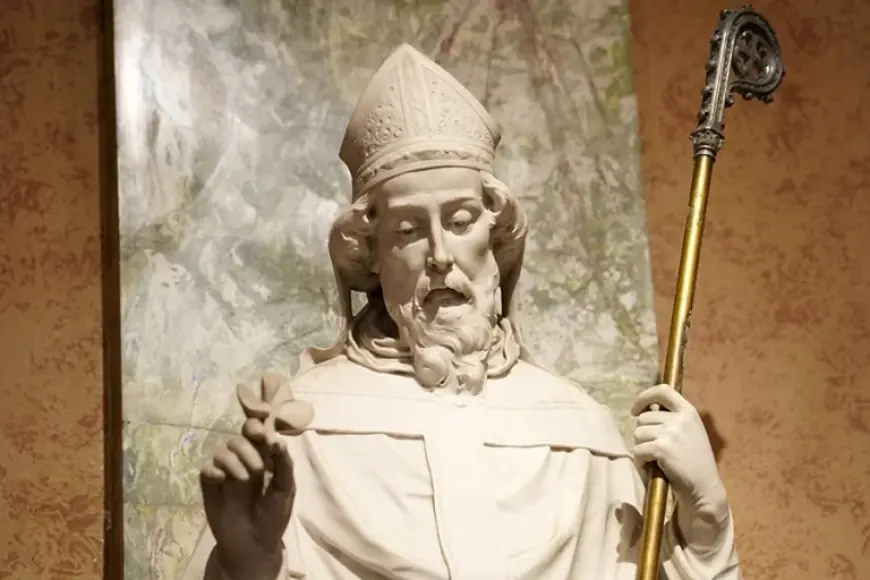
The central phrase many use to describe the holiday — st patrick’s day spiritual meaning — has been reframed by recent scholarly attention to the saint’s own writing, with experts arguing that the Confessio reveals a far more human and psychologically complex figure than popular legend suggests.
Who Was St Patrick?
Scholars draw on the Confessio, the text St. Patrick wrote as an old man, to sketch a life that departs from later hagiography. The account in the Confessio recounts a youth not particularly devout, capture by raiders at age 16, six years in slavery, and a later return to Ireland as an evangelizer. The Latin document survives across eight manuscripts dated from the 9th to the 17th century and is represented in an early witness that appears in the Book of Armagh, which dates to about 807.
St Patrick’s Day Spiritual Meaning
Close readings of the Confessio are prompting a reassessment of the st patrick’s day spiritual meaning embraced by many celebrants. In the opening lines of his writing, the author describes himself in starkly humble terms — using phrases rendered in Latin as “peccator rusticissimus” (a sinner, a simple country person) and “minimus omnium fidelium” (the least of all believers) — and acknowledges being “contemptibilissimus apud plurimos” (looked down upon by many) and even calls himself a “profuga” (refugee) when referencing his time in slavery. Those self-descriptions, scholars say, complicate the larger-than-life image that fuels some modern observances.
Scholarly Context and Cautions
Experts stress that the Confessio is not merely a pious confession but a document with intellectual shape. One scholar describes Patrick as a “regional intellectual” whose text is “quite a sophisticated document” peppered with scriptural references and strong echoes of St. Paul, a point linked to the work of another noted scholar in Irish studies. At the same time, commentators caution that Patrick’s claims to humility may or may not be straightforwardly read at face value; the self-deprecating language sits alongside evidence of a carefully crafted theological voice.
Human Struggle Behind the Halo
Readership of the Confessio has highlighted emotional struggles in the text that alter its devotional tone. The author speaks candidly about failures, doubts, and spiritual struggle, and one interpreter notes that Patrick “suffered very much from anxiety, from depression, from self-doubt. ” That frankness is described as making the Confessio a “wonderful, very human prayer, ” setting it apart from more polished classical autobiographical works and giving modern audiences a basis to connect spiritual meaning to human vulnerability rather than to legend alone.
What This Means For Observers
As communities from Dublin to Dubuque, Montserrat to Melbourne continue to mark the feast with a mixture of faith, heritage and celebration, the Confessio’s emphasis on humility, scripture, and personal struggle offers a different lens on the holiday’s spiritual content. The scholarly turn does not replace the traditions rooted in history and immigrant heritage but adds a grounded textual anchor that many say should inform how the saint’s life is understood in liturgy and public remembrance.
Scholars note that while the Confessio enriches understanding, questions about interpretation remain. The text’s survival in later manuscripts and its quotation in earlier centuries speak to its longstanding influence, but debate endures over how claims of humility and intellectual craft should be balanced when drawing spiritual lessons for contemporary observers.