Victor Davis Hanson and the New Wave of Arguments Over Trump, History, and Presidential Norms

victor davis hanson is at the center of a fresh round of debate as a new cluster of pieces revisits how Donald Trump is framed in public argument—touching on long-standing fears about Iran, the role of history in political presentation, and whether presidential norms in the U. S. still meaningfully apply.
Victor Davis Hanson-linked debate focuses on Iran fears and a claim of political decay
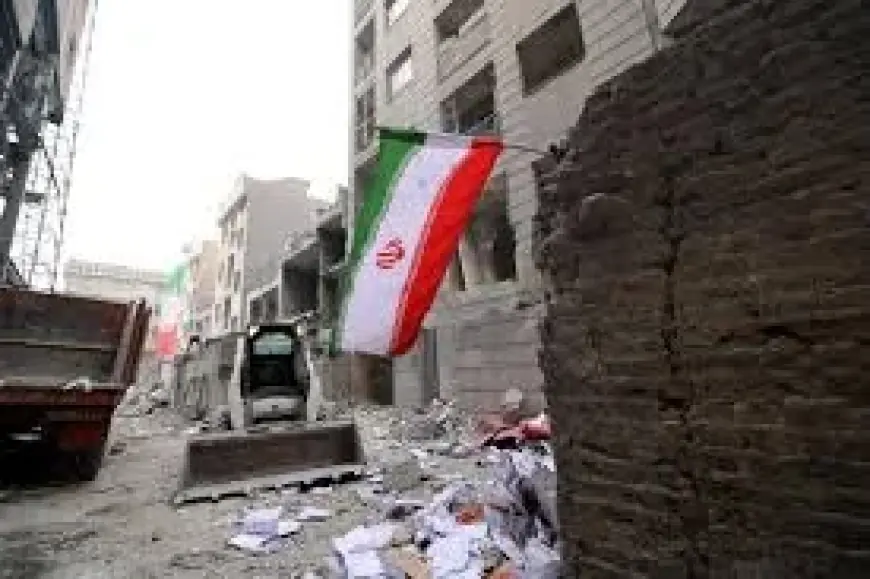
One of the newest prompts for the discussion is a commentary headlined “Trump challenged 50 years of Iran fears — and revealed the rotten, decaying truth. ” The framing positions Trump as a figure confronting decades of fear, while also making a broader argument about rot and decline. The headline’s language suggests an attempt to connect foreign-policy anxieties—specifically tied to Iran—to a wider claim about deterioration in public life.
What is clear from the current headline-driven coverage is that the argument is less about a single discrete event and more about interpretation: it invites readers to view “Iran fears” as an established narrative and Trump as the challenger of it, with the conclusion cast in stark moral terms. Because only the headline-level framing is available here, the underlying evidence and the specific “truth” being referenced cannot be verified from the provided context.
Still, the timing of the debate indicates heightened search interest in how political commentators are defining the moment—whether as confrontation, correction, or exposure of something broken. The focus on Iran also signals that international tensions remain a central vehicle for domestic political storytelling.
On Trump’s stage, history is treated as disposable—whether he “understood it” or not
A separate piece, headlined “On Trump’s gilded stage, history has no worth – even if he understood it, ” pushes the argument in a different direction. Rather than centering on geopolitical fear, it emphasizes presentation—“gilded stage”—and the claim that history is being stripped of meaning or value in the performance of politics.
The headline also carries an internal tension: it allows for the possibility that Trump may have understood history, yet argues that history still “has no worth” in that setting. The result is a critique aimed not only at a political figure, but at the incentives and aesthetics of modern political messaging—suggesting that even knowledge does not translate into respect for historical context when spectacle becomes the priority.
In the context of current interest around victor davis hanson, the juxtaposition is notable: one headline describes a confrontation with entrenched fears and decay, while another highlights the erosion of history’s relevance in political theater. Together, they reflect competing ways of asking what matters now—substance, memory, and the narratives used to organize public attention.
Are presidential norms still intact in Trump’s U. S. ?
The third headline driving this surge of attention is framed as a question: “In Trump’s U. S., are there any presidential norms anymore?” The wording signals uncertainty and invites readers to evaluate not just actions, but standards—what a president is expected to do, what behavior is considered typical, and what the public still treats as binding constraints.
Because the context here is limited to the headline, it’s not possible to specify which norms are being highlighted or what examples are used to support the question. What can be stated is that the headline itself reflects an ongoing debate: that “presidential norms” are either changing, weakening, or being openly contested, and that Trump remains the focal point for that argument.
Taken together, the three headlines show a common theme: they are not narrowly descriptive updates, but broader assessments about fear, historical meaning, and institutional expectations. For readers searching now, the immediate utility is understanding that the latest wave of coverage is structured around competing judgments—what Trump’s approach reveals about the country, what political staging does to historical context, and whether norms still function as norms.